Quick answer — cable railing posts: Specify cable railing posts with their function, cable path, terminal geometry and drilling schedule. Distinguish end posts from intermediate restraints and separate structural-post spacing from cable support spacing. Hole positions must accommodate fittings and installation access as well as the required cable layout.
For B2B buyers comparing wire rope systems, these checks turn the catalogue shortlist into a complete purchasing specification.
Problem one: the holes follow the wrong route
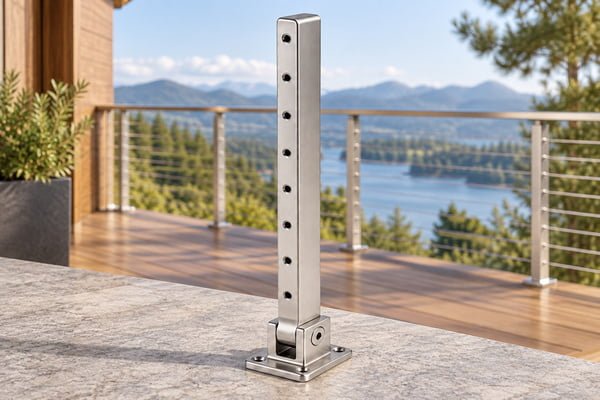
Elim catalogue comparison: Elim identifies WR022 as an intermediate post, WR054 as square cable railing posts and WR064 as an end cap. An end cap closes a profile; its catalogue identity does not make it a cable termination or a substitute for an end-post connection. Catalogue references: intermediate cable railing post.
Buying decision: Label every cable run by its termination points before counting fittings. Intermediate pass-through positions need different parts from terminal positions. Quoting one identical hardware set for every hole can overbuy connectors while still leaving the actual ends incomplete.
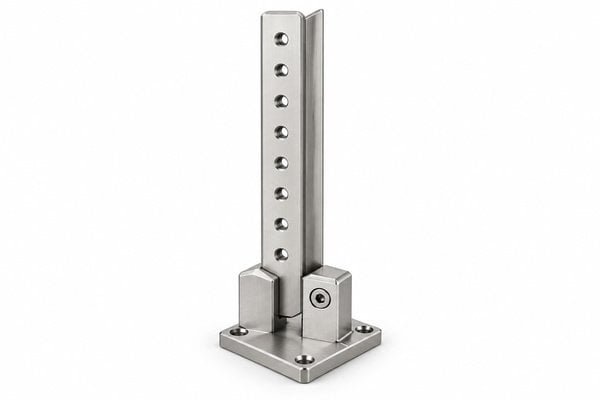
Reference configuration diagram; not an approved project installation drawing.
Do not create a universal hole-spacing rule from this article. Applicable barrier requirements and the engineered assembly govern the layout. Where US handrail accessibility requirements are relevant, consult the Access Board stairway guide; it does not by itself specify a cable infill system.
Record to produce: a numbered elevation showing every cable path and post position, with the controlling drawing revision.
Problem two: the terminal cannot be installed
Compare the proposed route with the square cable railing post. Identify whether the terminal sits inside, outside or through the post, and how removable covers affect access. Keep the chosen terminal reference in the same record as the hole detail.
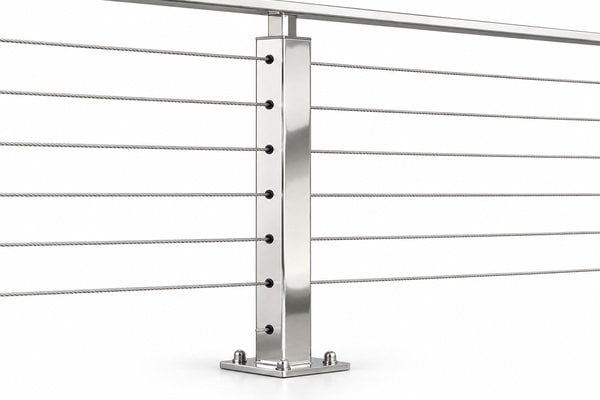
Catalogue application illustration showing the post in a cable railing arrangement.
Feeney’s technical library and installation hub demonstrate documentation organized around particular cable products. Their dimensions and procedures apply to those systems; use the selected Elim assembly’s own approved details for purchasing.
Record to produce: a section through the post and terminal showing the assembly sequence and access envelope.
What cable spacing should a buyer use for an initial layout?
For its CableRail system, Feeney recommends cable spacing no more than 3 inches and a post or intermediate vertical at least every 3 feet. Those are manufacturer recommendations with local-code qualifications, not approved spacing for an Elim system.
| Feeney reference dimension | Metric equivalent |
|---|---|
| 3 inches cable spacing | 76.2 mm |
| 3 feet between vertical supports | 914.4 mm |
Use this example to ask better questions about deflection and intermediate supports. Do not equate spacing between structural posts with spacing between all vertical restraint points. A preliminary hole schedule also needs the bottom and top gaps, terminal clearances and the exact cable/fitting system before fabrication; nominal spacing alone is not a drilling drawing.
Source: Feeney CableRail spacing guidance. Reference checked 27 September 2026.
Request a matched quotation: Send the post elevation, intended cable system and terminal details for a coordinated hole-layout quotation..
Problem three: cable diameter becomes the whole specification
Record construction, material, end treatment and the intended assembly alongside nominal diameter. Bergen Cable’s construction guide provides background on cable forms, while Bekaert’s diameter guidance addresses measurement. Those are separate information needs.
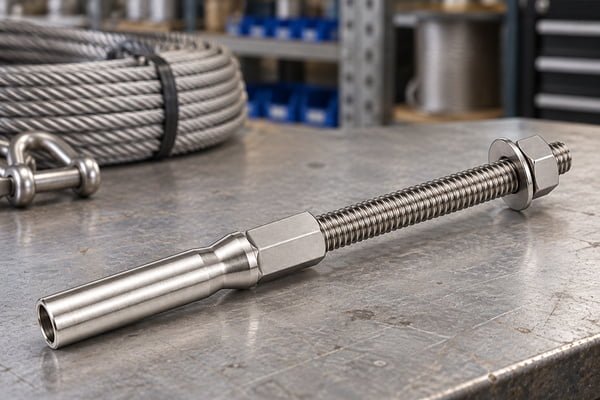
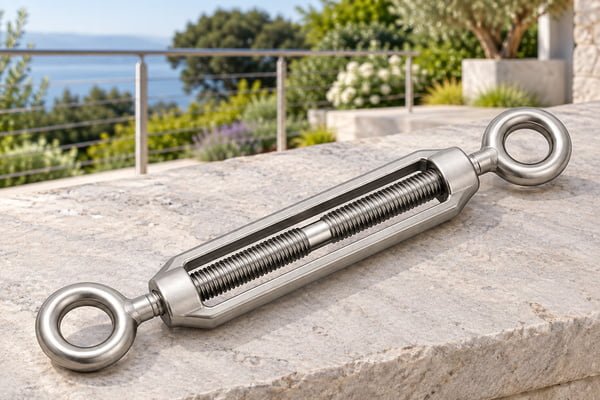
Use the turnbuckle specification guide when the run includes an adjustable end assembly. Its thread and usable adjustment requirements must remain compatible with the available space at the post.
| Drawing field | Example of a useful entry |
|---|---|
| Post identity | P07, intermediate, elevation E2 |
| Cable route | Run C03, drawing revision D |
| Terminal scope | Located at end post; not supplied at P07 |
| Access check | Installation sequence reviewed by contractor |
| Outstanding item | Final hole drawing awaiting approval |
This fictional record deliberately identifies an unresolved item. A complete order can contain a hold point; it should not hide that hold point behind a generic standard-post description.
Problem four: finishing parts obstruct the next operation
A cable railing end cap is a small component with an important sequencing role. Identify how it is retained and whether it must remain removable for access. Confirm its interface with the actual post rather than matching it by appearance.

Catalogue reference: Cable Railing End Cap — WR064.
Record to produce: an installation sequence with accessory references and a clear point for final closure.
Check the support and delivery interfaces
Post anchorage is a separate design task. Use the selected fastening system’s documentation; Hilti’s technical guides illustrate the link between anchors, substrates and installation conditions. Do not infer capacity from the post’s visible size.
State exposure and care requirements using ASSDA’s tea-staining guidance as background. Protect finished surfaces and identify posts by location. A shipment containing the right total number of posts can still be unusable if different hole patterns are mixed.
Continue the same project: Swage Stud Cable Terminals: A Bulk Ordering Checklist for Distributors covers the next related purchasing decision in this system.
Installer questions
Can holes be modified on site? Only through an approved change process that considers the component and complete assembly.
What makes the enquiry actionable? Submit the elevation, post schedule, cable and terminal references, access notes and quantities through the technical enquiry form. Request a coordinated return drawing, not isolated post and cable quotations.