Specification answer: Select installation grout for a core-drill pool spigot as part of the approved fixing detail. Grout type, hole geometry, embedded metal, substrate condition and curing requirements must agree. A high compressive-strength number alone does not establish a suitable pool fence connection.
For contractors buying pool fencing hardware, grout can be a small purchase with a large effect on installation sequencing. This specification note explains what to coordinate before committing to a delivery date or ordering materials.
Compare product families carefully
Sika’s cementitious grout range and epoxy grout range show distinct product families with different application conditions. Their availability is not evidence that every product is approved for a particular spigot.
Ask both the hardware supplier and grout manufacturer to review the proposed application. State the metal material, substrate, annular space, embedment and service environment. Do not confuse tile joint grout with an engineered fixing material.
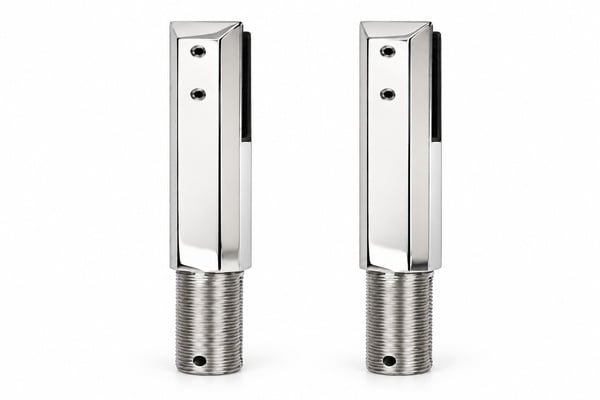
Catalogue illustration: Threaded-Shank Core-Drill Pool Fence Spigot — Polished silver appearance concept. Shown as a component reference, not an installation drawing or test result.
Put these details on the installation schedule
| Item | Required project information |
|---|---|
| Spigot | Model, material and embedded geometry |
| Core hole | Diameter, depth and location |
| Concrete | Relevant strength and condition |
| Grout | Exact product and current data sheet |
| Placement | Preparation, mixing and filling procedure |
| Curing | Temperature conditions and loading release |
| Water management | Surface finish and drainage detail |
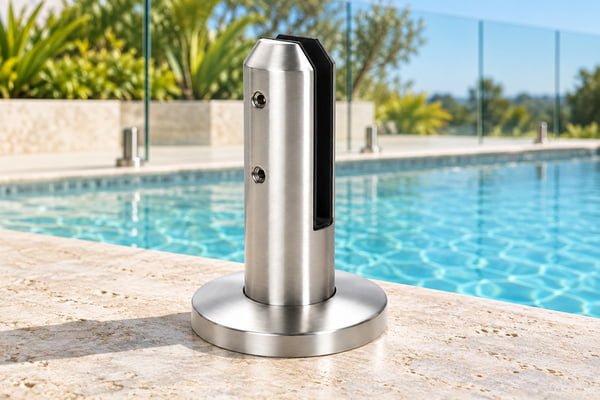
The base-plate versus core-drill comparison helps define the fixing concept. Product catalogues such as the CRL pool hardware range and glass pool fencing catalogue illustrate component arrangements, but the selected project’s fixing detail must govern.
Estimate quantity without inventing a fixing design
For a simple cylindrical hole and cylindrical embedded shank, theoretical grout volume is the hole volume minus the embedded shank volume. Use the approved dimensions and consistent units, then account for the actual profile and the manufacturer’s ordering guidance.
This calculation estimates material consumption; it does not establish hole diameter, embedment or capacity. Irregular profiles, bottom clearances and placement losses require separate consideration. Keep the quantity calculation with the drawing revision so a changed spigot does not inherit an obsolete estimate.
For anchorage design background, consult the relevant Hilti technical guides. An adhesive anchor’s published result cannot simply be applied to a different grouted spigot arrangement.
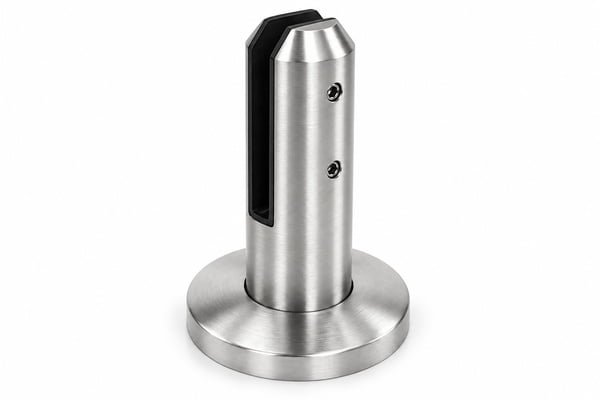
Catalogue illustration: Round Base-Plate Glass Pool Fence Spigot. Shown as a component reference, not an installation drawing or test result.
Coordinate water and corrosion
Review the spigot drainage guide before closing the detail. Surface falls, covers and grout finishing can affect where water remains. A neat decorative cover should not conceal an unresolved water-management problem.
Crevice corrosion guidance provides context for stainless interfaces exposed to retained moisture. The material decision belongs with the full environment and maintenance plan, not only with the visible finish.
Also check the anchor edge-distance checklist. Core drilling near an edge or existing reinforcement requires project-specific review. Do not move a hole on site simply to make a preferred spigot position convenient.
Establish the release-to-load hold point
Record placement time, product batch and relevant site conditions. The installer needs an explicit release criterion from the approved procedure before loading the connection or hanging associated glass. “Set hard” is not an adequate substitute for the product’s curing instructions.
Procurement should also check packaging size, storage conditions and the period within which the delivered material may be used. Match the delivery plan to the installation zones rather than opening every package at once. Record whether a product is supplied as a complete multi-component kit and preserve the manufacturer’s mixing instructions. Splitting a kit or changing the water addition to improve workability can change performance. Arrange the approved preparation equipment before the crew begins drilling, so installation is not delayed by a missing mixer or cleaning tool.
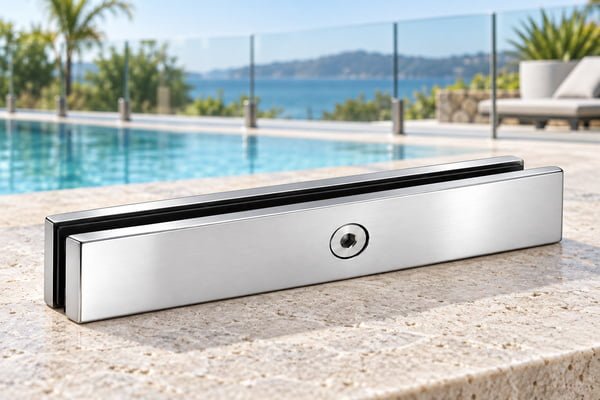
Catalogue illustration: Long Flat Glass Pool Fence Joiner — Polished silver appearance concept. Shown as a component reference, not an installation drawing or test result.
Questions for the purchasing meeting
Can grout be selected after hardware arrives? It is better to coordinate it before ordering, because an incompatible detail may require different geometry or a changed installation sequence.
Does strong grout prove pool barrier compliance? No. CPSC pool barrier guidance addresses broader safety considerations. Local requirements and complete-system review still apply.
What should the handover pack contain? Include the approved fixing detail, grout data, batch record and installation checks. Conformity assessment guidance helps identify the scope of each document.
Send the project section through the OEM enquiry route, review manufacturing capabilities, and request a coordinated spigot quotation. Include quantity, substrate details and programme constraints so pricing reflects the intended installation.