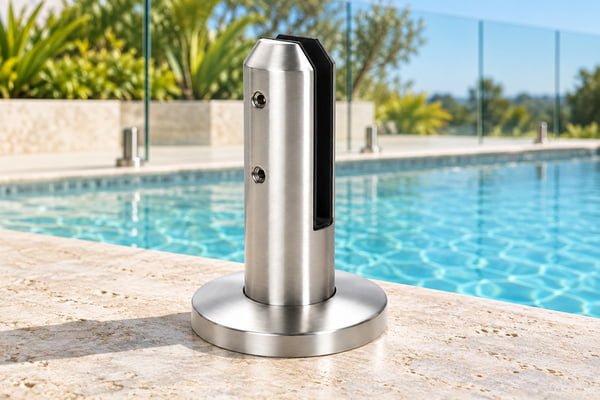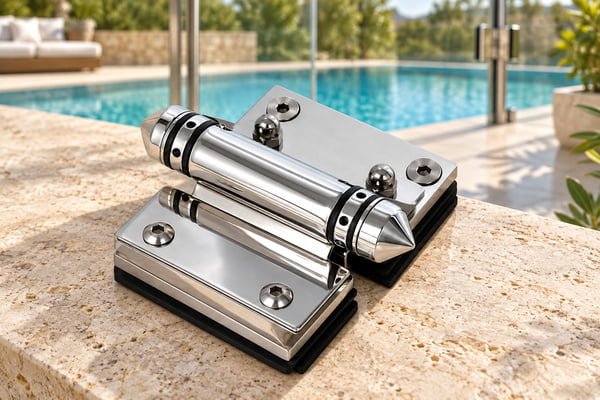
A mixed-brand pool gate assembly needs a review of the complete interface and operating requirements. Components that physically fit together are not automatically documented as a suitable combination. Confirm who accepts the assembly and what evidence supports its intended use before approving a substitution.
For contractors buying pool gate hardware, this is a responsibility and compatibility checklist. It is especially useful when a specified hinge or latch becomes unavailable during a project.
List the entire assembly
Identify the gate leaf, hinges, latch, striker, stops, supports and all relevant fixing components. Record the exact model and revision for each. A statement that both products are stainless steel says little about how they work together.
Manufacturer drawing and specification resources can establish dimensions and model requirements. Our hinge-and-latch compatibility guide explains why the relationship between components matters, not merely their individual descriptions.
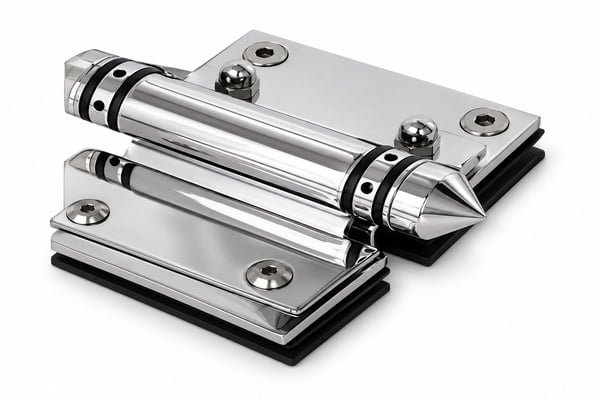
Catalogue illustration: Bolt-Plate Glass-to-Glass Pool Gate Hinge. Shown as a component reference, not an installation drawing or test result.
Review more than mounting holes
| Interface | Question before substitution |
|---|---|
| Gate geometry | Are width, mass and construction within the applicable limits? |
| Hinge operation | Does the approved closing action suit the gate? |
| Latch and striker | Are engagement and release conditions compatible? |
| Stops and supports | Is the intended movement controlled correctly? |
| Glass preparation | Does the supplied glass match the selected models? |
| Maintenance | Are instructions and replacement responsibilities clear? |
Use the exact product documents. The D&D FAQ is an example of manufacturer-specific support; it should not be treated as approval for another brand’s hardware.
Check the operating sequence
A gate may close through most of its movement but fail to latch consistently at the end. Review the interaction of hinges, seals or resistance, striker position and gate alignment under the approved conditions.
D&D’s latch-adjustment guidance illustrates one model family’s requirements. A CRL pool hardware catalogue describes another product range. Neither document, by itself, approves a combination of those products or an Elim component with either range.
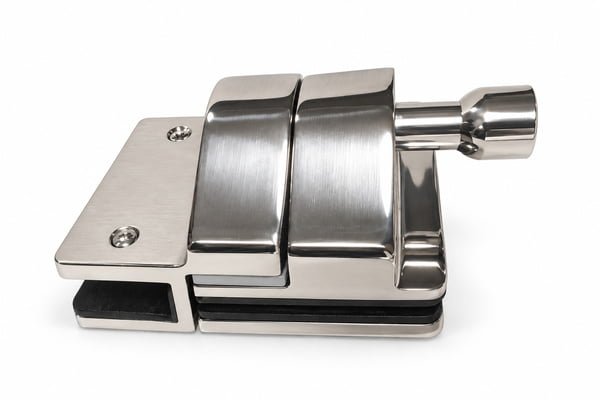
Catalogue illustration: Inline Glass Pool Gate Latch with Metal Housing. Shown as a component reference, not an installation drawing or test result.
Create a substitution record
Use the substitution-review checklist to state what changes and what remains unchanged. Attach the original requirement, proposed models, interface drawings and the responsible technical acceptance. Include any changes to glass preparation or maintenance instructions.
Do not rely solely on a distributor’s verbal statement that the replacement is equivalent. Ask for the scope of that statement and any evidence or exclusions. Purchasing should retain the final accepted configuration in the project record.
Identify the applicable requirements
Pool Safely provides general US pool-safety background. The project’s jurisdiction, occupancy and adopted rules determine the applicable requirements. ICC resources can help locate code material where relevant, but they do not certify an individual mixed assembly.
Accessibility or exit requirements may introduce additional considerations. The US Access Board door and gate guide is a reference within its scope. Ask the responsible designer to coordinate these requirements rather than assuming that pool suitability resolves every access question.
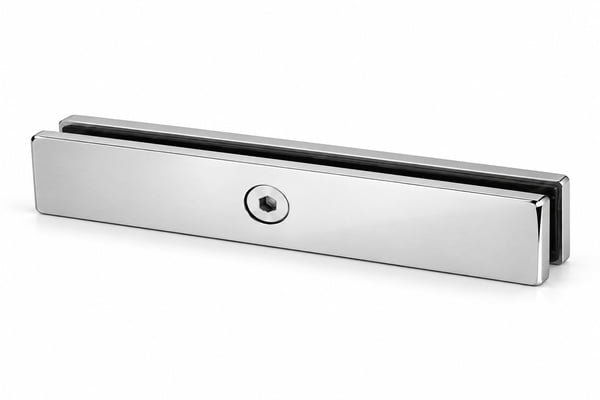
Catalogue illustration: Long Flat Glass Pool Fence Joiner — Polished silver appearance concept. Shown as a component reference, not an installation drawing or test result.
Test and document the accepted configuration
Use the approved closing-test and handover plan with the actual assembled gate. Record its model codes, installation conditions and results. A test on a different gate or with a different striker should not be presented as evidence for this configuration without a justified basis.
Conformity-assessment principles help separate inspection, testing and certification claims. A site check is valuable, but its result should be described accurately rather than expanded into a universal product approval.
Resolve warranty and service ownership
Ask which supplier covers which part and whether combining products affects the offered warranty. Identify the party responsible for investigating a system-level problem. Retain both installation manuals and a single maintenance schedule that resolves any conflicting instructions.
Is mixing brands always prohibited? That depends on the requirements and documented acceptance for the specific assembly. Do not assume universal approval or prohibition.
Can a successful trial replace documentation? It provides evidence for the tested conditions, but does not automatically resolve all design, regulatory or warranty questions.
Submit special interfaces through OEM review, confirm manufacturing capabilities, and send the complete gate schedule for quotation. A coordinated package makes substitutions visible before installation rather than after an operating problem appears.