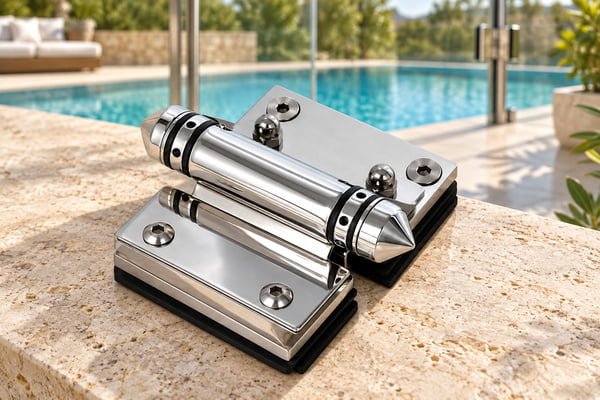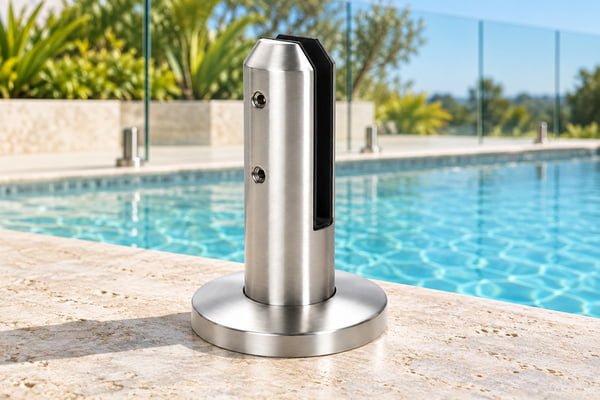
For a multi-site pool fencing order, treat each destination as a separately identifiable release within one controlled purchasing programme. A correct total quantity is not enough: each site needs the right revision, complete hardware sets and the documents required for its installation.
This playbook is for project buyers coordinating pool fence hardware across several developments. It focuses on preventing distribution errors rather than choosing a particular spigot or hinge.
Start with a site-release matrix
Create one line for each delivery zone or gate set. Separate confirmed quantities from forecasts. The minimum useful record includes site code, installation area, drawing revision, hardware codes, quantity, requested delivery date and receiving contact.
GS1 traceability principles provide a useful framework for linking identity and movement. You do not need to claim certification to use a clear identification system. Our hardware handover checklist explains which records should reach the installation and maintenance teams.
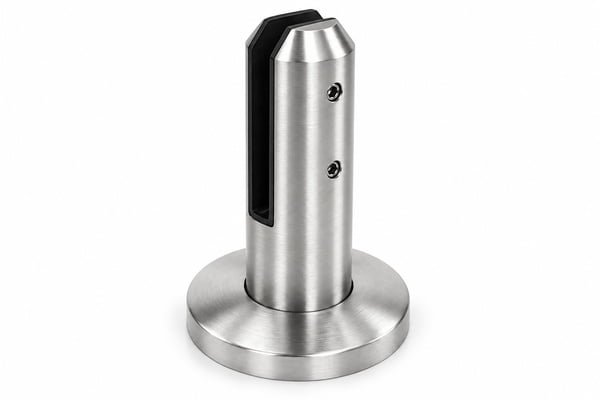
Catalogue illustration: Round Base-Plate Glass Pool Fence Spigot. Shown as a component reference, not an installation drawing or test result.
Count complete sets before cartons
| Release item | Example of information to record |
|---|---|
| Site A, gate 01 | Approved hinge and latch set codes |
| Site A, panel run 02 | Spigot and accessory quantities |
| Site B, gate 03 | Different approved handing or finish |
| Shared spares | Owner, storage location and issue record |
These are illustrative schedule entries, not actual Elim project data. Keep the set definition explicit: a carton of bodies without gaskets, covers or the specified fixings may be numerically correct but unusable for the planned installation.
Use separate identifiers when similar products have different finishes or interfaces. Avoid relying on carton colour alone, because packaging changes and poor lighting can make it unreliable.
Pack for the receiving sequence
Ask whether each site can unload, store and identify the proposed shipment size. A consolidated pallet may be economical at the factory but expensive to sort at a constrained site. Label both the outer shipment and the inner kits so that identity survives unpacking.
Review transport hazards using relevant ISTA procedures. At receipt, use a documented acceptance-sampling approach for the appropriate checks. Quantity reconciliation and technical inspection are different activities; completing one does not automatically complete the other.
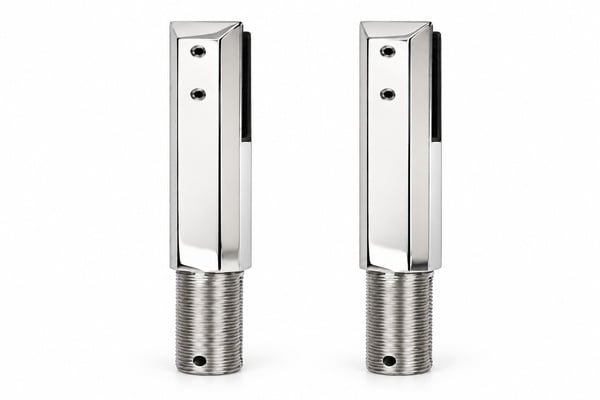
Catalogue illustration: Threaded-Shank Core-Drill Pool Fence Spigot — Polished silver appearance concept. Shown as a component reference, not an installation drawing or test result.
Control revisions during phased supply
A project revision should identify which sites and unreleased orders it affects. Mark superseded stock and obtain a documented disposition. Do not allow the newest drawing to silently overwrite the record of parts already installed elsewhere.
Manufacturer specification and drawing resources can support exact-model verification. The D&D FAQ is another example of product-specific support. Neither replaces a project-controlled bill of materials covering the actual supplied hardware.
Use the substitution approval checklist when a component becomes unavailable. Record whether the replacement affects glass preparation, mounting, finish or maintenance. Purchasing convenience alone is not sufficient approval for a changed gate assembly.
Handle shortages without losing traceability
When one site borrows stock from another, record the part code, quantity, originating batch and destination. Update both site balances immediately. Otherwise the programme can show enough total stock while repeatedly delaying individual installations.
Plan the spare-parts allocation separately from installation quantities. Identify who may authorize the use of service stock to cover a construction shortage and how that stock will be replenished.

Catalogue illustration: Long Flat Glass Pool Fence Joiner — Polished silver appearance concept. Shown as a component reference, not an installation drawing or test result.
Keep safety documents with the destination
Provide each site with the instructions applicable to its gate models and jurisdiction. Pool Safely offers general safety information, but a central programme binder is not a substitute for the correct installation and handover documentation at each location.
Use conformity-assessment principles to define which claims require inspection, test evidence or another form of review. Where dimensions are checked, retain a meaningful measurement record informed by NIST traceability guidance.
Weekly exception review
Track four exceptions: missing components, damaged goods, unresolved revisions and unapproved substitutions. Give each one an owner and a required decision date. A short exception list is more useful than a shipment report that marks every dispatched carton as complete.
Can all sites share one part number? Only if the specified item is genuinely identical. Add clear variant codes when finish, handing or interface changes.
Should spares travel with every release? Decide from the maintenance plan and storage arrangements rather than applying an unexplained percentage.
Discuss custom kits through OEM services, review supply capabilities, and request a phased-delivery quotation with the release matrix attached. That makes sorting, documentation and spare-stock responsibility part of the agreed scope.