Quick answer — pool fence hardware spare parts: Stock pool fence hardware spare parts by the installed parent model, glass thickness, component revision and kit contents. Keep hinge and latch replacements application-specific. Use actual demand and replenishment time to size stock, while separating sealed service kits from loose pads or fasteners.
This planning guide is for importers and installation businesses supplying pool fencing hardware. It connects purchasing with the service team that must identify a component months or years after the first shipment.
Build an installed-model register
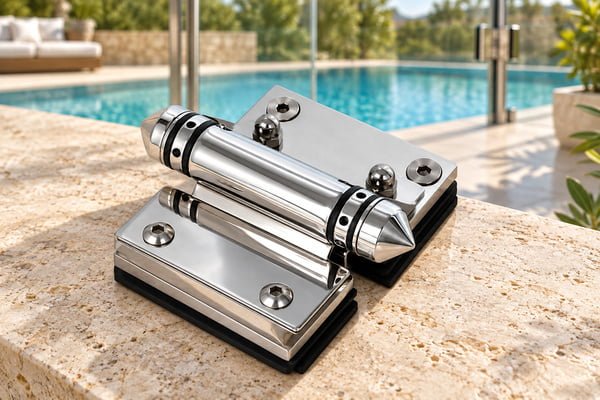
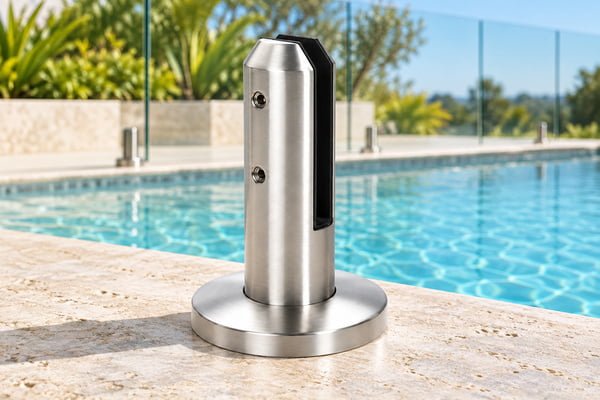
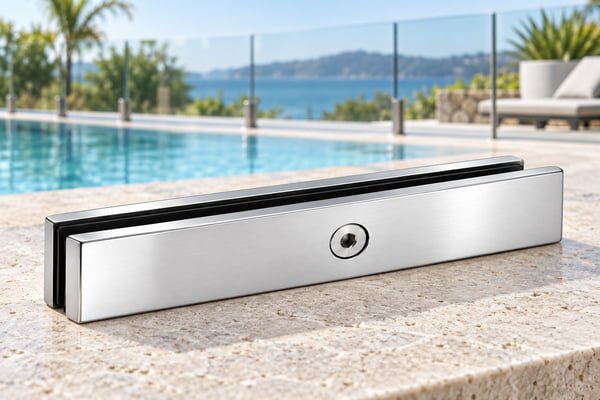
Elim catalogue comparison: The Elim hinge, inline latch and base-plate spigot references identify different service families. Their common pool-fence category does not establish interchangeable liners, fasteners or replacement functions. Catalogue references: glass-to-glass gate hinge, inline pool gate latch, base-plate spigot.
Buying decision: Prioritize parts by installed population, service demand and consequence of unavailability. A low-cost liner can prevent completion of a repair, while a visually similar spare hinge may be unusable. Track complete compatible service sets rather than only total pieces in a bin.
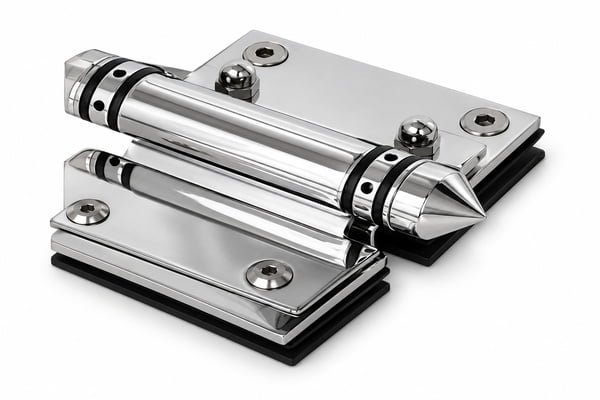
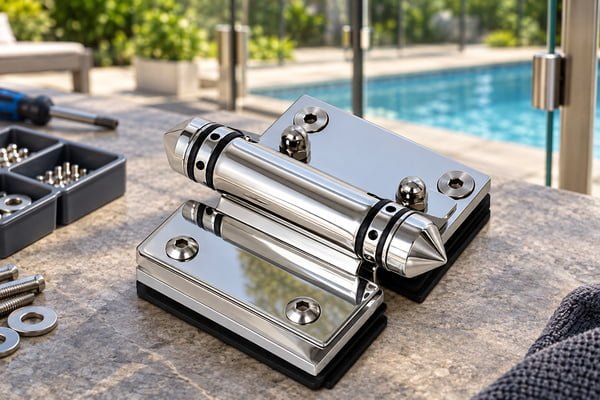
Catalogue reference: Bolt-Plate Glass-to-Glass Pool Gate Hinge.
Ask the supplier which parts can be ordered separately and which are supplied only as complete assemblies. Do not create a repair kit by dismantling a product unless the manufacturer’s instructions support that service method.
Separate stock by consequence and demand
Use three questions: how often is the part requested, how long does replenishment take, and what happens while it is unavailable? A low-cost accessory and a gate operating component may need different service priorities.
Use the CPSC pool-barrier guidance and NSW pool-owner requirements within their respective jurisdictions when defining the service escalation process. Stock availability should never become a reason to leave a required barrier function unresolved.
Keep the applicable glass requirements with the installed record; the AGWA glass-standard notice provides Australian context. A replacement fitting that changes glass preparation or assembly geometry needs review rather than an automatic stock substitution.
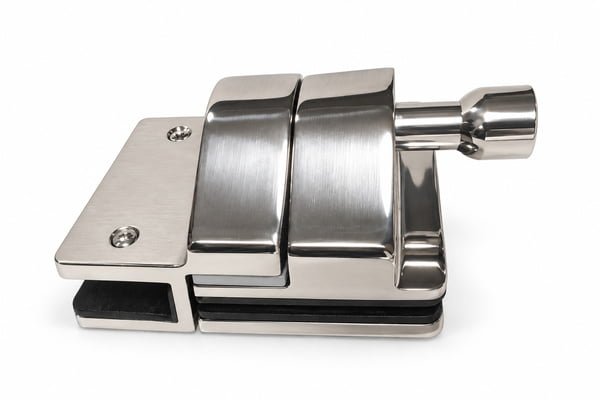
Catalogue reference: Inline Glass Pool Gate Latch with Metal Housing.
Which spare parts need a model-specific stock record?
Hinges, latch components and glass-contact liners should carry the parent model, compatible thickness and application. CRL’s GH180LBS demonstrates the risk of stocking by appearance: it lists 10 or 12 mm glass but explicitly excludes pool gates. Its dimensions cannot turn it into an approved pool-gate replacement.
| Illustrative spare-kit request | Keep separate in stock |
|---|---|
| 10 mm glass-contact set | Parent model and full set contents |
| 12 mm glass-contact set | Its own model-specific liner reference |
| Hinge or latch replacement | Exact application and matching components |
If five service kits each require two complete liner sets, reserve ten sets, not ten individual pads. Count broken packs separately from sealed kits. This helps a warehouse avoid issuing a visually similar part that fits a screw but changes the gate’s intended behaviour.
Source: CRL gate-hinge application warning. Reference checked 27 September 2026.
Request a matched quotation: Send installed model numbers and glass thicknesses to build a spare-parts list tied to the actual hardware..
Calculate stock from a stated assumption
The table below is a fictional planning exercise, not a demand forecast or an Elim lead-time promise.
| Planning input | Example |
|---|---|
| Average recorded demand | Four approved replacement items per month |
| Assumed replenishment period | Two months |
| Expected demand during replenishment | Eight items |
| Chosen planning buffer | Three items |
| Illustrative reorder point | Eleven items |
Count stock that is actually usable. Quarantined parts, unidentified revisions and items reserved for an existing service job should not be treated as freely available inventory.
Preserve the approval behind the replacement
Use the pool hinge and latch compatibility guide when planning a replacement operating assembly. Retain the accepted model configuration and installation information so a technician does not rely on a photograph alone.
Where fixing components are involved, follow the selected system’s instructions. Hilti’s technical guides provide examples of product-specific fastening documentation; they do not authorize reusing or substituting an unspecified anchor.
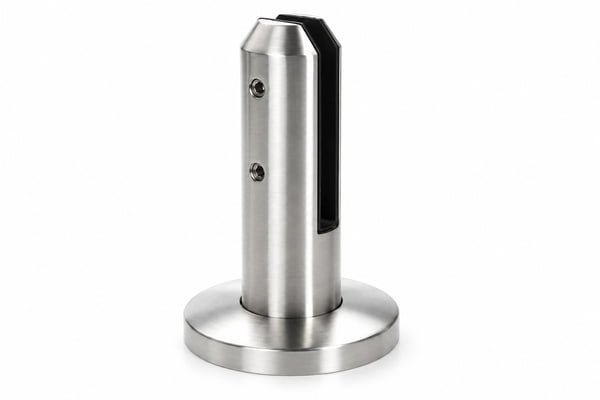
Catalogue reference: Round Base-Plate Glass Pool Fence Spigot.
Give the warehouse a reliable picking method
Use packaging that preserves small parts and finished surfaces. ISTA’s procedure overview can inform distribution-testing choices for replacement shipments. Align descriptions with export-document guidance, particularly when a parcel contains several different service items.
Plan maintenance information alongside stock
Provide care instructions for the actual material and finish. ASSDA’s tea-staining guidance explains environmental influences, while its cleaning discussion provides stainless maintenance background. Avoid promising that a replacement finish removes the need for inspection.
Continue the same project: Base-Plate vs. Core-Drill Pool Fence Spigots: What Buyers Should Specify covers the next related purchasing decision in this system.
Service-manager questions
Should every order include the same spare percentage? No. Base the policy on the installed range, recorded demand, replenishment assumptions and service consequence.
Can a similar latch replace an unavailable model? Only after the replacement configuration is confirmed for the actual gate.
Send the installed-model list, service history, required components and planning quantities through the spare-parts enquiry form. Request a model-by-model replacement schedule, including any items that must be supplied as complete assemblies.