Selection answer: Specify a pool gate hinge against the complete gate: width, verified weight, glass preparation, support arrangement, opening direction and closing requirements. A weight figure alone is not a selection rule. Pool-barrier acceptance also depends on the installed gate, latch and surrounding barrier under the applicable local requirements.
This guide helps project buyers prepare a useful enquiry for pool fencing hardware. It does not assign an unverified rating to a catalogue hinge or provide a universal pool-gate design.
Start with a gate schedule
Give every gate a location reference. Record its opening, leaf dimensions, glass specification, handle and latch, and the proposed supporting panels or posts. Ask the glass supplier for the finished leaf weight, including the hardware where relevant, rather than relying on a visual estimate.
Compare a glass-to-glass pool gate hinge with the actual support detail. The adjacent fixed panel and its supports are part of the load path. A stronger-looking hinge cannot compensate for an unreviewed supporting assembly.
Use the CPSC pool-barrier guidance to understand the safety role of the complete barrier. For a project in New South Wales, the owner-obligations guidance provides jurisdiction-specific context. Establish the actual destination requirements before purchasing; one market’s guidance is not a global certificate.
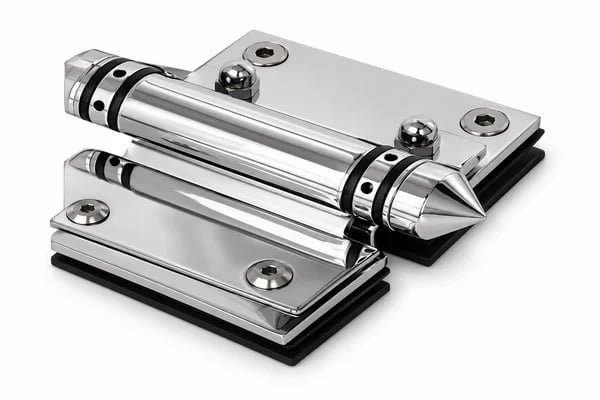
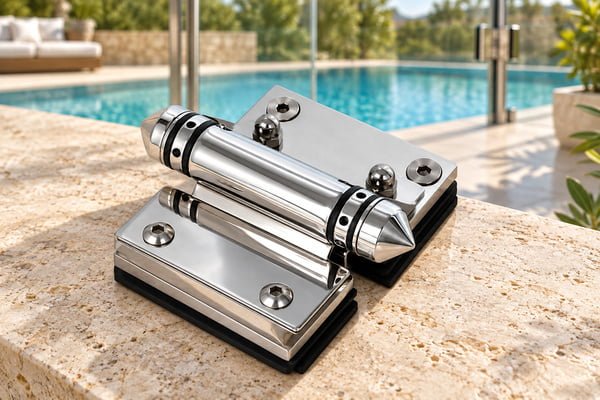
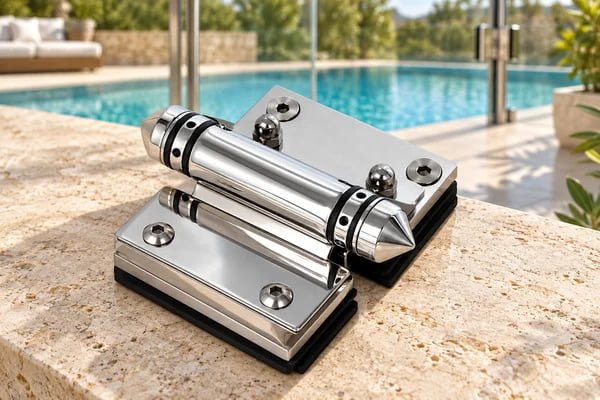
Product reference: Bolt-Plate Glass-to-Glass Pool Gate Hinge. Confirm the ordered configuration against its drawing.
Why width belongs beside weight
A wider gate can place the same weight farther from its support. As an illustrative comparison, a 30 kg leaf with its centre of gravity 0.4 m from the support has a different static moment from the same mass at 0.5 m. The second distance is 25% larger. This comparison is not a hinge-capacity calculation: actual forces, geometry and dynamic effects require the appropriate design assessment.
Ask the supplier for the permitted combination of gate dimensions, weight and hinge arrangement for the exact model. Do not extrapolate from a rating stated for another width or infer a doubled capacity by adding a second hinge.
| RFQ field | What to provide |
|---|---|
| Gate identity | Location and drawing revision |
| Leaf | Dimensions, glass specification and verified weight |
| Support | Post or fixed-panel detail and fixing arrangement |
| Motion | Opening direction, travel and required clearances |
| Closing system | Hinge/closer, latch and stop references |
| Evidence | Destination requirements and model-specific documentation |
The hinge and latch compatibility guide helps organize these fields. Pair the proposal with the intended pool gate latch, not a generic “standard latch” description.
Draw the opening before ordering glass
Show the hinge axis, latch side, approach route and nearby objects in plan. Identify whether the leaf can strike a wall, coping or adjacent panel. Ask the responsible designer to establish the stop and clearances; do not use contact between glass edges as a travel limit.
The CPSC tempered-glass alert is relevant when coordinating glass preparation. Resolve the approved cut-outs and holes before manufacture. Avoid a purchasing plan that assumes the installer can modify finished tempered glass to suit a different hinge.
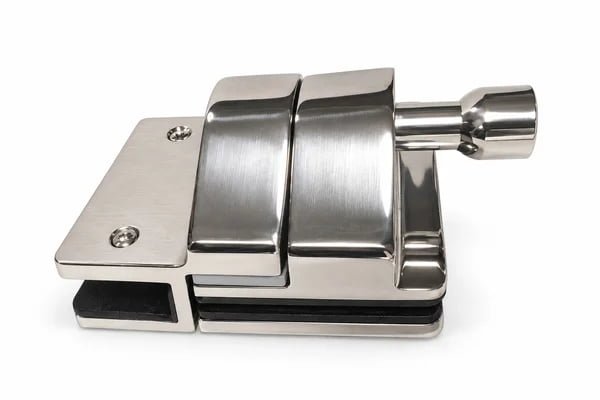
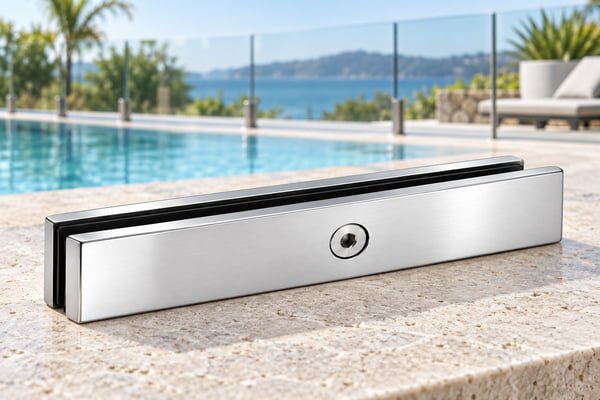
Product reference: Inline Glass Pool Gate Latch with Metal Housing. Confirm the ordered configuration against its drawing.
Separate material evidence from operating evidence
Specify materials and finishes for the hinge, fasteners and associated components. ASSDA’s grade-confirmation guidance supports material verification. Coastal-exposure guidance and tea-staining advice support environmental selection, but neither proves closing performance.
Ask what documentation applies to the exact supplied configuration and what site checks are required. Discuss available production and inspection scope through Elim’s manufacturing capabilities. Do not treat a general factory page as an independent test report.
Where mounting fixings are involved, consult the chosen fixing manufacturer’s data, such as anchor technical guides. The spigot mounting comparison provides related context for the fixed barrier, which must remain coordinated with the gate support.
Close the procurement loop with handover
Include model identification, installation instructions, adjustment instructions where applicable, maintenance information and replacement-part references in the order scope. The installer should record the required functional checks after installation under the relevant instructions and local requirements.
Stainless-steel cleaning guidance can inform care documentation, adapted to the actual coating and exposure. Avoid a fixed maintenance interval copied from an unrelated environment.
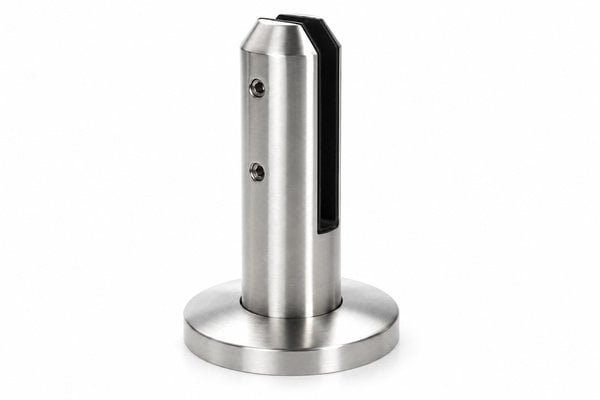
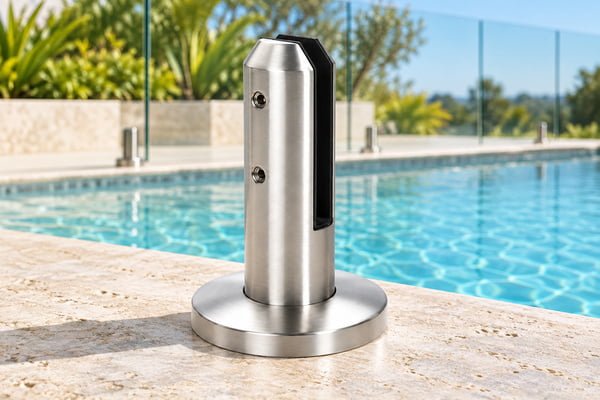
Product reference: Round Base-Plate Glass Pool Fence Spigot. Confirm the ordered configuration against its drawing.
Buyer questions
Can a weight rating alone approve the hinge? No. Confirm the permitted gate configuration and evidence for that model.
Can the latch be selected later? It should be coordinated before releasing the gate and glass details.
What if the catalogue lacks a rating? Request the necessary documentation before specifying it for the project.
Send Elim your gate schedule and destination requirements. Request a coordinated hinge-and-latch proposal with clearly stated scope and supporting information.