Quick answer — glass pool fence joiners: Order glass pool fence joiners with panel thickness, panel-to-panel gap, included angle and the selected connection’s function. Alignment hardware is not automatically structural support. Keep glass processing tied to the exact model so a gap dimension cannot be mistaken for the compatible glass thickness.
This pre-production memo is for glass processors and project buyers coordinating pool fencing hardware. The handoff should connect three records: the panel schedule, the selected fitting drawings and the project’s barrier requirements.
Memo item 1: define the joiner’s role
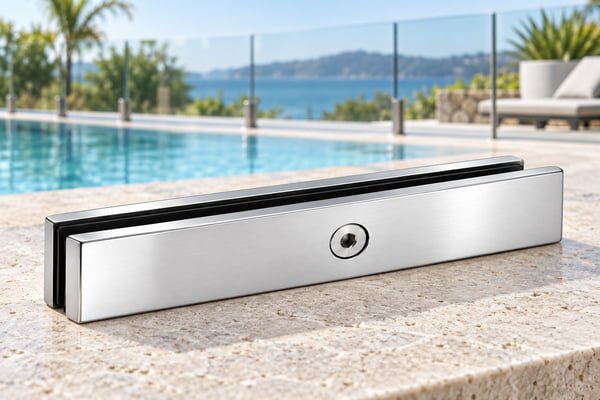
Elim catalogue comparison: Elim’s long flat joiner and two standoff examples use different product-family labels. The distinction helps purchasers avoid treating a point-fixing component as an inline joiner simply because both appear beside pool-fence glass. Catalogue references: long flat glass pool fence joiner.
Buying decision: Assign each fitting a role on the panel elevation: support, alignment or another specified connection. Compare only quotations covering the same roles. A cheaper alignment-only offer is not an alternative to a complete support-and-alignment package.
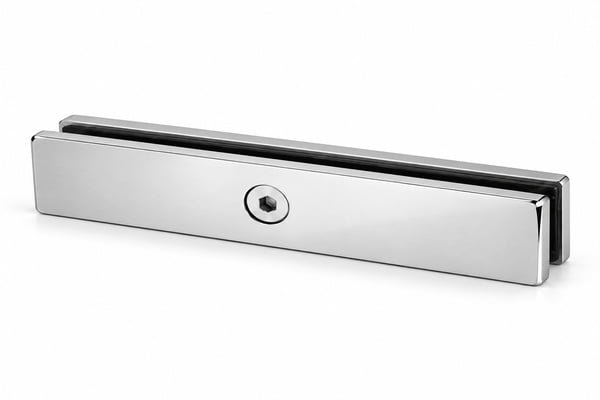
Catalogue reference: Long Flat Glass Pool Fence Joiner — Polished silver appearance concept.
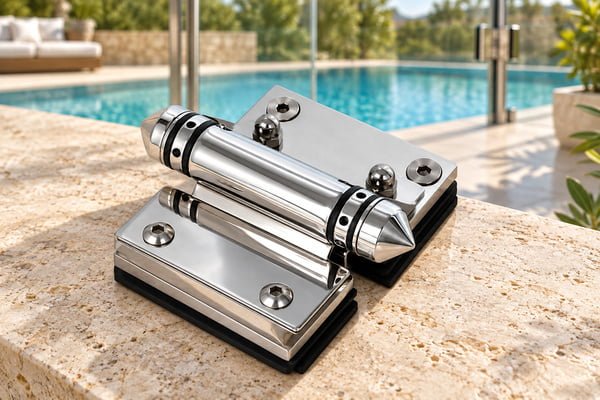
Do not infer that a joiner is a structural support, alignment aid or substitute for another fitting solely from its shape. The project drawing and product information should state the function explicitly.
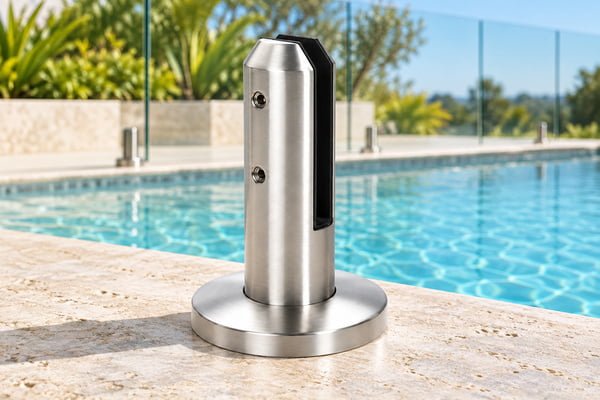
Separate a panel-to-panel connection from a connection to a building or support. A set-screw standoff and a slotted-face standoff illustrate different catalogue configurations. They are not presented as interchangeable joiners.
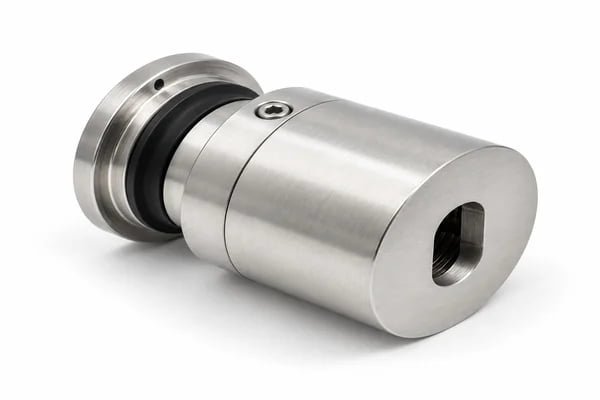
Catalogue reference: Set-Screw Glass Pool Fence Standoff.
Memo item 2: identify the applicable barrier framework
Record the project location and responsible reviewer. The CPSC residential pool-barrier guidance concerns US safety context; NSW owner obligations concern NSW requirements. Do not combine their details into an invented international specification.
For glass selection in Australia, the AGWA AS 1288 notice points to a relevant framework. The CPSC tempered-glass alert is separate safety information. Obtain the current requirements governing the actual project and keep them with the design review.
This memo does not set universal panel gaps, glass thicknesses or fixing distances. Those values belong to the applicable design and selected assembly, not a generic purchasing article.
Can a fitting for 10 mm glass be used on 12 mm pool panels?
Only if the exact fitting’s specification includes that thickness. Q-railing’s MOD 2200 reference lists 6–10 mm glass and separate rubber inlays. It is a clamp example, not a pool-panel joiner, and cannot be used to justify 12 mm compatibility or pool-system approval.
| Panel connection | Essential selection dimension |
|---|---|
| Inline joiner | Panel gap and glass thickness |
| Corner joiner | Included angle and compatible glass range |
| Point fixing | Hole geometry and complete isolation assembly |
For an illustrative 12 mm panel and 10 mm gap, write those as two separate dimensions on the enquiry. A 10 mm gap is not a request for 10 mm glass. Keep the connection’s role clear as well: a joiner that aligns adjacent panels is not automatically their structural support.
Source: Q-railing clamp glass-range example. Reference checked 27 September 2026.
Request a matched quotation: Send glass thickness, panel gap and corner angles before ordering processed glass or joiner hardware..
Memo item 3: link each fitting to a panel
The pool spigot comparison can help coordinate the support arrangement alongside the joiners. A change to the support layout may affect assumptions elsewhere in the panel schedule.
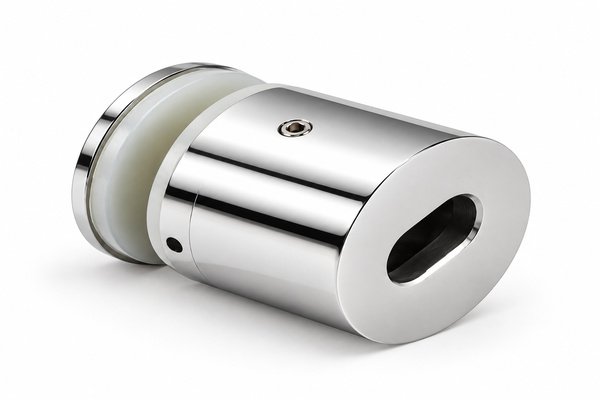
Catalogue reference: Slotted-Face Glass Pool Fence Standoff — Polished silver appearance concept.
Memo item 4: make the release decision visible
The following fictional handoff record shows how to prevent one unresolved connector from disappearing inside a general glass release.
| Handoff field | Example entry |
|---|---|
| Panel | G04, orientation shown on elevation |
| Connection | J02 at interface with G05 |
| Hardware document | J02 assembly drawing revision B |
| Glass document | Panel schedule revision D |
| Open issue | Supplier to confirm preparation template |
| Release | G04 affected work held pending review |
Memo item 5: include fixing and surface requirements
Where the arrangement connects to a substrate, obtain the selected fastening documentation. Hilti’s technical guides illustrate the system-specific nature of anchor information; a hole that accepts a fastener does not prove the fixing design.
State material and finish requirements separately. ASSDA’s tea-staining discussion supports environmental questions, and its cleaning guidance provides maintenance background for stainless surfaces. Neither certifies the pictured Elim components.
Before the glass order is released
Continue the same project: Sourcing Glass Pool Gate Hinges and Latches: A Compatibility Checklist covers the next related purchasing decision in this system.
Can a joiner be changed after glass processing? Only after reviewing the actual preparation, geometry and project requirements; appearance is insufficient.
Who owns the final interface decision? Name the responsible project parties in the handoff record rather than leaving it between suppliers.
Send the panel schedule, connection locations, model drawings, project jurisdiction and quantities through the pool hardware enquiry form. Ask for a returned interface schedule that makes every approval and outstanding item visible before manufacture.