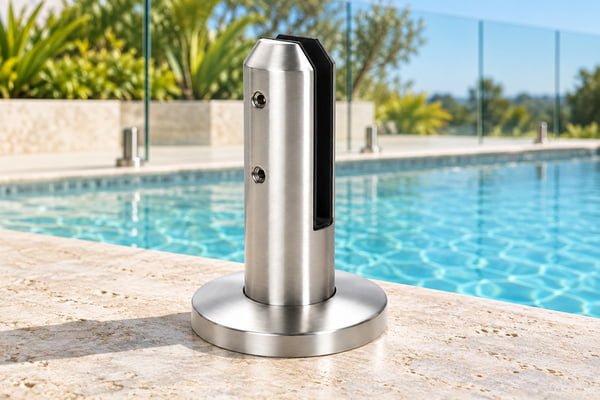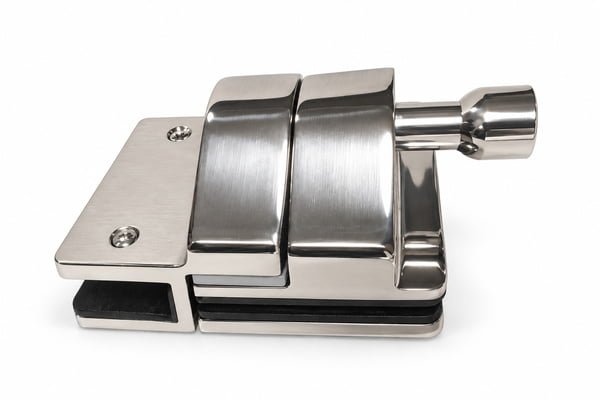
Choose a keyed or keyless pool gate latch by the required access operation and the approved gate application. A key cylinder adds an access-control function; it does not by itself demonstrate that the gate will self-close, self-latch or satisfy local pool-barrier requirements.
For distributors ordering pool fencing hardware, the useful starting point is a latch schedule. Identify the gate, users, operation from each side and the evidence applicable to the exact model.
Separate latching from locking
Latching retains the gate in its intended closed condition. Locking controls access according to the mechanism. Ask how the selected product behaves when unlocked, locked and released from either side. Avoid using the word keyless without explaining whether it means a non-locking latch or a coded access device.
D&D’s MagnaLatch Side Pull range provides a real example of lockable and non-lockable variants. Its application limits and instructions belong to those named products, not to every visually similar latch. The manufacturer FAQ is a useful source for model-specific questions.
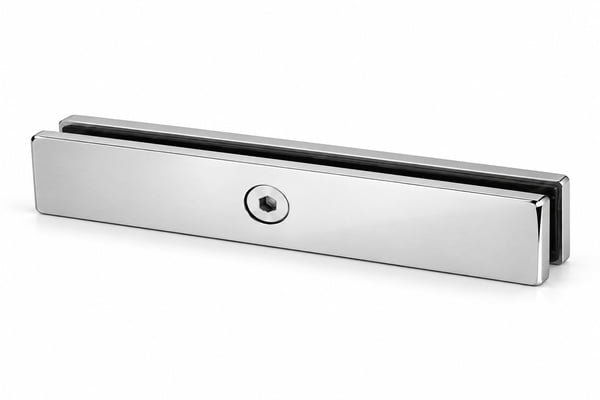
Catalogue illustration: Long Flat Glass Pool Fence Joiner — Polished silver appearance concept. Shown as a component reference, not an installation drawing or test result.
Compare the operating requirement
| Buying question | Keyed version | Non-locking version |
|---|---|---|
| Who controls access? | Requires a defined key arrangement | Relies on the specified release operation |
| Lost credentials | Needs a replacement-key procedure | No key inventory for that mechanism |
| Model approval | Verify exact variant and installation | Verify exact variant and installation |
| Maintenance | Include cylinder and latch checks | Include latch and release checks |
Do not treat this table as an approval matrix. The project designer and relevant authority determine the required arrangement. Our magnetic and mechanical latch comparison covers another choice; a magnetic mechanism can still have different locking options.
Fit the latch to the whole gate
Check gate thickness, gap, mounting interface, handing and striker relationship. A lockable variant may have different clearances or components from the item already stocked. Ask for the installation document for the exact code being ordered.
D&D’s adjustment guidance demonstrates the importance of striker alignment. Consult the manufacturer’s specification and drawing resources, then coordinate the latch-positioning review before glass preparation or fabrication is released.
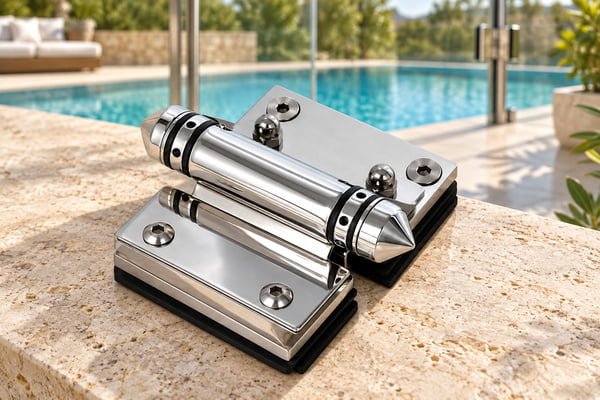
Catalogue illustration: Bolt-Plate Glass-to-Glass Pool Gate Hinge. Shown as a component reference, not an installation drawing or test result.
Keep pool safety and access rules distinct
The Pool Safely programme provides pool-safety background. Accessibility and exit requirements may introduce separate considerations, depending on the site. The US Access Board’s door and gate guide is a US accessibility reference, not a worldwide rule for every pool gate.
Confirm the applicable jurisdiction, occupancy and adopted requirements with the responsible professional. ICC’s code resources are one starting point where relevant. Do not publish a universal compliant height or lock arrangement without identifying the applicable rule and installation condition.
A required escape route deserves particular review. A key arrangement acceptable for one access purpose may be unsuitable for another. Resolve that coordination before buying a full batch of keyed-alike hardware.
Create a key and spare-part schedule
For keyed products, record whether keys are individual, keyed alike or part of a separately approved arrangement. State the quantity of keys supplied, custody at handover and the replacement process. Keep sensitive key information in controlled project records rather than public product descriptions.
For every version, list the latch, striker, fixings and approved spare components. Retain the manufacturer’s care instructions; Feeney’s warranty and care resources illustrate why maintenance documents belong to specific products and should not be transferred indiscriminately between brands.
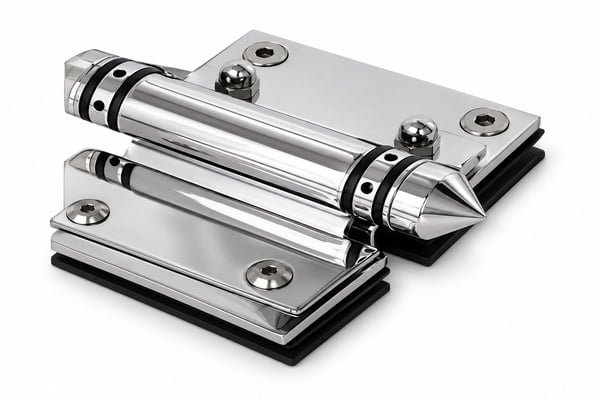
Catalogue illustration: Bolt-Plate Glass-to-Glass Pool Gate Hinge. Shown as a component reference, not an installation drawing or test result.
Handover checks
Use the approved closing and latching test plan to check the installed gate in its required operating states. Record alignment, release operation and any corrective action. A successful lock-cylinder test does not establish a successful gate-closing test.
Is keyless automatically more convenient? It removes key handling only when the chosen mechanism operates without keys. Other user and maintenance requirements still need review.
Can the lock option be changed later? Only if the manufacturer supports the change for that assembly. Similar housings do not prove interchangeable internals.
Submit special interfaces through OEM review, discuss manufacturing capabilities, and send the gate schedule with the enquiry. Quote exact model variants, not simply pool latch with optional key.