Resolve the latch position before releasing the glass: A pool gate latch must be coordinated with its mating panel or post, gate swing, access arrangement and the applicable pool-barrier requirements. A suitable latch cannot compensate for an incorrectly prepared glass panel or a gate that does not close as intended.
This design-review agenda is for buyers of pool fencing hardware. It brings the glass processor, gate installer and project reviewer into the same conversation. Specific dimensions must come from the selected hardware drawings and applicable local requirements, not from a generic blog diagram.
Meeting item one: identify the complete closing arrangement
Record the latch configuration, the gate hinge arrangement and the receiving component. Show the closed position and the complete opening path. Identify which parts are attached to moving glass and which remain fixed. Note obstacles that affect access or prevent the gate reaching its intended closed position.
Use the hinge and latch compatibility guide to define the assembly before discussing appearance. A catalogue image is useful for identification, but does not establish handedness, operating clearances or the permitted panel preparation.

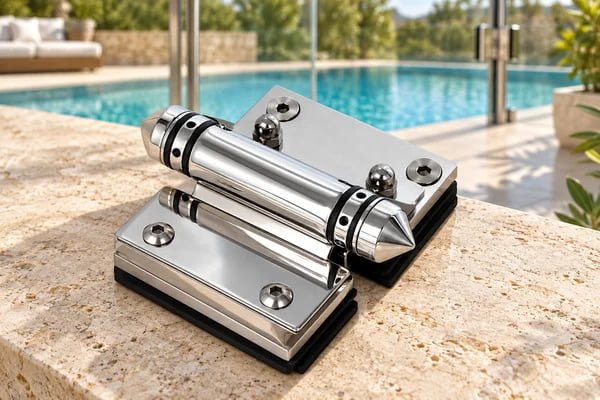
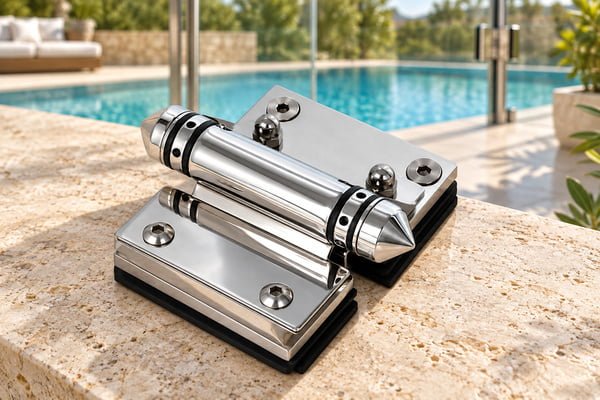
Product reference: Bolt-Plate Glass-to-Glass Pool Gate Hinge. Match the supplied configuration to the approved drawing.
Meeting item two: establish the applicable requirements
Pool barriers are safety-critical. The CPSC barrier guidance provides US safety guidance, while NSW pool-owner obligations illustrate a different jurisdiction’s framework. Neither should be copied into a project governed by different rules. Ask the responsible local professional to identify the applicable provisions and inspection process.
Prepare a compliance responsibility list. State who selects the latch, who approves the gate layout, who produces the glass and who verifies the installed barrier. A supplier’s general catalogue statement should not replace a documented project review.
Meeting item three: freeze the glass preparation
| Drawing field | Review before glass production |
|---|---|
| Hardware reference | Exact latch and mating part |
| Orientation | Moving side, fixed side and swing direction |
| Preparation | Approved hole or cutout drawing |
| Datum | Named edges and measurement points |
| Gaps | Closed and operating clearances |
| Revision | Same approved revision for all parties |
Send one coordinated drawing rather than separate screenshots with handwritten amendments. Check that the glass processor and installer use the same dimensions and orientation. CPSC’s tempered-glass alert explains why post-production modification is not a routine remedy for an incorrect preparation.
For an illustrative document check, compare the revision number on three records: hardware drawing, glass order and installation sheet. If two show revision B and one shows revision A, hold release until the discrepancy is resolved. This example concerns document control, not a tolerance or approved fitting dimension.
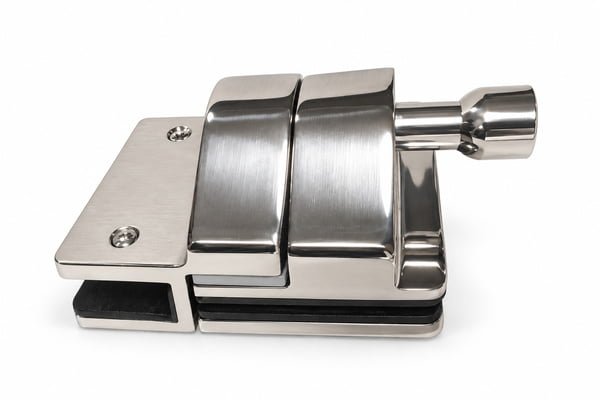
Product reference: Inline Glass Pool Gate Latch with Metal Housing. Match the supplied configuration to the approved drawing.
Meeting item four: review reach and closing clearance together
Operating position affects users, but convenience must not override pool-safety requirements. Check both sides of the gate and any reach path around or through the barrier. Review obstructions, adjacent surfaces and maintenance access with the person responsible for compliance.
Gate width and weight also affect the hinge selection and closing behaviour; use the gate-hinge selection brief to gather those inputs. Do not prescribe closing force, latch height or adjustment values without the applicable rules and selected hardware instructions.
Where the arrangement includes fixing into the building or deck, consult the relevant anchor technical documentation. Material identity can be supported by grade-confirmation methods, but a material certificate alone does not validate the installed gate’s operation.
Meeting item five: protect the approved arrangement
Specify the exposure and finish for all components, including fasteners and concealed parts. Coastal stainless guidance and tea-staining prevention help frame environmental questions. Provide cleaning instructions compatible with the supplied finish, using stainless cleaning guidance as a technical starting point.
Keep adjustment and replacement instructions with the handover documents. Record the installed latch and hinge references so maintenance staff can obtain compatible replacements rather than visually similar parts. After installation or later adjustment, arrange the verification required by the governing rules and system instructions.
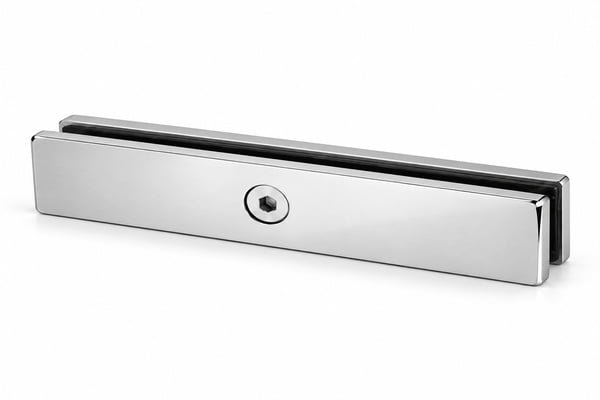
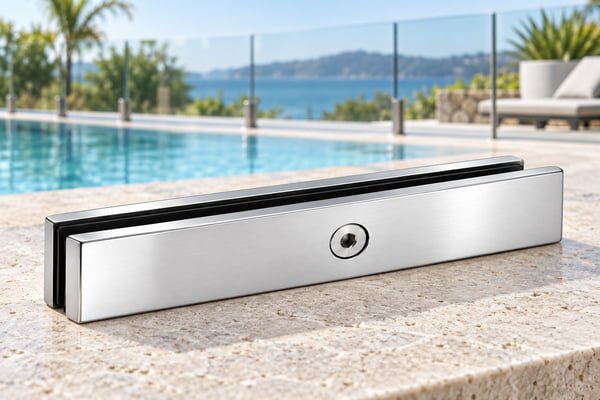
Product reference: Long Flat Glass Pool Fence Joiner — Polished silver appearance concept. Match the supplied configuration to the approved drawing.
Can the glass processor use a similar latch template? Only when the selected supplier confirms that the preparation is correct for the exact assembly.
Does a successful bench trial prove pool-barrier compliance? No. The installed gate and complete barrier require the applicable checks.
What should accompany the enquiry? Gate layout, glass information, receiving details, exposure and the identified project requirements.
Review customization through Elim’s manufacturing capabilities, then submit the coordinated gate schedule. Request confirmation against the selected component drawings before authorizing glass preparation or bulk hardware production.