Plan pool gate maintenance around use, exposure and the supplied hardware instructions. Seasonal opening and closing dates are useful scheduling milestones, but they do not replace checks needed during normal operation or after an incident. Reliable closing and latching remain the central operational questions.
This planning guide supports facility teams maintaining pool fencing hardware. It does not prescribe one inspection interval for every pool; the responsible operator should apply local obligations and the selected manufacturer’s instructions.
Before the busy season
Identify every gate and its installed hinge, closer and latch models. Confirm that the available instructions match those parts, including any replacements made since the previous season.
The CPSC pool barrier guidelines explain the role of the barrier and its gate. NSW owner obligations illustrate another jurisdiction’s responsibilities. Apply the requirements for the actual location rather than treating a seasonal checklist as a universal compliance certificate.
Use the closing-test handover guide to organize records. Check the gate’s required operation using the relevant procedure, and address faults through competent personnel before relying on it as a functioning barrier.
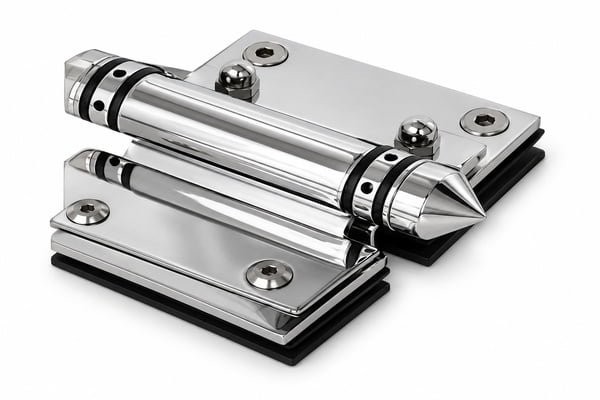
Catalogue illustration: Bolt-Plate Glass-to-Glass Pool Gate Hinge. Shown as a component reference, not an installation drawing or test result.
Create a condition-based calendar
| Planning point | Focus | Record |
|---|---|---|
| Before increased use | Identity, condition and required function | Baseline inspection |
| During operation | Checks required by the maintenance plan | Dated observations and actions |
| After impact or severe exposure | Damage and changed operation | Incident-linked review |
| Before reduced use | Cleaning, access and future checks | Handover to the next responsible person |
These are planning categories, not fixed legal intervals. A quiet season does not make a pool barrier irrelevant if the pool remains accessible.
Avoid adjustment by habit
D&D’s FAQ shows that hardware adjustment and permitted configurations are product-specific. Use the instructions for the actual model rather than repeating a setting that worked on another gate.
If the latch no longer engages, inspect alignment and obstruction before assuming the closer needs more force. D&D’s MagnaLatch adjustment guidance is a named-product example. It is not an instruction for unrelated latches.
For closers, SureClose product information illustrates another defined hardware family. Keep mechanism identification and instructions together so maintenance staff do not confuse spring adjustment with a different type of control.
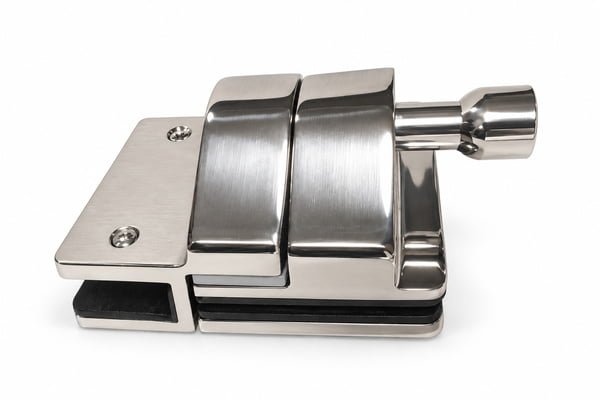
Catalogue illustration: Inline Glass Pool Gate Latch with Metal Housing. Shown as a component reference, not an installation drawing or test result.
Cleaning is part of the plan
Record permitted cleaners, methods and areas that require access. ASSDA’s exterior stainless cleaning guidance provides background, while the chemical compatibility article explains what to ask before introducing a cleaning product.
For exposed sites, IMOA’s coastal salt guidance helps frame environmental questions. Salt deposits, pool chemicals and an incorrectly selected cleaner are not the same condition; maintenance records should distinguish what was observed and what treatment was used.
Do not use appearance alone to conclude that a moving mechanism is serviceable. A polished hinge can still require functional attention, while a surface mark needs assessment rather than an immediate assumption about failure.
Assign responsibility explicitly
An illustrative facility record might identify Gate P-01, its model codes, the person completing the check and the next action owner. The important feature is a traceable responsibility chain, not the particular label format.
Use traceability principles to link replacement parts with the gate record. Keep photographs and instructions accessible to the team that actually performs maintenance, rather than only in the original procurement file.
Separate repair from a warranty discussion
Review the warranty checklist for the documents a supplier may request. A commercial claim should proceed alongside appropriate site action, not delay a response to a gate that is not functioning as required.
Prepare for staff changes
Name a backup responsible person and explain where records, instructions and spare-part codes are stored. If an outside contractor performs the work, require a report that identifies the gate and action taken. A seasonal plan is only useful if the next person can distinguish completed work, outstanding faults and routine observations without reconstructing the history from informal messages.
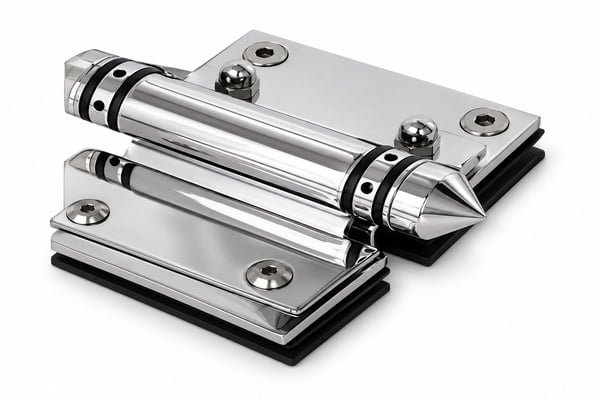
Catalogue illustration: Bolt-Plate Glass-to-Glass Pool Gate Hinge. Shown as a component reference, not an installation drawing or test result.
Before ordering replacements, confirm compatibility with the installed arrangement. Discuss unusual parts through OEM review, check available manufacturing support, and request an identified replacement kit. A good seasonal plan leaves the next operator with clear model information, maintenance records and unresolved actions, rather than only a ticked calendar box.