A cleaning product must be compatible with the complete pool fence assembly. Review the metal, coating, gasket, sealant and glass, along with the product concentration and application instructions. A cleaner suitable for one surface is not automatically suitable for the neighbouring hardware.
This maintenance briefing is for facility managers responsible for pool fencing hardware. Its purpose is to turn a vague instruction to clean regularly into a documented, repeatable process.
Build a materials list before a cleaning list
Identify the installed finishes and contact materials from the supply records. Do not rely on colour alone to distinguish stainless steel, plated parts or coated components. Keep the cleaning instructions supplied for each identified product.
ASSDA exterior stainless cleaning guidance provides useful background and cautions against hydrochloric-acid brick cleaners. Its indoor stainless cleaning resource is another reference, but the selected process still needs to suit the installed assembly and operating conditions. Do not mix cleaning products or improvise chemical treatments.
| Maintenance record | What to specify |
|---|---|
| Surface | Identified material and finish |
| Product | Exact cleaner and current instructions |
| Method | Application, removal and rinsing as specified |
| Restrictions | Adjacent materials and prohibited uses |
| Record | Date, condition observed and action taken |
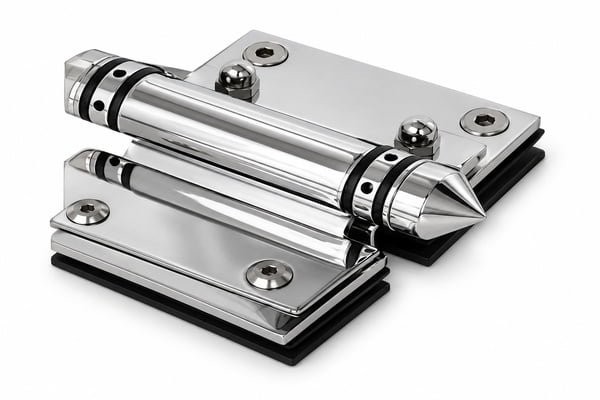
Catalogue illustration: Bolt-Plate Glass-to-Glass Pool Gate Hinge. Shown as a component reference, not an installation drawing or test result.
Separate pool water from cleaning chemicals
Exposure to pool water does not prove compatibility with a concentrated cleaning agent. Read our saltwater pool hardware guide and the IMOA coastal stainless guidance for exposure context. Conditions at sheltered joints can differ from open surfaces that are washed frequently.
The ASSDA surface finish resources also help identify how appearance relates to the surface treatment. Obtain the coating or plating supplier’s care instructions where those finishes are used. A method recommended for bare stainless should not be assigned to a decorative finish without checking.
Remember the less visible materials
Gaskets and seals may react differently from the metal. The Parker O-Ring Handbook provides general elastomer reference information; it does not identify the material in an unknown pool fence gasket. Obtain the actual component specification before drawing a compatibility conclusion.
Check the spigot drainage guide when planning rinsing and inspection. Cleaning should not leave residue in inaccessible pockets or obstruct designed water paths. The procedure must address the installed detail rather than only the accessible front face.
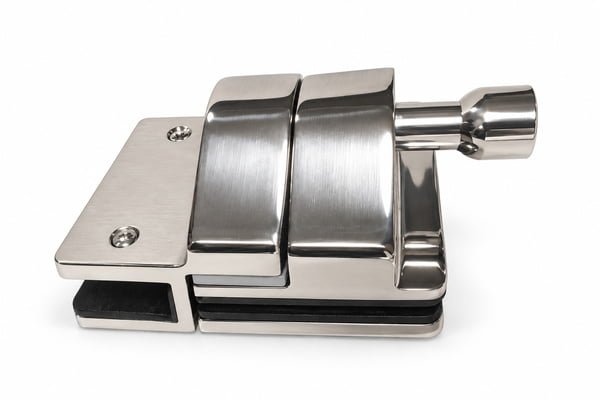
Catalogue illustration: Inline Glass Pool Gate Latch with Metal Housing. Shown as a component reference, not an installation drawing or test result.
Approve the method before routine use
The facility team should obtain the relevant supplier instructions and check them against the cleaner label and safety documentation. Where a compatibility assessment is needed, arrange it with the responsible supplier or specialist. An informal hidden-area appearance check is not proof of long-term material compatibility.
If the finish or component is unidentified, pause the proposed chemical treatment and recover the records. Discuss replacement or identification needs through OEM/ODM support, and review the relevant manufacturing capabilities for any replacement item being considered.
Keep safety operation in the maintenance visit
Cleaning and barrier operation are related maintenance tasks, but one does not replace the other. The CPSC barrier guidance and NSW pool safety information provide their respective safety context. Follow the applicable requirements and the hardware instructions for operational checks.
Use our handover checklist to retain product identities and care information. Record changes in the selected cleaning product so a new contractor does not unknowingly apply a different formulation under a familiar trade name.
When appointing a new cleaning contractor, transfer the current hardware and finish register together with the care instructions. Ask the contractor to identify its proposed products before work begins. Record any approved changes, and keep an escalation route for unknown stains or damaged finishes. This makes continuity possible even when the personnel performing routine maintenance change.
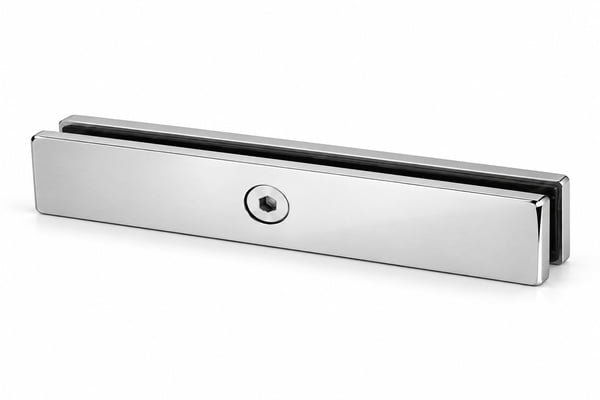
Catalogue illustration: Long Flat Glass Pool Fence Joiner — Polished silver appearance concept. Shown as a component reference, not an installation drawing or test result.
The NIST conformity assessment overview helps keep claims precise. A maintenance log records actions and observations; it is not a corrosion test certificate. If damage is found, photograph it, identify the affected component and obtain an appropriate assessment rather than assuming every stain is only cosmetic.
A practical service brief
Specify who cleans the barrier, which instructions apply and how defects are reported. Keep the plan accessible to replacement staff. Review it when hardware, finishes or cleaning products change.
What should we send for assistance? Component codes, finish records, cleaner identity, exposure details and photographs of the condition. Submit those details so the enquiry concerns a defined compatibility question instead of an unidentified silver fitting and an unspecified pool cleaner.