Saltwater pool hardware should be selected through an exposure review, not a promise that one stainless grade is corrosion-proof. Material identity, surface condition, drainage, cleaning and every small component belong in the purchasing specification. This environmental checklist is for pool contractors and importers.
Describe the exposure accurately
A poolside fitting may encounter splashing, drying deposits, cleaning products and sheltered crevices. Its conditions are not described completely by the words outdoor or saltwater. Record whether the site is also coastal, whether fittings are sheltered from rain and how maintenance will be performed.
IMOA’s coastal guidance and ASSDA’s tea-staining resource provide useful stainless-steel background. Neither is a warranty for an unspecified fitting. Review the selected pool fencing components against the actual environment and supplier documentation.
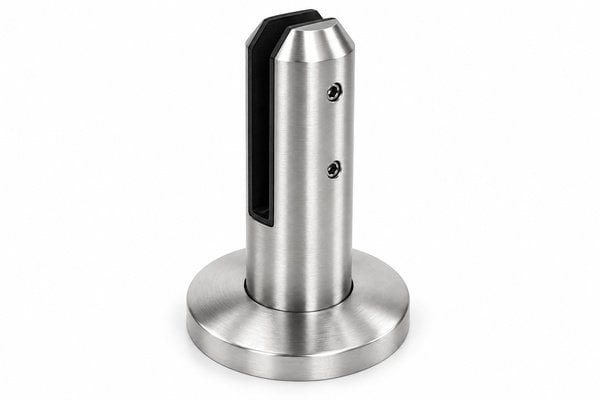
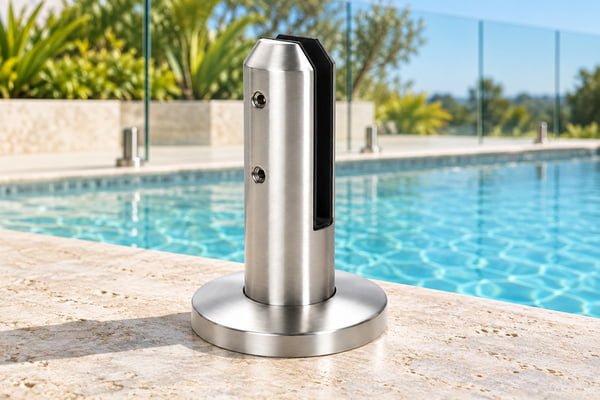
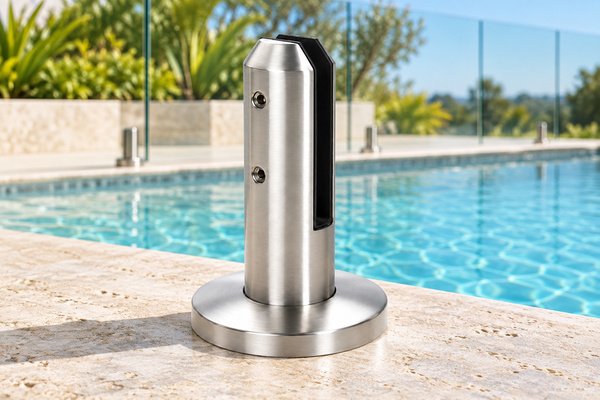
Catalogue illustration: Round Base-Plate Glass Pool Fence Spigot. Shown as a component reference, not an installation drawing or test result.
Review the complete kit
| Item | Question for the quotation |
|---|---|
| Main body | What material and finish are supplied? |
| Fasteners and pins | Are their specifications separately identified? |
| Springs or internal parts | What environmental and maintenance information applies? |
| Gaskets and sleeves | Are materials compatible with the intended exposure? |
| Covers and bases | Can water and deposits collect behind them? |
| Care instructions | Who provides the cleaning and inspection procedure? |
Our 316 stainless pool-project guide provides a starting point for the grade discussion. Do not infer that every item in a kit shares the body material. Ask the supplier to identify components with different materials or service requirements.
Look for water traps in the detail
Review base covers, deck interfaces and sheltered gaps. A visually clean cover can conceal retained water or deposits. Our spigot drainage guide helps coordinate that discussion with the mounting arrangement.
Do not drill drainage holes or remove seals without review of the approved detail. The issue is to specify a suitable assembly, not to improvise modifications that could affect the fixing or barrier. Capture the agreed detail on the purchasing drawing so it survives substitution and site changes.
Mixed metals require their own review
Where dissimilar metals are connected, evaluate the interface and environment. The ASSDA galvanic-corrosion guide explains the mechanism and separation considerations. A stainless body does not eliminate every issue associated with adjacent metal, fasteners or wet contact surfaces.
For custom interfaces, use OEM development with the full section drawing. The manufacturing capabilities page provides process context; require the quotation to identify the actual materials and finishing scope for the order.
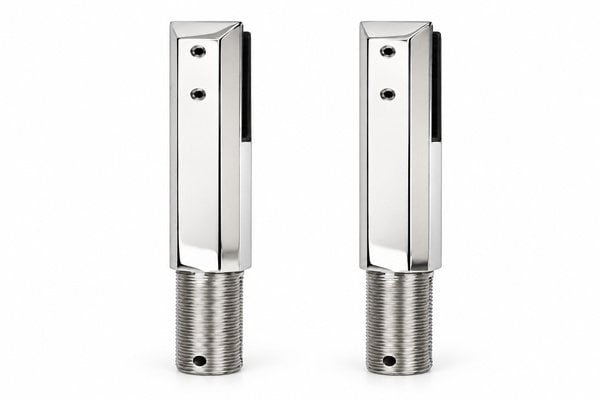
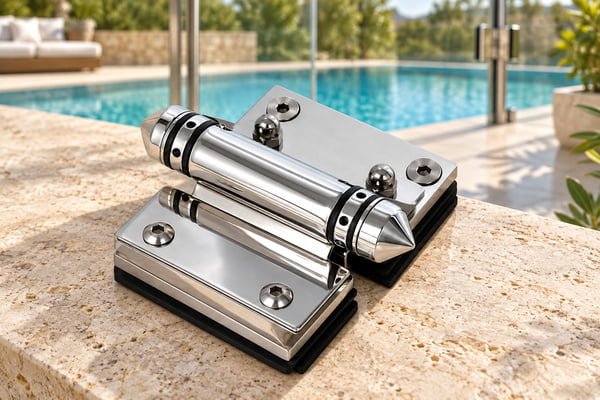
Catalogue illustration: Threaded-Shank Core-Drill Pool Fence Spigot — Polished silver appearance concept. Shown as a component reference, not an installation drawing or test result.
Specify maintenance as a deliverable
The ASSDA exterior-cleaning guide offers background, but obtain instructions suitable for the complete supplied assembly and adjacent finishes. Agree who receives those instructions and how replaceable components are identified.
For example, a handover register can list each gate and spigot zone, its component codes, inspection responsibility and the applicable care-document revision. This is an organisational example, not a universal cleaning interval. The required frequency depends on exposure, usage and the manufacturer’s instructions.
Do not let corrosion review obscure gate safety
The gate must still satisfy the applicable barrier requirements. The CPSC pool-barrier guide and NSW pool-safety information provide relevant context for their respective settings. Determine which requirements apply at the project location.
Use our pool hardware handover checklist to preserve the approved configuration and required gate checks. A clean appearance does not prove proper closing or latching, and a functioning gate does not establish that every material is suitable for the environment.
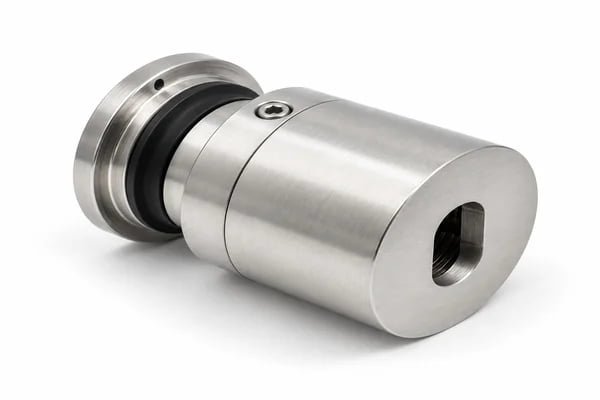
Catalogue illustration: Set-Screw Glass Pool Fence Standoff. Shown as a component reference, not an installation drawing or test result.
Read test claims within their limits
A supplier may provide salt-spray results. ASTM B117 identifies a laboratory practice; request the specimen identity, conditions and acceptance criteria rather than accepting only a number of hours. Do not turn exposure hours into years of outdoor service by an invented conversion.
NIST’s conformity-assessment overview helps separate material documentation, inspections and test evidence. Ask what the evidence actually covers, including whether the specimen was a flat coupon or the assembled fitting.
Is a higher alloy grade the whole solution? No. Selection should address the complete environment, design and maintenance arrangement, with product-specific support.
To request saltwater-pool hardware, send the site exposure, water-treatment context, mounting details, materials requested, quantities and maintenance expectations. Ask for explicit qualifications and exclusions so the quote can be reviewed before the order is released.