“Left-hand latch” is an incomplete order description unless both buyer and supplier use the same viewing convention. Record the viewing side, hinge position, opening direction and exact latch configuration on a labelled drawing. This question-and-answer guide is for distributors handling mixed gate schedules.
Why do left and right cause disputes?
Stand on opposite sides of a gate and the apparent hinge side changes. A photograph can also be mirrored, cropped or taken from an unspecified side. Written shorthand becomes unreliable when a supplier applies a different convention.
Begin with the relevant pool fencing hardware range, then ask for the model’s handing instructions. The D&D specifications and drawings library is an external example of product-specific documentation. Do not assume an Elim component uses the same adjustment or reversal method as the illustrated third-party product.
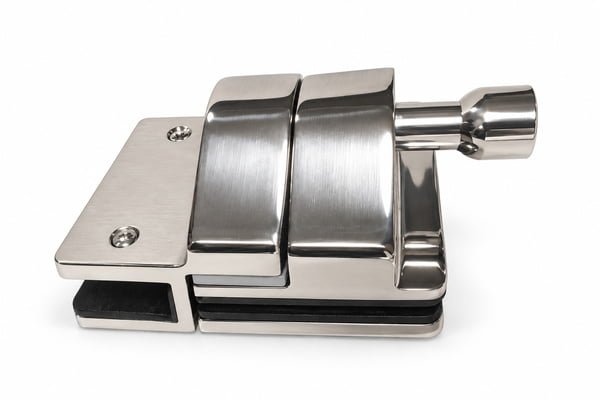
Catalogue illustration: Inline Glass Pool Gate Latch with Metal Housing. Shown as a component reference, not an installation drawing or test result.
What should the order drawing show?
Use a plan and a simple elevation. Label the pool side and approach side, mark the hinge side from the named viewpoint, and add an opening arrow. Identify the latch body and striker separately, especially where they mount on different materials.
| Schedule field | Clear entry |
|---|---|
| Gate identity | Unique location or gate number |
| Viewing convention | Named side shown on the drawing |
| Hinge location | Left or right from that named side |
| Movement | Arrow and intended opening direction |
| Latch configuration | Exact model, body and striker arrangement |
| Mounting interface | Post or glass detail and drawing revision |
For an illustrative order containing eight gates of one orientation and four of another, create two schedule rows tied to drawings. Do not order twelve “universal” latches unless the selected model is documented for both arrangements and the required configuration procedure is supplied.
Is a reversible latch automatically suitable?
No. Reversibility answers one configuration question. It does not establish compatibility with the gate gap, mounting face, glass preparation, required release arrangement or barrier rules. Our latch-positioning guide covers the related geometry questions.
The CPSC pool-barrier guide, NSW pool guidance and Pool Safely information provide safety context. They are not interchangeable jurisdictional approvals. Identify the project’s applicable requirements before selecting the release and installation arrangement.
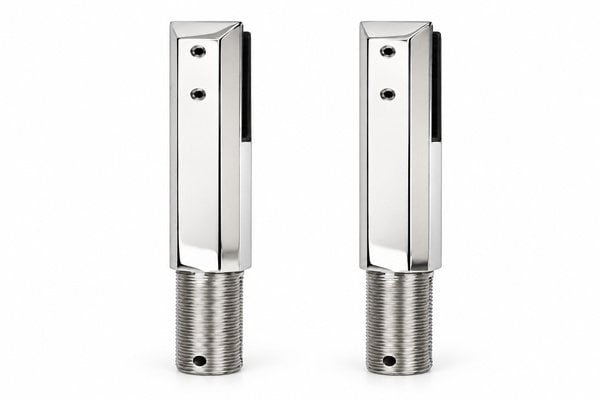
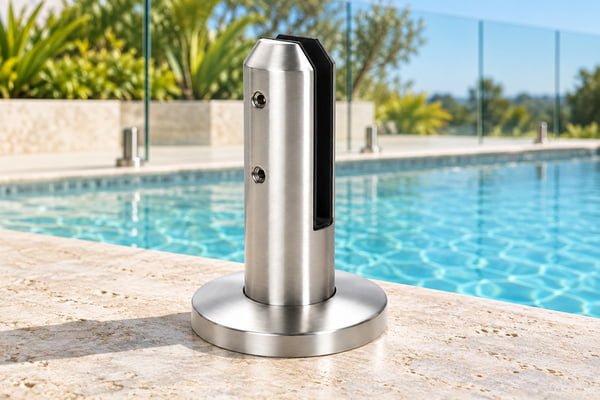
Catalogue illustration: Threaded-Shank Core-Drill Pool Fence Spigot — Polished silver appearance concept. Shown as a component reference, not an installation drawing or test result.
How should hinge and latch information connect?
Keep the hinge identity on the same gate schedule. The gate must move into the position required for the latch to engage, without relying on a compensating installation that conflicts with the hinge instructions. Our hinge width and weight guide helps structure the gate inputs.
The D&D closing-system example illustrates why model-specific instructions matter for movement. It does not certify a mixed-manufacturer assembly. If a substitution changes the gate position or gap, review the complete interface rather than accepting the substitute because its finish matches.
What measurements should be recorded?
Record the relevant mounting-face dimensions, gate gap and approved fixing geometry with named datums. State whether measurements are taken at the closed position. A gap described only as “approximately right” is not a procurement specification.
NIST traceability guidance supports the measurement discussion. The CPSC tempered-glass alert is relevant to fabrication changes: do not plan field drilling of finished tempered glass to correct a handed-order mistake. Resolve the glass drawing before production.
For changed mounting details, discuss OEM development with the drawings attached. Use the manufacturing capabilities page to identify the relevant process scope, while keeping installation approval with the responsible project team.
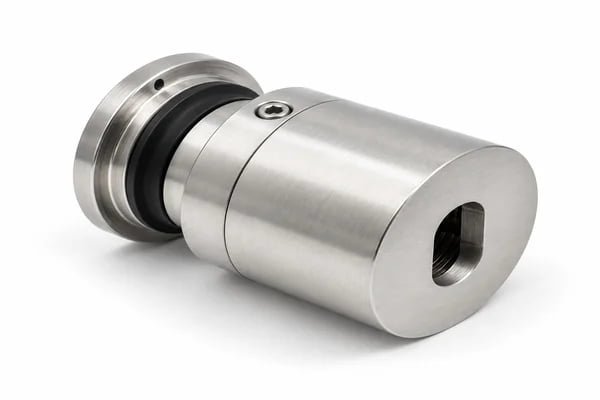
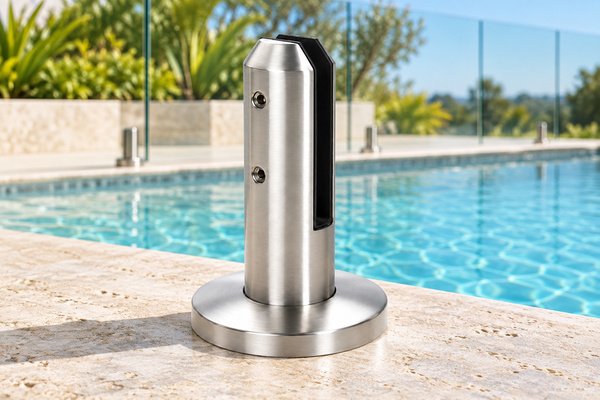
Catalogue illustration: Set-Screw Glass Pool Fence Standoff. Shown as a component reference, not an installation drawing or test result.
How should the shipment be labelled?
Put the gate number and drawing reference on each kit. Include the matching striker and any configuration-specific small parts. If installers must reverse or adjust a component, provide the exact instructions and identify who is responsible for that step.
ISTA packaging procedures offer a framework for protecting the kit in distribution. Labels should remain readable after unpacking so parts from adjacent gates are not mixed during installation.
What is the final acceptance check? Verify the installed configuration against the approved schedule, then perform the required closing and latching checks. Our pool gate test checklist helps organise the record.
To request a handed latch quotation, send the gate schedule, labelled viewing convention, opening arrows, interface drawings, finish and quantities by configuration. That small amount of preparation is far more useful than adding “please check left and right” to an otherwise ambiguous purchase order.