Pool gate hinge adjustment needs usable tool access after the gate, covers and surrounding finishes are installed. Reserve that access in the drawing and document the permitted adjustment procedure before handover. This service-planning guide is for installers and facilities teams.
Walk through the maintenance task
Imagine the gate already installed beside its wall, post or fixed panel. Identify the adjustment point, the prescribed tool, the required approach and whether a cover must be removed. Then check the task in the permitted gate positions.
Start with the exact model in our pool fencing range. The D&D drawing library provides external examples of model-specific documentation. The D&D hydraulic-closing information is relevant to its identified product family, not a universal instruction for every hinge.
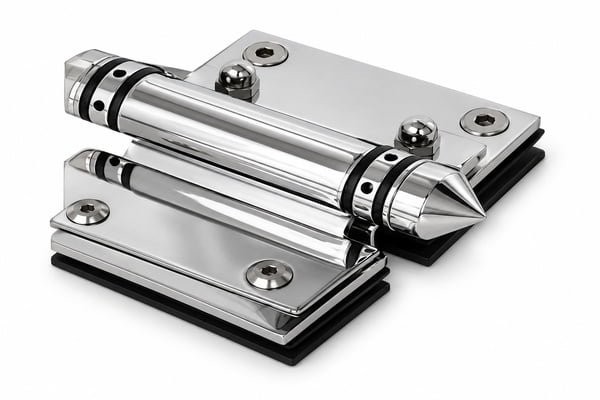
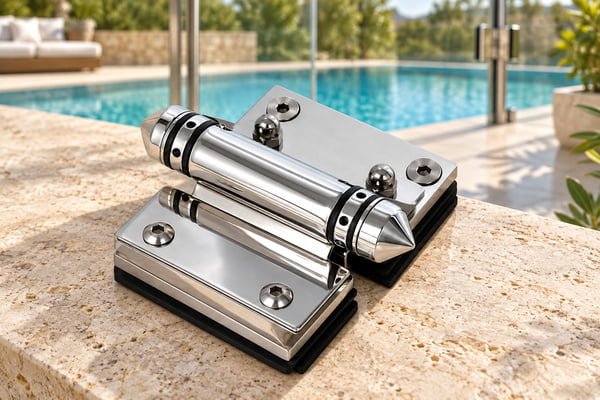
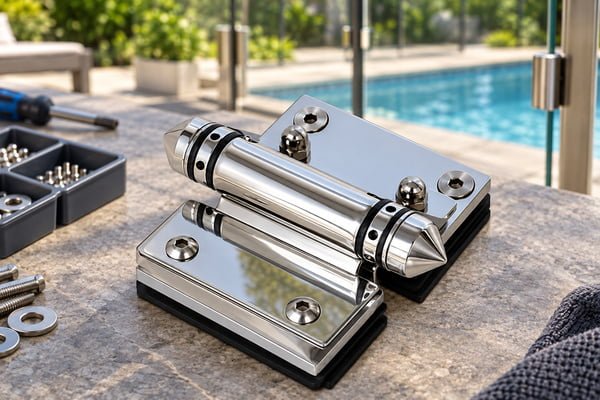
Catalogue illustration: Bolt-Plate Glass-to-Glass Pool Gate Hinge. Shown as a component reference, not an installation drawing or test result.
Build an access schedule
| Service item | Drawing or instruction needed |
|---|---|
| Adjustment point | Location and access direction |
| Tool | Type and working envelope from the manufacturer’s procedure |
| Cover | Removal sequence and retained small parts |
| Gate position | Position required for the permitted operation |
| Surroundings | Clearance to walls, posts, handles and fixed glass |
| Completion | Required functional checks and record |
Do not specify a universal clearance copied from another hinge. A compact hex key and a long adjustment tool need different envelopes. Review the actual procedure and verify the proposed access on a representative arrangement.
Separate permitted adjustment from repair
Adjusting an identified setting is not the same task as dismantling a hinge or changing its internal mechanism. The manufacturer’s instructions should define what the installer may do and when specialist service is required.
Our spring and hydraulic hinge comparison helps frame the mechanism discussion. Do not assume a setting available on one product exists on another. Ask suppliers to list the supplied adjustment instructions and replacement-part references with the quotation.
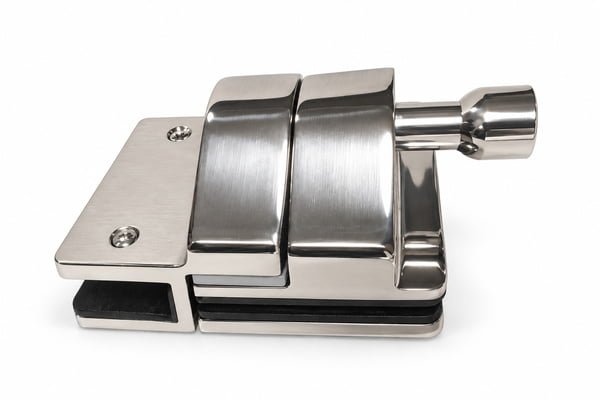
Catalogue illustration: Inline Glass Pool Gate Latch with Metal Housing. Shown as a component reference, not an installation drawing or test result.
Protect the approved movement path
A newly fitted cover, nearby planter or revised gate stop can obstruct tool access or movement. Our pool gate stop guide explains why the full opening path must be coordinated. Include the actual adjacent construction on the drawing rather than reviewing the hinge in isolation.
If a change affects glass preparation, coordinate it before manufacture. The CPSC tempered-glass alert is relevant to late drilling or modification proposals. Do not create a new service opening through finished tempered glass to compensate for a missed access detail.
Plan the post-adjustment check
After permitted adjustment, carry out the required closing and latching verification under the applicable procedure. Our gate-closing checklist helps organise that record. The CPSC barrier guide and NSW pool guidance provide context; identify the requirements applicable to the project.
Record the model, location, date, work performed and observations. Where measurements are required, state the method and instrument; NIST traceability guidance provides measurement background. A video can supplement the record but should not hide which configuration was checked.
Put the service scope into the order
For a modified mounting plate or cover, discuss OEM development with the service envelope marked on the drawing. Review the manufacturing capabilities against the requested parts and instructions. Confirm who supplies tools, covers, spare fasteners and any model-specific consumables.
An example handover package might contain a gate-location list, hinge codes, current instructions, replacement-part references and completed functional-check records. That is a document structure, not evidence that any particular installation has passed inspection.
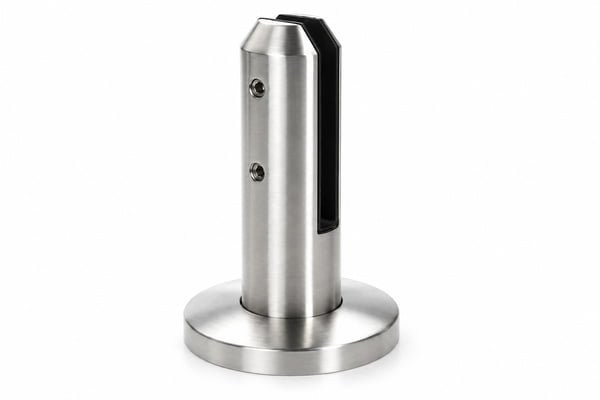
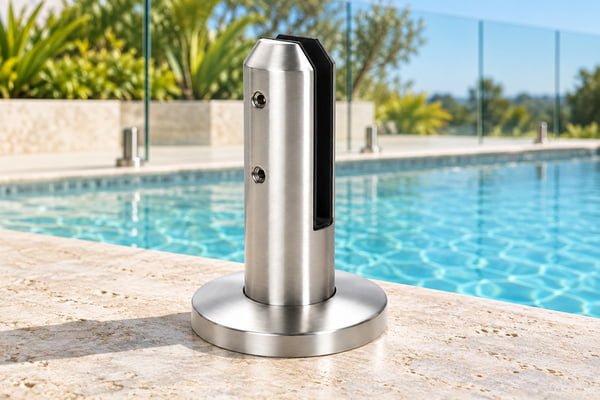
Catalogue illustration: Round Base-Plate Glass Pool Fence Spigot. Shown as a component reference, not an installation drawing or test result.
Keep cleaning and inspection practical
The ASSDA cleaning guide provides stainless-surface context, while the hinge manufacturer’s instructions govern its mechanism and permitted products. Do not introduce lubricants or cleaning chemicals into an assembly based only on a generic maintenance habit.
NIST’s conformity-assessment overview helps distinguish a maintenance observation from certification. Report what was checked and any unresolved issue, rather than replacing the original technical evidence with a vague “serviced” label.
Can access be checked from a product photograph? A photograph can identify a possible obstruction, but the actual tool and installed geometry need review.
To request serviceable pool gate hardware, send the gate section, surrounding finishes, hinge model, adjustment requirements and quantities. Ask for the access and maintenance documents with the price so serviceability is considered before installation closes off the space.