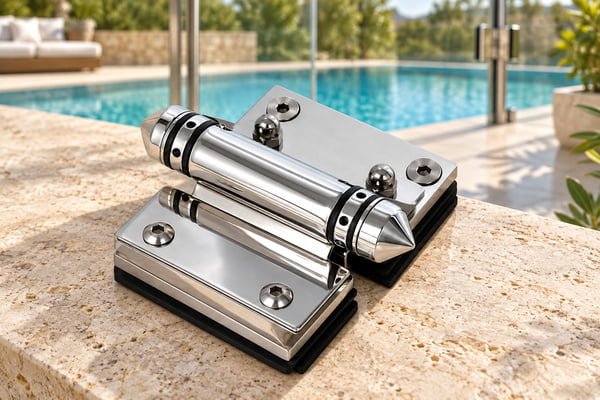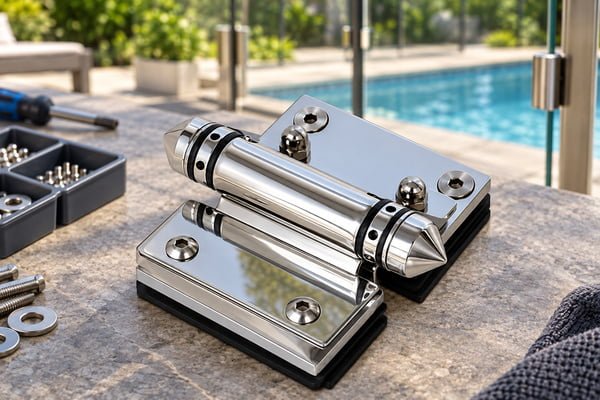
Closing speed describes how quickly a gate moves; closing force or hinge torque describes its tendency to move against resistance. Buyers should evaluate both, together with opening effort and reliable latching. A fast-closing gate is not automatically a correctly functioning pool gate.
When comparing pool fencing hardware, request the complete hinge, closer and latch arrangement. Do not select a closer by one adjustment feature while leaving the gate dimensions or latch resistance undefined.
Separate three purchasing requirements
| Requirement | What it describes | What to request |
|---|---|---|
| Closing movement | Gate travel over time | Applicable adjustment instructions |
| Closing action | Ability to overcome resistance | Approved gate limits and system details |
| Opening effort | User effort to move the gate | Project-specific acceptance requirement |
For example, D&D’s SureClose information describes a named closer family. Its features belong to those products, not to every hinge with a cylindrical body. Our spring versus hydraulic hinge comparison provides a procurement framework for discussing different mechanisms.
Ask what is actually adjustable
Some products offer adjustment of spring action; others provide hydraulic controls or different combinations. Ask for the exact model instructions and a labeled explanation of each control.
D&D’s FAQ illustrates why limits and installation arrangements are model-specific. Do not assume adding hinges increases capacity or that a setting from one gate can be copied to another. Obtain the relevant manufacturer’s drawings and instructions for the selected product.
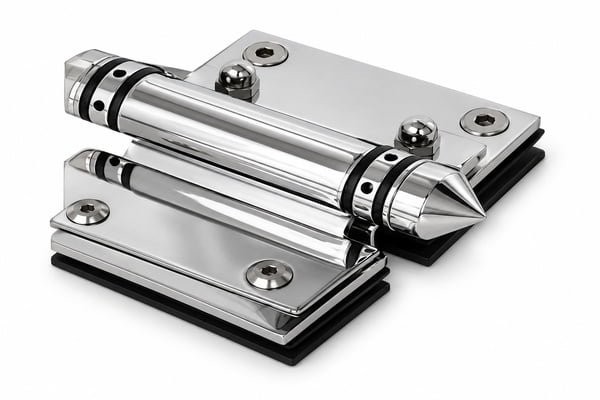
Catalogue illustration: Bolt-Plate Glass-to-Glass Pool Gate Hinge. Shown as a component reference, not an installation drawing or test result.
Build the gate schedule before comparing prices
Record gate width, height, mass, hinge axis, mounting arrangement, opening direction and latch type. Include environmental exposure and access restrictions. The complete geometry affects how the installed assembly behaves.
An illustrative comparison could list two gates of equal mass but different widths. Equal mass does not make their hardware requirements identical. Submit both layouts to the responsible supplier or designer instead of treating the weight entry as the whole specification.
The CPSC pool barrier guidelines provide U.S. safety context. NSW pool owner guidance supplies a different jurisdictional context. Apply the requirements at the actual project location rather than combining selected provisions into an invented global rule.
Verify closure as a system
Use the pool gate closing test checklist to plan records, then apply the selected product instructions and project requirements. Document the starting conditions, observed latching and any adjustment made. Repeat the required checks after adjustment; do not rely on one successful closure.
If the gate hesitates near the latch, investigate alignment, obstruction and compatibility before changing the closer. The latch striker adjustment guide helps frame those questions. Increasing closing action cannot correct every mechanical mismatch.
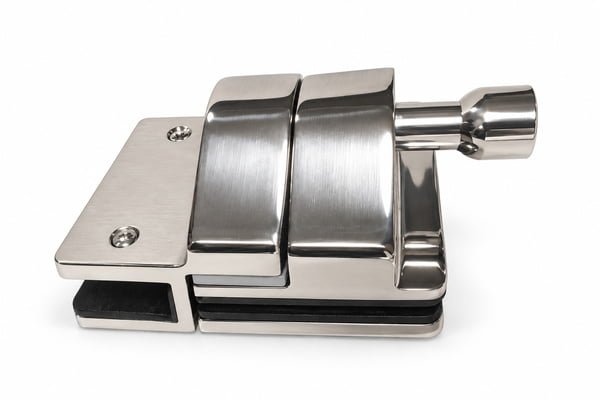
Catalogue illustration: Inline Glass Pool Gate Latch with Metal Housing. Shown as a component reference, not an installation drawing or test result.
Keep accessibility and barrier safety coordinated
Where applicable, U.S. Access Board door and gate guidance helps identify accessibility considerations. Applicability depends on the installation and governing requirements. A buyer should not assume that a general door criterion replaces pool barrier obligations.
Request coordinated acceptance criteria from the responsible project team. Describe how opening effort and reliable closure will be evaluated, who performs the checks and which records accompany handover.
What should be in the supplier submission?
Include model identification, gate limits, mounting drawings, adjustment instructions, maintenance information and relevant evidence. Conformity assessment guidance helps distinguish product claims from supporting documentation. Use traceability principles to link supplied parts to the approved schedule.
Receiving the correct closer
Keep the model code visible on the packing and project schedule. Check that handed parts, mounting accessories and adjustment instructions accompany the intended gate position. If the supplier substitutes a model, request a fresh compatibility review rather than accepting a similar appearance. Record the final model in the handover documents so later maintenance does not apply the adjustment instructions for an obsolete or different closer.
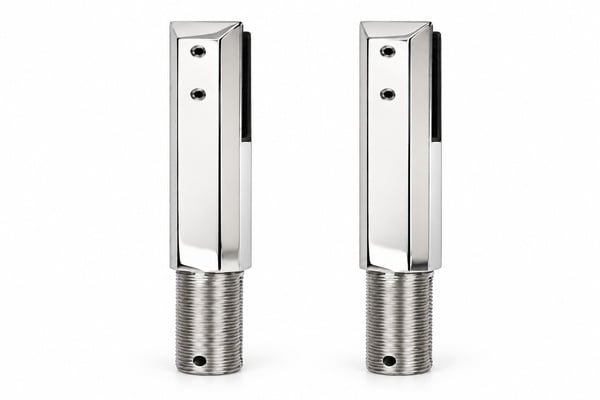
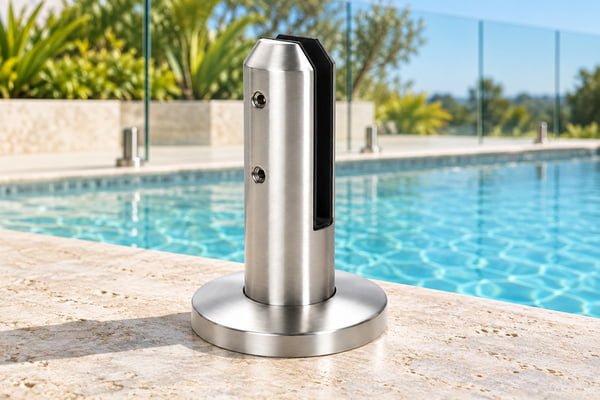
Catalogue illustration: Threaded-Shank Core-Drill Pool Fence Spigot — Polished silver appearance concept. Shown as a component reference, not an installation drawing or test result.
Can a slow gate still be unsafe? Yes. Speed alone does not establish reliable closure or latching.
Should every gate use the same setting? No. Apply the product instructions to the actual installed arrangement and required checks.
For a project enquiry, send the complete gate schedule through OEM review, review available manufacturing support, and request a compatible hardware quotation. Compare the resulting system documentation as carefully as the unit price.