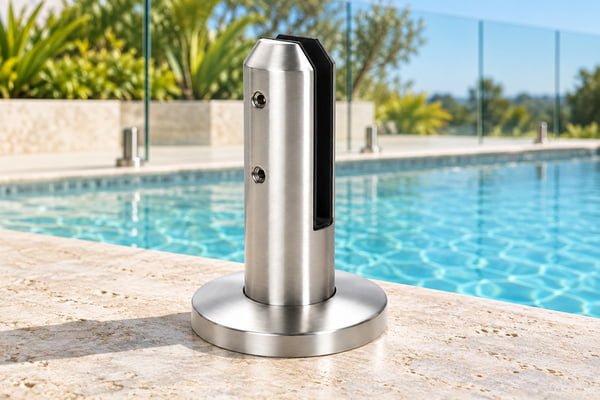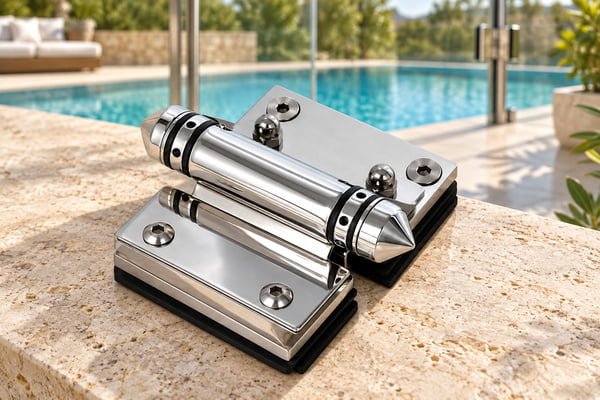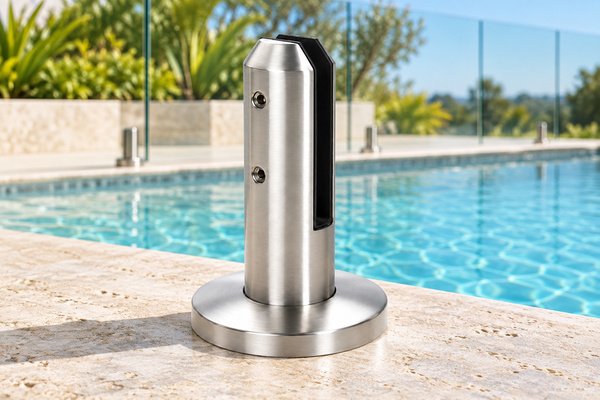
Pool fence spigot anchors must be selected for the actual substrate, base plate, loading and edge geometry. Edge distance and embedment are linked design inputs, not numbers that can be copied from a different installation. This RFQ worksheet helps contractors provide enough information for a technically meaningful quotation.
Define the three dimensions
Edge distance normally refers to the anchor centre’s distance from the relevant concrete edge, using the definition in the applicable design documentation. Anchor spacing describes the distance between anchors. Embedment requires particular care: nominal installation depth and effective embedment are not automatically the same value.
Use the selected anchor’s technical documentation, and where applicable consult relevant EOTA technical reports. Do not infer the required embedment from the overall bolt length. Start with the identified spigot in the pool fencing hardware range, including its base-plate drawing and mounting-hole pattern.
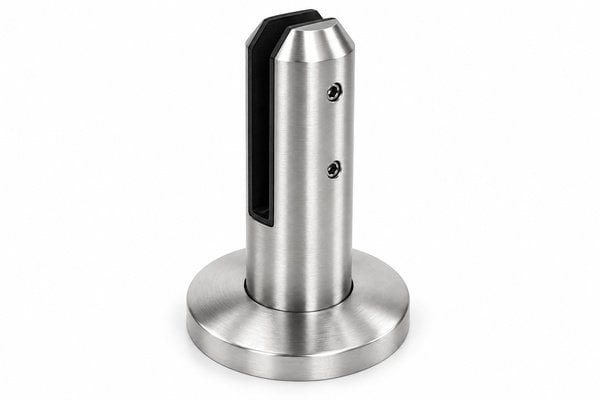
Catalogue illustration: Round Base-Plate Glass Pool Fence Spigot. Shown as a component reference, not an installation drawing or test result.
Send this information with the enquiry
| Information | What to provide |
|---|---|
| Substrate | Material, thickness and project-defined properties |
| Edge geometry | Dimensioned plan and nearest free edges |
| Spigot | Product code, base plate and hole layout |
| Anchor | Proposed system and installation documentation |
| Finish layers | Tile, screed, waterproofing and packing detail |
| Design input | Loads and responsible design reference |
| Environment | Pool exposure and relevant corrosion conditions |
The tiled-deck spigot guide explains why a finished surface and the supporting substrate must be distinguished. A tile edge is not necessarily the concrete edge, and tile thickness is not automatically effective anchor embedment. Show the full build-up in section.
Avoid the catalogue-capacity shortcut
A single capacity value may depend on concrete condition, embedment, spacing, edge distances and installation. Obtain the conditions behind the value before using it in a project comparison. A larger anchor diameter does not by itself resolve a restricted edge condition.
Consider a hypothetical base plate with four holes. Moving the plate to avoid one edge may alter the glass alignment and the distances of the other anchors. The correct response is to review the complete geometry, not to adjust one number on a purchase order. This example illustrates coordination and supplies no load or minimum-distance recommendation.
Keep barrier requirements in view
The anchor connection is one part of the complete fence. CPSC safety-barrier guidance and NSW pool-safety obligations provide examples of the wider requirements that may govern a project. The applicable local requirements and responsible design determine the actual acceptance basis.
Record how the selected spigot and panel arrangement connect to that basis. Changing the anchor location to simplify drilling can affect the intended fence layout. Proposed deviations should be resolved before holes are drilled or glass is ordered.
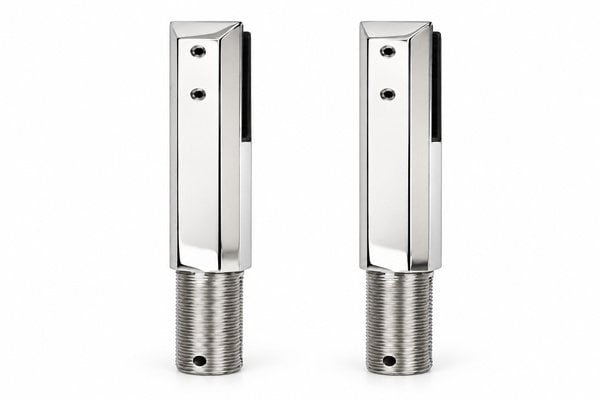
Catalogue illustration: Threaded-Shank Core-Drill Pool Fence Spigot — Polished silver appearance concept. Shown as a component reference, not an installation drawing or test result.
Exposure and drainage matter too
Specify the anchor material and exposed component materials separately. IMOA’s coastal exposure information and ASSDA’s dissimilar-metal guidance help frame the corrosion review. Neither substitutes for the anchor manufacturer’s product suitability information.
Our spigot drainage guide addresses water retention around the assembly. A cover should not conceal a drainage or inspection problem. Coordinate sealants and waterproofing without assuming that sealing every visible gap is the correct detail. Agree which trade supplies each material and who checks the completed interface.
Installation records worth keeping
The handover file should identify the anchor product, batch where required, substrate, installed locations and applicable installation procedure. Record the checks required by that procedure, which can differ between anchor types. Do not transplant a torque value or hole-cleaning method from another product.
Use NIST measurement traceability where dimensional or instrument-based checks are recorded. Our pool hardware handover checklist helps organise the evidence. Photographs should show the relevant location and scale rather than a close-up that cannot be linked to a fence run.
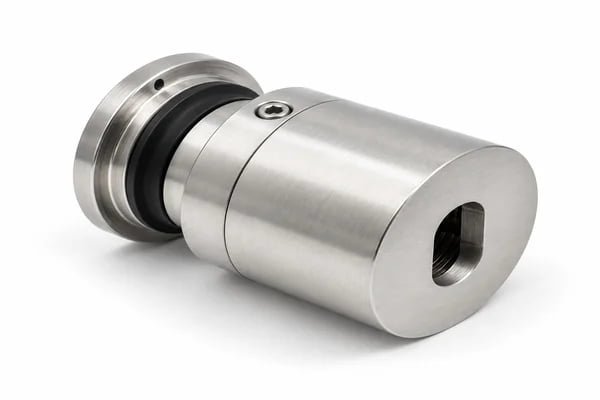
Catalogue illustration: Set-Screw Glass Pool Fence Standoff. Shown as a component reference, not an installation drawing or test result.
Can an installer choose the anchor on arrival? Only within the approved design and procurement process. The spigot’s mounting holes alone do not define a suitable anchor.
Does an anchor test report approve the whole fence? No. Conformity-assessment guidance helps distinguish component evidence from assembly approval.
For revised plates or interfaces, discuss OEM development and review the manufacturing scope. Send a complete spigot-anchor enquiry with the drawing package and destination requirements. A clear RFQ reduces the risk of receiving an attractive spigot with an unresolved building connection.