Choose railing setting blocks as specified components of the glass-support system. Their job is to transfer load through the intended bearing surfaces while preventing inappropriate glass-to-metal contact. A block that fits the gap is not automatically suitable. This procurement checklist is for buyers coordinating glass fabrication and hardware kits.
First distinguish the parts
A setting block supports glass at a defined location. A side liner, gasket or wedge may perform a different function. Similar-looking polymer pieces are not interchangeable merely because their colours match. Start with the glass railing hardware catalogue and request an exploded assembly identifying each part number, position and material.
The CRL base-shoe range shows why accessories belong to particular systems. For clamp assemblies, our EPDM versus silicone gasket guide addresses a related material decision, but a clamp gasket recommendation must not be transferred automatically to a load-bearing setting block.
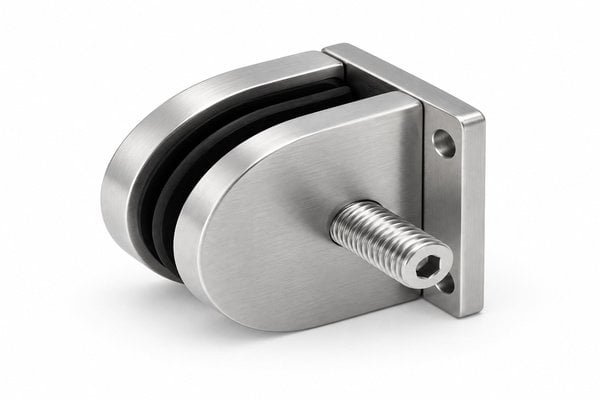
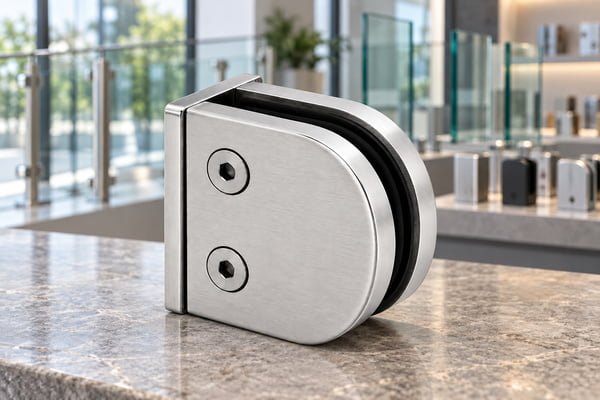
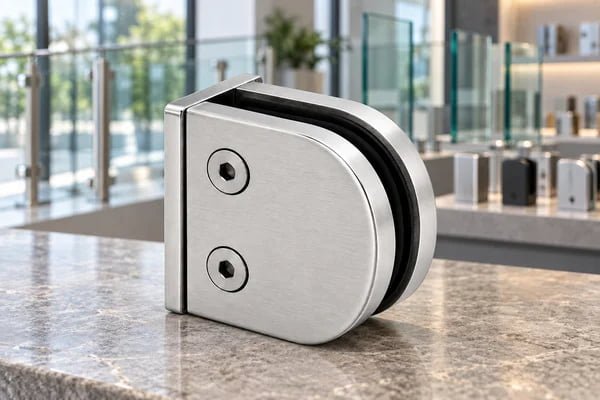
Catalogue illustration: Flanged D-shaped Glass Clamp. Shown as a component reference, not an installation drawing or test result.
Five fields for the purchase order
| Field | Record explicitly | Reason |
|---|---|---|
| Assembly identity | Shoe or clamp code and revision | Prevent mixed-system kits |
| Glass build-up | Plies, interlayer and total thickness | Establish supported geometry |
| Block geometry | Length, width, thickness and shape | Control bearing and clearance |
| Material identity | Supplier designation and relevant properties | Prevent unapproved substitutions |
| Position | Drawing reference and quantity per panel | Make installation repeatable |
Do not fill unknown dimensions from an unrelated catalogue. A useful schedule provides actual approved values, not an instruction to choose whatever fits on site. The laminated-glass specification guide explains how to identify the build-up. Kuraray’s interlayer information supplies material context; it does not approve a particular support detail.
Check compatibility as well as hardness
Hardness is one property, not a complete description of long-term support. Ask the system supplier how the specified block material is identified and what compatibility information applies to adjacent sealants, interlayers and finishes. Supplier guidance should address the actual contact arrangement and service conditions.
The Parker elastomer handbook illustrates the breadth of polymer properties and compatibility considerations. It is not a substitute setting-block specification. Avoid selecting an elastomer solely from a general chemical-resistance chart or transferring an O-ring material recommendation to a glass support. Record the exact approved product designation so procurement can reject an undocumented alternative.
Treat the glass edge as a controlled interface
An edge chip, trapped hard particle or misplaced support changes the contact condition. Inspect the edge and clean the bearing area before installation according to the system instructions. If a mismatch appears, stop and resolve the drawing rather than forcing the panel into place.
The CPSC tempered-glass safety alert reinforces the importance of coordinating fabrication before finished tempered glass is supplied. Our hardware tolerance checklist helps organise the mating dimensions. Do not use extra loose packing to conceal a tolerance problem without written approval.
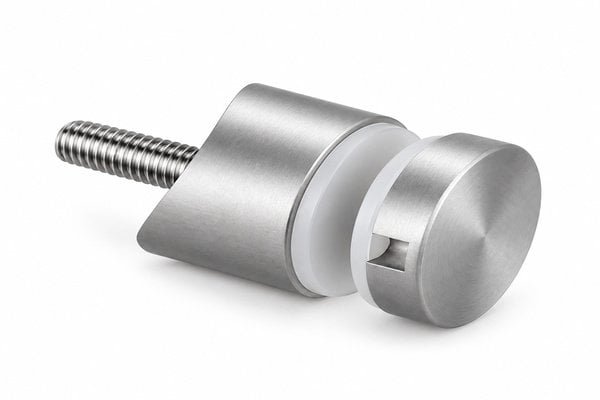
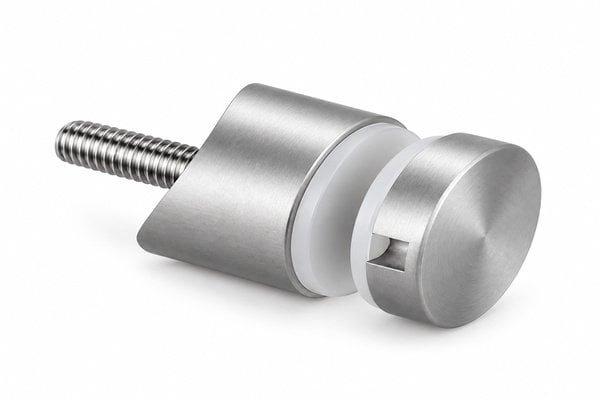
Catalogue illustration: Matte Silver Stepped-cap Cylindrical Glass Standoff. Shown as a component reference, not an installation drawing or test result.
A practical sample-kit exercise
For an illustrative order of 50 panels, suppose the approved detail calls for two identified supports per panel. The base quantity is 100 blocks before agreed spares. That arithmetic is a stock-control example, not a recommendation for the number of supports in any railing design.
Pack a first-article kit with the approved blocks, retention components and a revision-labelled drawing. Check part identity and dimensions using an appropriate measurement method. NIST measurement traceability helps define the record, while the GS1 traceability standard provides broader supply-chain principles. Keep the kit linked to the supplied batch rather than only to a sales description.
Evidence and delivery
Where assembly testing is required, review whether the tested support arrangement represents the purchased configuration. ASTM E2353 is a test-method reference for relevant glass railing assemblies; mentioning it does not certify the supplied blocks. Changes to the load-transfer arrangement need the responsible technical review.
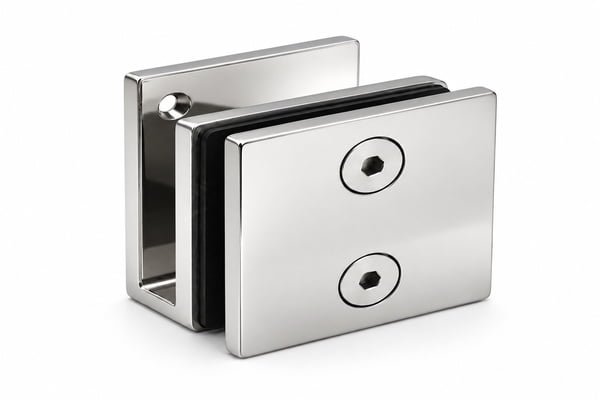
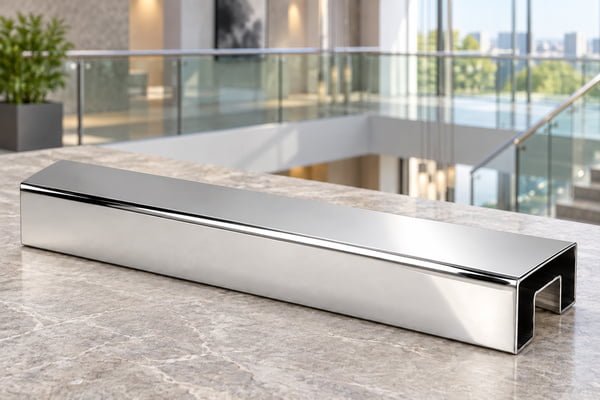
Catalogue illustration: Polished Silver Square Wall-to-Glass Shower Clamp — Finish Concept. Shown as a component reference, not an installation drawing or test result.
Separate small polymer components from sharp metal pieces during transport. Use the distribution conditions and appropriate ISTA procedures to plan packaging evaluation. Label bags by system and revision so a warehouse cannot combine visually similar items from different projects.
Can a thicker block correct a short panel? Not automatically. It changes the supported height and possibly engagement or clearance.
Are replacement blocks generic consumables? Treat them as controlled replacement parts until the system supplier documents an acceptable alternative.
For a bespoke kit, discuss OEM packaging and component development, review manufacturing capabilities, and send the approved glass-support drawing. Ask the quotation to list every support and liner individually. That small administrative step makes receiving inspection and future replacement much more reliable.