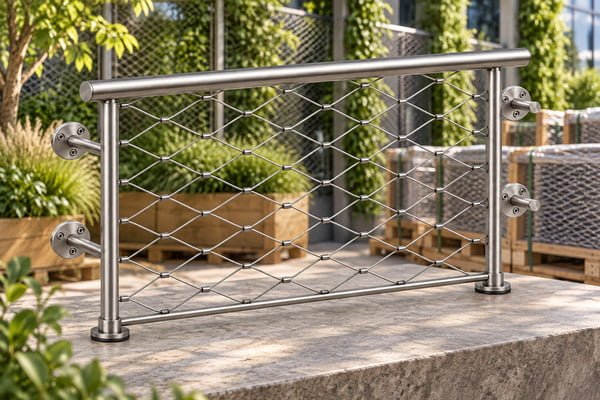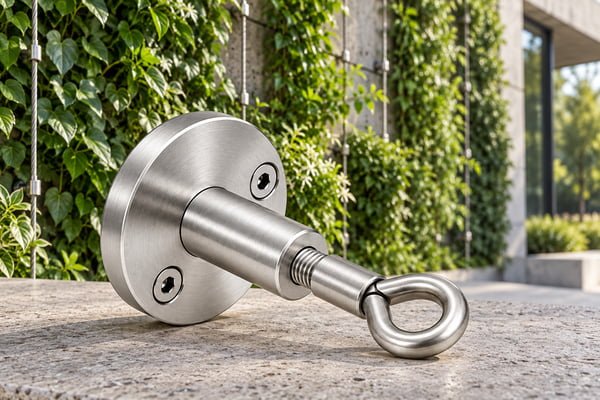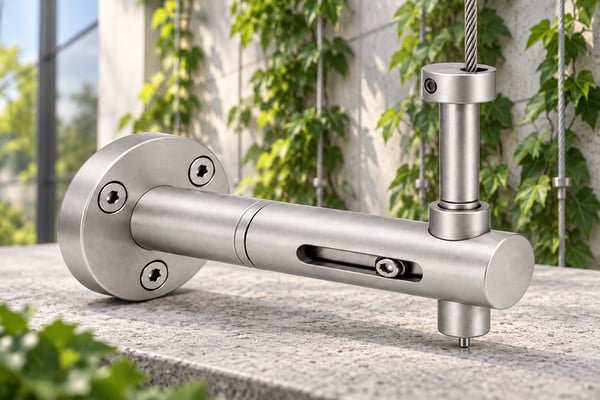
Green wall hardware should support the designed cable layout while leaving plant attachment and stem growth to a coordinated horticultural plan. A metal cable guide is not automatically a suitable plant tie. This guide helps landscape contractors define the boundary between structural fittings and plant-training materials.
Start with the climbing habit
Different climbers attach by different mechanisms, and some plants require tying to the support. The RHS climber overview provides a useful horticultural starting point. Identify the chosen species and intended mature coverage before ordering a generic grid of fittings.
Our green wall hardware range contains support components for the enquiry. The landscape designer should identify how plants are trained onto that support, including any separate ties and maintenance requirements. Product appearance alone does not answer that question.
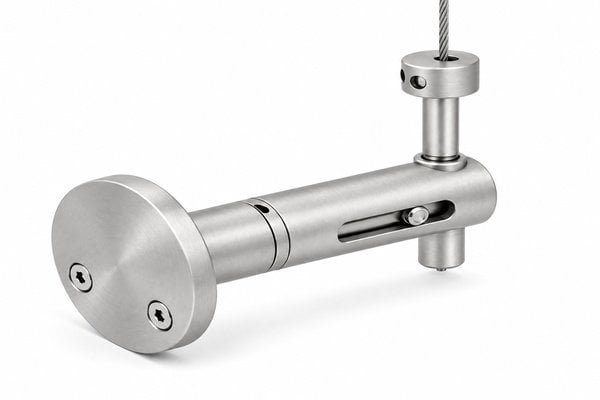
Catalogue illustration: Slotted Adjustable Cable Support — Matte silver appearance. Shown as a component reference, not an installation drawing or test result.
Separate hardware from plant contact
| Element | Primary purchasing question |
|---|---|
| Cable support | Does it locate the cable according to the approved design? |
| Cross connector | What cable relationship and adjustment does it provide? |
| Plant tie | Is it suitable for the plant and intended training method? |
| Stand-off | Is the cable position coordinated with growth and access? |
| Maintenance record | Who checks ties, stems and support condition? |
The RHS tying-in guide discusses allowing room for stems to grow. Treat plant ties as maintained items rather than permanent restraints that can be tightened once and forgotten. Do not improvise a rigid wire loop around a growing stem because spare cable is available on site.
Ask for a practical training plan
Mark where plants first reach the support and how new growth will be distributed. Include areas near windows, doors and service access. Our cable-grid planning guide helps organise the geometry and maintenance discussion.
For example, a schedule can identify planting zone A, its chosen species, support drawing, tie material and maintenance responsibility. This example defines records, not a universal tie spacing or stem allowance. Those details depend on the plant and the selected method.
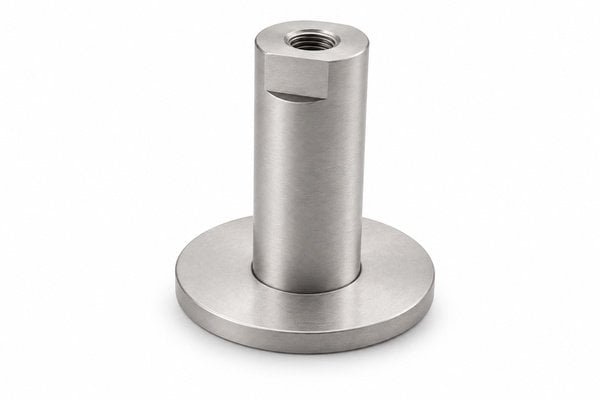
Catalogue illustration: Female Threaded Standoff Foot — Matte silver appearance. Shown as a component reference, not an installation drawing or test result.
Preserve the structural cable arrangement
Plant-training decisions should not lead to unreviewed movement or removal of structural fittings. The Jakob greening overview and technical catalogue show external examples of coordinated cable-supported systems. Their details do not establish compatibility with another manufacturer’s hardware.
Our green wall load-input guide explains why mature vegetation and environmental actions belong in the design review. Cutting a cable or moving a support to accommodate an established stem can alter the approved arrangement. Coordinate the horticultural and structural requirements before installation.
Review contact zones and access
Identify locations where a stem could grow against a sharp edge, trapped gap or frequently moving part. The objective is to plan the interface, not to claim every rounded metal component is plant-safe. Obtain the landscape designer’s review of the actual contact arrangement.
The Jakob GreenBlock information is an example of support-specific technical documentation. The University of Washington green-wall resource provides broader planting-system context. Keep manufacturer-specific dimensions and plant guidance clearly attributed rather than copying them into an unrelated product specification.
Make seasonal inspection achievable
Assign responsibility for checking plant ties and growth as well as the visible condition of fittings. Our plant-removal planning guide addresses future access when vegetation must be cut back or removed. The support should not be assumed to carry maintenance personnel unless expressly designed for that purpose.
At exposed sites, IMOA’s coastal guidance informs the hardware material discussion. ASSDA’s cleaning resource gives stainless-steel context, but cleaning activities must also respect the vegetation and surrounding facade materials.
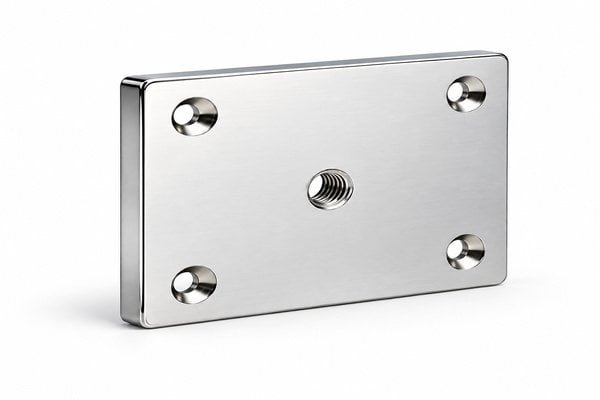
Catalogue illustration: Rectangular Threaded Mounting Plate — Polished silver appearance. Shown as a component reference, not an installation drawing or test result.
What should the supplier quote?
For custom cable guides or support layouts, use OEM development with the coordinated drawing. Review the manufacturing capabilities and explicitly identify which plant-training items are supplied by others. This avoids a handover where both the hardware contractor and landscape contractor assume the other has included the ties.
Can one guide arrangement suit every plant? No universal arrangement follows from the cable diameter alone. Growth habit, mature geometry and maintenance access need their own review.
Should all plant ties be replaced on a fixed generic interval? Follow the selected material, plant requirements and maintenance plan rather than inventing a universal interval.
To request coordinated green wall fittings, send the support layout, planting plan, intended contact points, exposure and supply boundary. A clear division of responsibilities protects both the plant-training plan and the engineered cable arrangement.