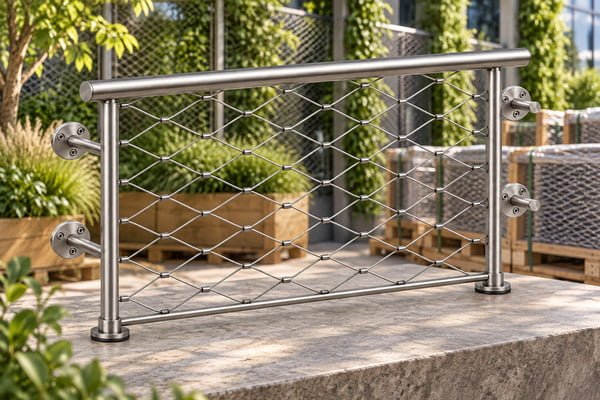
A freestanding green screen needs a complete support and foundation design as well as cable hardware. Treat posts, frames, cables, planting and maintenance access as one coordinated system. This scope guide helps project buyers avoid ordering an attractive mesh infill before the supporting structure is resolved.
Separate the screen from a wall-mounted system
A freestanding screen cannot rely on a building facade as its backing support unless the approved design includes that connection. Identify the proposed hardware in the green wall system range, then define which elements carry the loads to the supporting structure and foundations.
Jakob’s green facade information and technical catalogue provide examples of coordinated components. They are not a universal freestanding-screen design. The green wall load guide helps organize information about wind, mature planting and the intended configuration for the responsible designer.
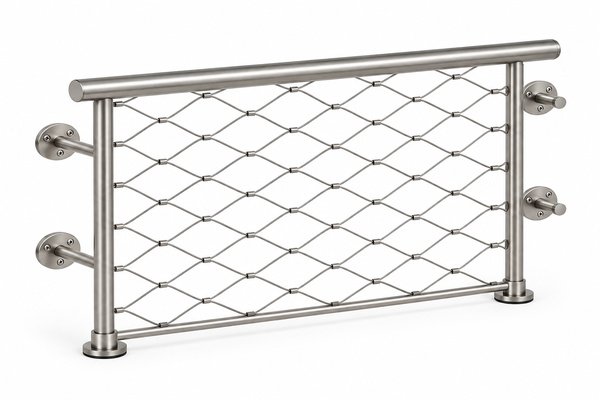
Catalogue illustration: Tubular Rail Cable Mesh Panel — Matte silver appearance. Shown as a component reference, not an installation drawing or test result.
Write the supply boundary first
| Element | Procurement question |
|---|---|
| Frame or posts | Who designs and supplies the supporting structure? |
| Foundation connection | Who specifies the base and anchoring detail? |
| Cable or mesh infill | Which complete system is proposed? |
| Planting | Who defines species and maintenance requirements? |
| Installation | Who coordinates assembly and final verification? |
Our mesh border comparison explains why a framed panel and a perimeter-cable arrangement need different coordination. Jakob’s frame catalogue illustrates one manufacturer’s approach; do not transfer its performance claims to an unverified assembly.
Establish the ground conditions and exposure
Provide the relevant site and substrate information to the designer. The Hilti technical guide resource offers product-specific anchoring context, not a foundation design for an unknown screen. The finished surface may conceal conditions that matter to the connection.
Describe coastal exposure, irrigation and anticipated deposits. IMOA coastal guidance is useful environmental context. The choice of stainless grade does not by itself resolve every joint, drainage or maintenance issue.
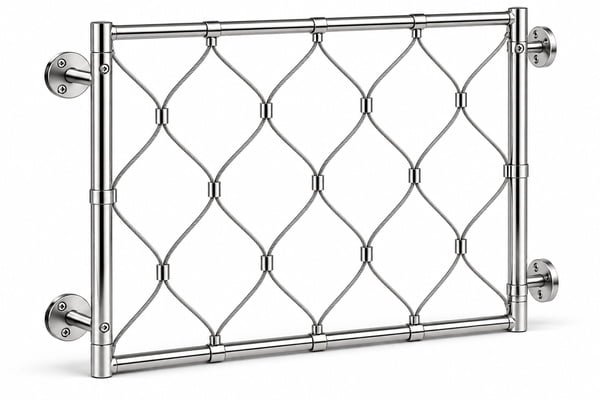
Catalogue illustration: Ferruled Cable Mesh Frame — Polished silver appearance. Shown as a component reference, not an installation drawing or test result.
Keep planting from becoming an afterthought
RHS climber information helps the landscape team define the intended planting. Agree the mature plant strategy, pruning access and replacement approach. Do not size or approve the support system from the appearance of a newly planted screen.
Use the repairable green wall section guide to discuss how local replacement will work. Identify whether a damaged cable or panel can be removed without dismantling the entire screen or disturbing neighbouring planting.
Compare complete quotations
Ask bidders to state what is included and excluded: frame, bases, cable or mesh, tensioning hardware, fixings, planting supports, labels and installation tools. A mesh-only price and a complete supported-screen price should never occupy the same comparison row without explanation.
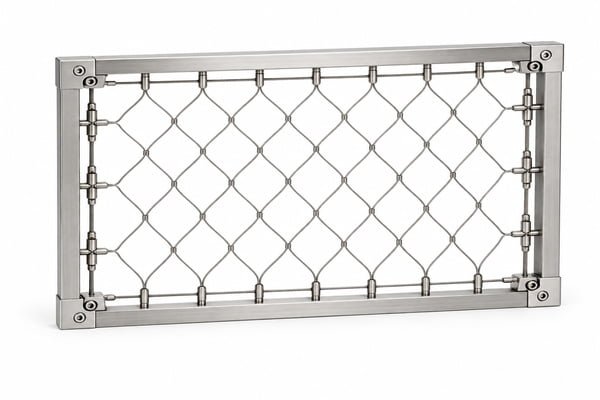
Catalogue illustration: Perimeter Tensioned Cable Net Panel — Fine brushed silver appearance. Shown as a component reference, not an installation drawing or test result.
Ask the receiving team to review the proposed package sizes and lifting arrangements before dispatch. A complete screen frame may be efficient to fabricate but unsuitable for the available access. If a knock-down arrangement is proposed, have its interfaces and assembly requirements approved. Do not allow a shipping decision to change the supporting structure or connection detail without the necessary coordination and documented release.
ISTA packaging procedures can inform transport protection for frames and visible surfaces. NIST conformity assessment guidance helps define the evidence needed for the actual claims. A catalogue illustration is not proof of a completed project or a tested freestanding assembly.
Use a zone schedule for repeat units
For a hypothetical order of ten screens, record any differences in dimensions, base arrangements, exposure and planting. Do not assume that every unit is identical because the front elevation looks repeated. Keep a unit identifier on the approved drawing and delivery package so the correct assembly reaches each location.
Check whether the site can unload and move complete frames or whether an approved assembly sequence is needed. Coordinate those logistics before deciding the shipping format. Record any field assembly requirements and the inspections needed before infill and planting conceal the connections.
Questions before purchase
Can a wall-mounted kit become freestanding? Not without assessing and designing the supporting arrangement.
Does a planter box provide enough support? Do not assume it does; the complete design must address the actual conditions.
Should cable and frame suppliers coordinate? Yes. Their interface dimensions, loads and assembly requirements must be compatible.
For an OEM screen-hardware discussion, submit the approved support concept and infill requirements. Review manufacturing capabilities and request a clearly scoped quotation identifying the hardware supplied, interfaces with other trades and the evidence required before installation.