
Factory assembly can reduce site work when dimensions and interfaces are settled. Site assembly can accommodate a different construction sequence, but it requires suitable tools, skills and inspection. Buyers should compare complete delivery and installation scopes rather than assuming one route is always cheaper.
This decision guide is for contractors sourcing green wall mesh systems. It separates a finished panel, a prepared mesh kit and loose components because those are materially different deliverables.
First define what arrives on the truck
| Delivery form | Buyer should confirm |
|---|---|
| Factory-assembled frame and mesh | Final dimensions, connections and lifting plan |
| Prepared mesh with identified fittings | Remaining site operations and tools |
| Loose components | Complete assembly method and inspection responsibility |
Jakob’s Webnet Frames catalogue illustrates a defined framed system. Its Webnet assembly instructions identify specific assembly details and tooling. Those instructions belong to that system; they do not make arbitrary components suitable for site swaging.
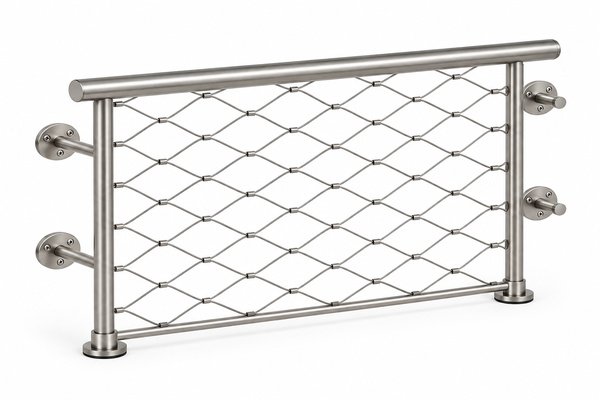
Catalogue illustration: Tubular Rail Cable Mesh Panel — Matte silver appearance. Shown as a component reference, not an installation drawing or test result.
Gate one: are the dimensions dependable?
Factory completion depends on an agreed dimensional basis. State whether the supplier is working from design dimensions, a site survey or an approved interface schedule. Define tolerances and how discrepancies are resolved before release.
Our panel orientation and labeling guide is particularly useful where repeated panels look alike. A correctly manufactured panel can still be delivered to the wrong position if the schedule and labels are unclear.
For illustration, a twelve-panel elevation may contain ten repeated panels and two special end panels. A purchasing team should identify those exceptions explicitly rather than allowing the factory to assume twelve interchangeable items.
Gate two: can the package reach its final position?
Check transport size, site unloading, access routes and handling equipment. A large preassembled frame may save assembly labour but introduce a handling constraint. A smaller kit may travel more easily while increasing site work.
Webnet product information and the GreenSolutions technical catalogue provide context for different system forms. Use the actual selected product drawings to define package dimensions and connection scope.
The mesh seam guide helps identify which joints remain to be completed after delivery. Make those joints visible in the quotation rather than leaving them under an undefined installation allowance.
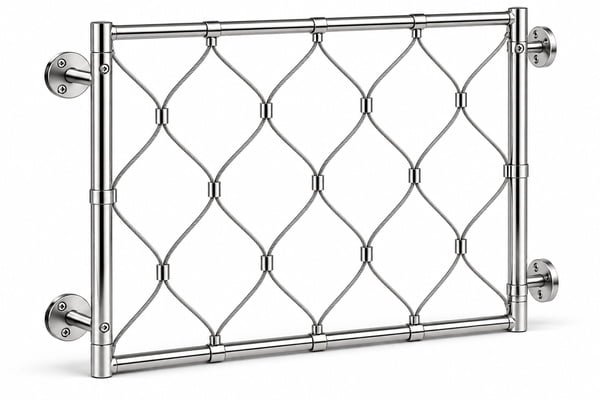
Catalogue illustration: Ferruled Cable Mesh Frame — Polished silver appearance. Shown as a component reference, not an installation drawing or test result.
Gate three: who controls the site process?
For operations performed on site, name the required tools, consumables, operator competence and inspection records. Confirm that weather, access and sequencing permit the specified method. Do not select site assembly merely to defer unresolved technical decisions.
Factory assembly also needs records. Ask which checks are completed before packing and which must be repeated after transport or installation. Receiving a finished frame does not eliminate the need to inspect shipping damage and final connections.
ISTA’s transport-testing overview helps frame packaging requirements. GS1 traceability principles support panel identity across manufacturing, delivery and installation. Both are useful to either assembly route.
Compare the complete cost
Use the installed-cost quotation guide to separate fabrication, packing, freight, handling, assembly and inspection. Include the cost of special tools and access equipment where relevant. Do not claim savings percentages without a project-specific estimate.
An illustrative comparison might show a higher factory price but fewer site operations. Whether that is preferable depends on actual labour, logistics and risk. Keep the assumptions visible so a later site change does not invalidate the comparison unnoticed.
Agree the acceptance points
NIST’s acceptance-sampling introduction offers background for lot decisions. Conformity assessment guidance helps distinguish inspection, testing and supplier statements. Define which evidence is required at factory release, receiving and final installation.
Record approved changes to mesh size, fittings or panel dimensions. A substitution that appears minor can alter the remaining site process or the supporting evidence.
State the assembly boundary
Mark the exact point where factory work ends and site work begins on the parts schedule. Identify who supplies any remaining lacing, fittings and tools, and who records acceptance. If those responsibilities move during procurement, revise the quotation scope and installation documents together. Otherwise both parties may reasonably assume that the other has included a small but essential operation.
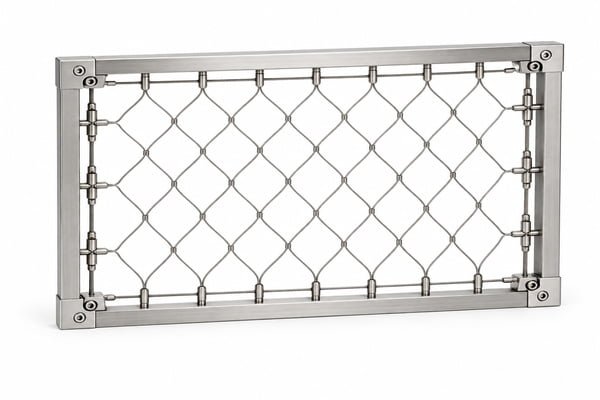
Catalogue illustration: Perimeter Tensioned Cable Net Panel — Fine brushed silver appearance. Shown as a component reference, not an installation drawing or test result.
Submit the elevation, survey basis and delivery constraints through OEM coordination, review available manufacturing support, and request separate factory and site-scope quotations. Select the route that leaves the fewest undefined interfaces for the team that will install and maintain the green wall.