
Start with the damage mechanism: Polished railing hardware needs packaging that prevents metal-to-metal contact, restrains movement and keeps grit away from visible surfaces. Extra carton thickness will not solve an abrasive part rubbing against another fitting inside the box. Specify the packing arrangement as carefully as the finish.
For importers purchasing glass railing fittings, transit damage creates sorting costs, replacements and arguments about when a scratch occurred. This article follows a shipment from the supplier’s packing bench to the receiving inspection area, with a practical acceptance plan for each stage.
At the packing bench: identify exposed surfaces
A glass standoff and a glass spigot require different restraint. Record which faces remain visible after installation, which projections can puncture a sleeve and which removable parts can move in transit. Threaded pieces should not share an unpartitioned bag with polished covers.
Use individual protection compatible with the actual surface treatment. A film suitable for bare polished steel is not automatically suitable for every coating or adhesive-sensitive finish. Agree application, storage and removal conditions with the supplier. Consult stainless cleaning guidance before specifying a residue-removal method.
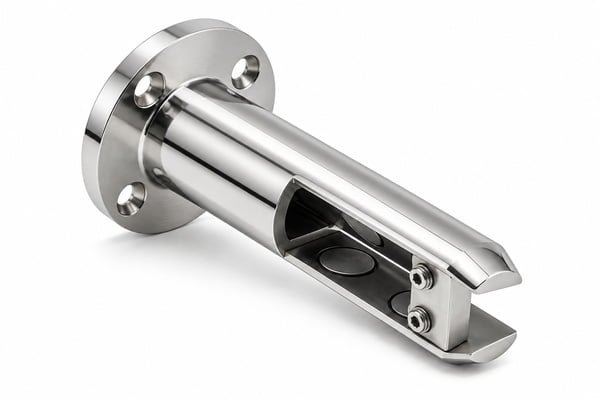
Product reference: Reflective Silver Round-base Glass Spigot with Circular Pads. Match the supplied configuration to the approved drawing.
Write a packing bill of materials
| Packing layer | Requirement to define | Evidence at approval |
|---|---|---|
| Individual part | Sleeve, wrap or protective film | Photograph of covered visible faces |
| Inner pack | Part separation and restraint | Open-pack photograph and movement check |
| Accessory pack | Identified fasteners and gaskets | Counted contents beside the label |
| Outer carton | Quantity, layout and closure | Packing drawing and gross weight |
| Shipping unit | Pallet arrangement if used | Loading pattern and handling marks |
Do not specify “export packing” as the entire requirement. State who supplies the packaging, whether it is disposable, and whether the buyer needs individual retail-ready packs. A protective inner pack and a presentation box serve different commercial purposes.
Before shipment: test the arrangement you will receive
The ISTA test-procedure overview helps buyers discuss a distribution-relevant testing programme with a packaging specialist. Choose conditions appropriate to the intended route and handling, then test the actual packed configuration. Passing a different carton with a different component mass does not validate the current order.
Define acceptance before testing. Inspect the same visible surfaces before and after, under agreed lighting. Record scratches, displaced parts, damaged closures and missing accessories separately. Keep photographs of the unopened carton, each unpacking stage and the individual parts. This makes a failure investigation far more useful than one photograph of a scratched fitting.
Moisture deserves its own review. IMOA’s coastal-exposure discussion and ASSDA’s tea-staining guidance explain why exposure and contamination matter for stainless products. Packaging selection should consider the shipping environment without treating a sealed bag as a universal corrosion solution.
At the quotation desk: compare the cost of protection
Suppose additional separators cost $0.20 per part for a 1,000-piece order. The added packing cost is $200. If ten damaged parts each create $25 in replacement and handling costs, those incidents cost $250 before considering customer delays. This is an illustrative comparison, not an Elim quotation or a predicted damage rate.
Compare complete costs, including carton volume, warehouse unpacking time and disposal. More packaging can increase freight or labour without improving restraint. Ask for two clearly described alternatives instead of requesting the cheapest packaging with an undefined damage guarantee.
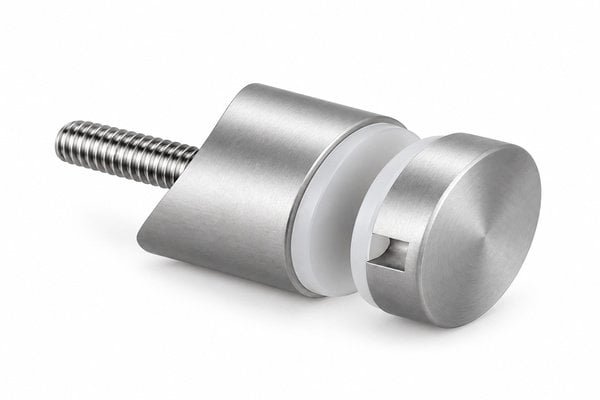
Product reference: Matte Silver Stepped-cap Cylindrical Glass Standoff. Match the supplied configuration to the approved drawing.
At the warehouse: preserve useful evidence
Match carton labels to the packing list and photograph visible transit damage before opening. The US export-document overview explains the role of common shipping documents, while GS1 logistics-label guidance supports consistent shipping-unit identification. Neither replaces a product-level inspection record.
Check a defined sample of cartons using the approved unpacking sequence. Retain suspect packaging with its parts and record carton position where available. A mixed pile of returned fittings loses the link between packaging failure and the affected batch. Apply the traceability principles in GS1’s traceability standard to the records you actually maintain.
Make the approved method repeatable
Add packaging revision, part orientation and accessory location to the purchase order. Review changes using the sample-approval principles and distinguish shipping damage from dimensional fit problems. If material identity is disputed, use grade-verification guidance rather than visual judgement.

Product reference: Reflective Silver Side-mounted Glass Railing End Post. Match the supplied configuration to the approved drawing.
Is a polished surface always more fragile? Damage depends on the finish, contact, contamination and handling; specify the actual product.
Should every part have its own carton? Not necessarily. Effective separation and restraint may provide protection with less material.
Review options through Elim’s manufacturing capabilities, then request a packing proposal with quantities, destination and receiving requirements. Approve the photographed arrangement before bulk shipment.