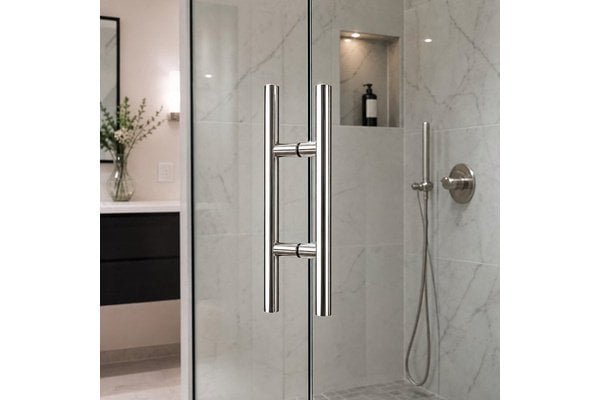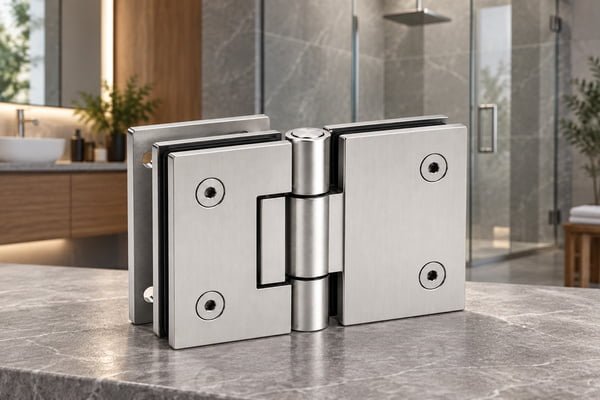
Do not assume ordinary shower hardware is suitable for a steam room. Request documented compatibility with the intended heat, moisture, cleaning regime and enclosure design. The review must include seals, gaskets, finishes and fixings as well as the visible hinge or handle.
For hotel and spa buyers considering shower hardware, this is a suitability-screening checklist. Catalogue inclusion alone does not establish that an Elim model is approved for steam-room service; obtain the relevant written product information before ordering.
Question one: what service conditions are being specified?
Identify the steam system, intended operating conditions, use pattern and cleaning products through the project team. Do not invent a common operating temperature and apply it to every seal or hinge.
MrSteam’s installation guide discusses enclosure and steam-system coordination, including the relationship between steam discharge and seals. Its technical archives provide product-specific documentation. These are steam-equipment references, not approval of an unrelated hardware assembly.
Question two: which parts need compatibility evidence?
| Part or interface | Information to request |
|---|---|
| Hinge and fixing | Permitted application and complete model limits |
| Contact gaskets | Specified material and service compatibility |
| Door seals | Suitable profile, material and installation detail |
| Handle and finish | Cleaning and exposure requirements |
| Wall or glass connection | Approved geometry and preparation |
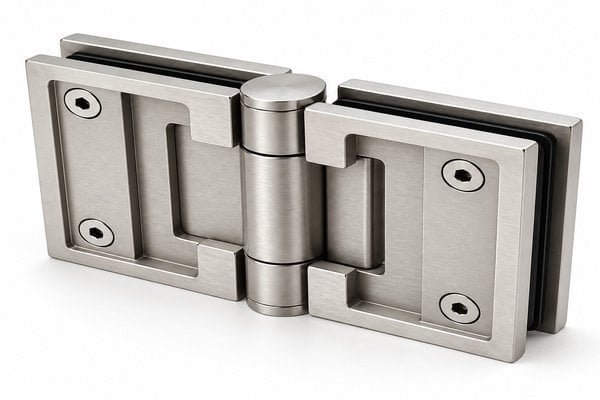
Catalogue illustration: Heavy-Duty Shower Door Hinge. Shown as a component reference, not an installation drawing or test result.
The CRL shower hardware catalogue illustrates model-specific selection. A generic reference to shower hinges should not replace the exact product instructions. Keep the selected glass dimensions and mounting arrangement attached to the enquiry.
Question three: does the door layout work?
Review the door swing, operating grip and clearances using the inward-versus-outward opening guide. Have the responsible project team determine applicable access and safety requirements. Do not copy a conventional enclosure layout without reviewing its suitability for the intended steam installation.
Coordinate the vertical and bottom seals with the full door movement. Manufacturer seal information provides examples of profiles, while the bottom seal comparison helps distinguish their different functions. A seal that appears to close a gap is not automatically suitable for the thermal and cleaning conditions.
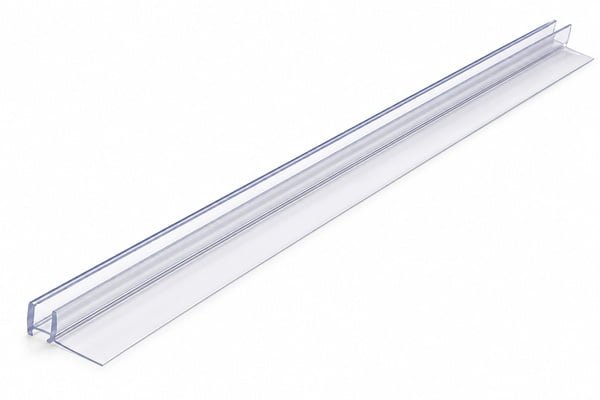
Catalogue illustration: Shower Door Side Seal Strip. Shown as a component reference, not an installation drawing or test result.
Question four: what does the material statement prove?
A gasket material name is a starting point, not a complete suitability decision. Parker’s material handbook provides useful background on elastomer selection, but the exact supplied compound, geometry and service conditions still require review.
For metal components, worldstainless corrosion information explains why environment and design matter. A stainless grade label does not establish compatibility with every cleaner, finish process or crevice condition.
Ask the supplier to state the basis of its recommendation and any limitations. Keep documentary evidence distinct from a sales statement that the product is high quality. If evidence does not cover the intended service, resolve that gap before release.
Question five: what will the mockup establish?
A representative mockup can help check fit, movement, access and seal arrangement. Define its purpose and acceptance criteria before building it. A short operational demonstration cannot establish long-term durability under repeated steam exposure.
The CPSC glass safety alert provides background on glass risks. Where applicable, the U.S. Access Board bathing-room guide identifies accessibility considerations. Neither supplies a universal steam-room hardware specification.
Question six: can maintenance follow the instructions?
Use the finish-care guide to organize supplier questions, then retain the actual permitted cleaning procedure. Identify replaceable seals and gaskets, their part codes and the responsible service contact. Record changes so maintenance teams do not later fit an unverified substitute.
Keep the recommendation attached
Ask the supplier to tie its written suitability response to the exact part codes, drawing revision and service description. Save that response with the order, including limitations and maintenance conditions. If the project later changes its cleaning chemistry, steam equipment or usage pattern, review the effect rather than treating the original recommendation as approval for every future operating condition.
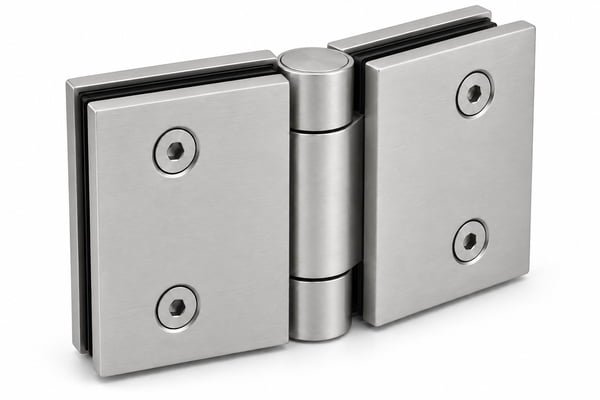
Catalogue illustration: Matte Silver 90 Degree Glass-to-Glass Shower Door Hinge — Finish Concept. Shown as a component reference, not an installation drawing or test result.
The quotation should identify every included component, the intended service and the evidence supplied. Discuss special requirements through OEM review, check relevant manufacturing capabilities, and request a documented suitability review. The purchasing decision should rest on the proposed assembly and operating conditions, not on the assumption that all wet-room hardware is interchangeable.