Shower hinge opening angle, self-centering range and closed-position adjustment describe different behaviours. Ask suppliers to identify each one separately before approving the hinge and glass drawings. This question-led guide is for distributors and enclosure manufacturers comparing similar-looking products.
What does the advertised angle mean?
A number in a product name may describe the relationship between two glass panels rather than the door’s permitted travel. A closing-range figure describes another function. The closed position may also have a product-specific adjustment, or no such adjustment at all.
The CRL shower hardware FAQ illustrates why hinge behaviour needs model-specific documentation. Start with the chosen model in our shower systems range, then ask for its drawing and operation instructions. Do not transfer a feature from another hinge because its exterior shape looks similar.
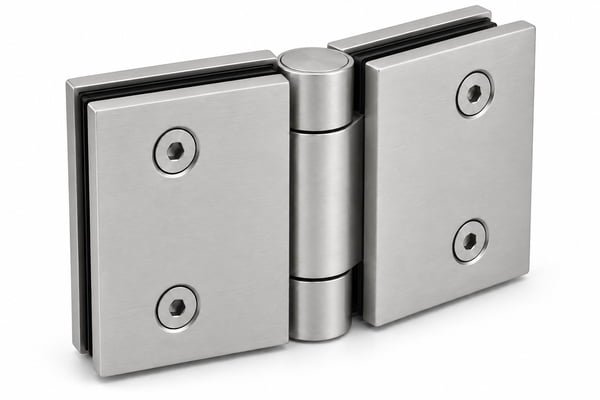
Catalogue illustration: Matte Silver 90 Degree Glass-to-Glass Shower Door Hinge — Finish Concept. Shown as a component reference, not an installation drawing or test result.
Four terms to separate on the order
| Term | Question to ask |
|---|---|
| Panel relationship | At what angle are the fixed and moving glass arranged? |
| Permitted travel | Where may the door move under the documented installation? |
| Self-centering range | From which positions does the stated behaviour apply? |
| Closed-position setting | Is adjustment permitted, and under which procedure? |
The CRL shower catalogue provides examples of products with differing arrangements. These are third-party specifications, not figures for Elim hinges. Ask the supplier to write the selected model’s actual values and limitations into the quotation.
Why “self-closing” needs clarification
A hinge described as self-centering may not return from every possible open position. Buyers should not assume that the word guarantees controlled closing throughout the full travel. Ask what the manufacturer means and what installed conditions are required.
For illustration, two hypothetical hinges could have different stated centering ranges while sharing the same glass-to-glass mounting angle. That distinction can matter to an enclosure’s intended use. The example does not establish the behaviour of any supplied product.
Coordinate the closed position with the seals
Our hinge-offset guide explains how named drawing datums coordinate the door and fixed panels. The seal selection guide adds the separate questions of gap and contact profile. A hinge setting must not be used to compensate for an incompatible seal or incorrectly fabricated glass.
The CRL gasket resource illustrates model-specific insert requirements. Do not add improvised gasket layers to alter the door position. Obtain the documented arrangement for the selected glass and hinge combination.
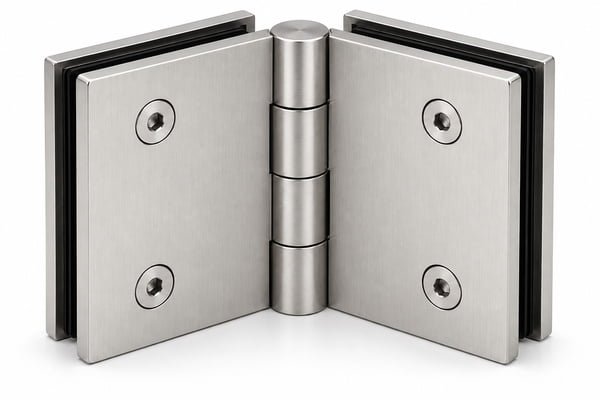
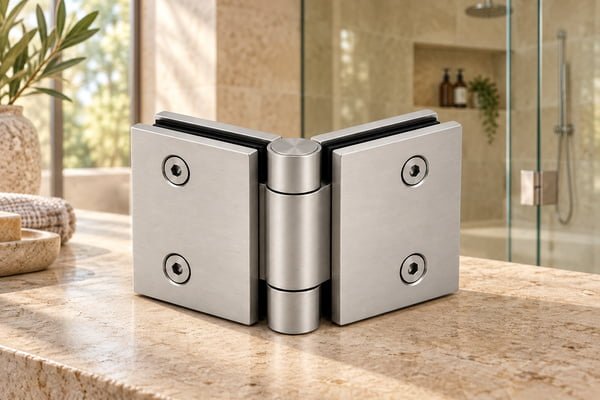
Catalogue illustration: 135 Degree Glass-to-Glass Shower Door Hinge. Shown as a component reference, not an installation drawing or test result.
Review the opening path
Show handles, walls, fixed panels and adjacent fixtures through the intended movement. Identify any specified stopping arrangement. A nominal opening angle does not establish that the installed door clears every obstruction.
Where applicable, the Access Board bathing-room guidance and door guidance provide accessibility context. Determine the requirements relevant to the project rather than assuming one standard hinge description addresses all enclosure and access obligations.
Approve a representative assembly
Check the identified model, glass preparation, gasket set, seals and installation procedure together. Record observations at the positions required by the agreed inspection method. Where angle measurements are used, state the datum and equipment; NIST traceability guidance provides measurement background.
Our hinge cycle-test checklist concerns durability evidence. A short demonstration of closing behaviour is not a substitute for that evidence when it is contractually required. Conversely, a cycle-test report should not be assumed to describe every available closed-position adjustment.
Resolve changes before glass fabrication
The CPSC tempered-glass alert is relevant to late drilling or cutout proposals. If a different hinge changes the interface, coordinate the revised fabrication drawing before the glass reaches the stage at which such modification is unsafe.
For modified hardware details, use OEM development with the required geometry and behaviour stated separately. Review the manufacturing scope, and ask the supplier to identify any requested feature that is outside the documented model configuration.
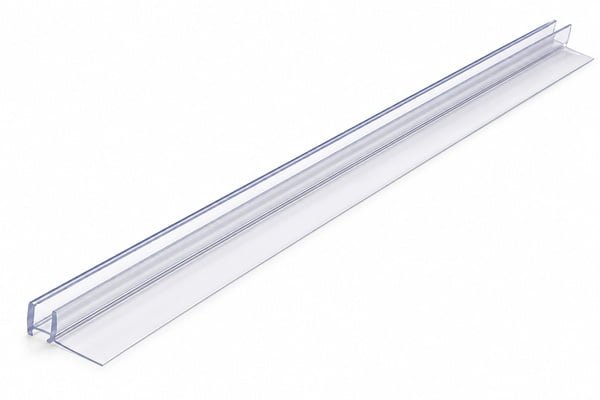
Catalogue illustration: Shower Door Side Seal Strip. Shown as a component reference, not an installation drawing or test result.
Release the order with clear evidence
NIST’s conformity-assessment overview helps distinguish a functional check, a test report and certification. Keep the relevant documents tied to the exact model and revision rather than attaching a generic catalogue page to every order.
Can the installer change the closing angle freely? Only adjustments permitted by the selected product’s instructions should be planned. Some settings or features may be fixed.
To request a hinge quotation, send the panel arrangement, intended travel, closed-position drawing, glass details and required operating behaviour. Ask for an explicit response to each field so suppliers are comparing the same function rather than repeating the phrase self-closing.