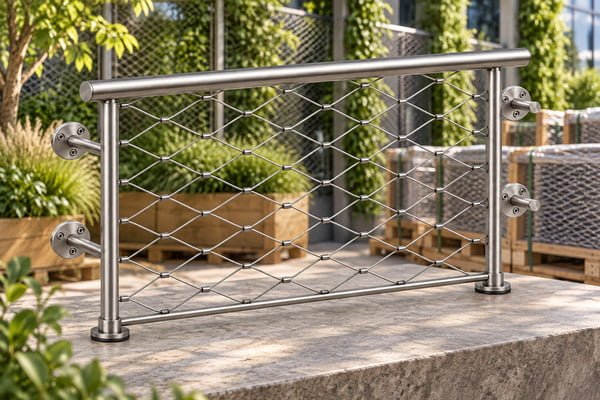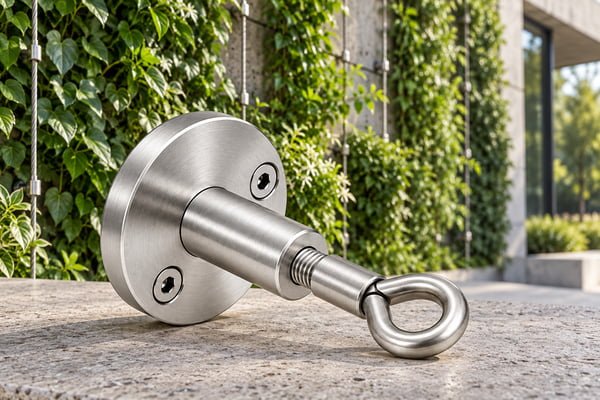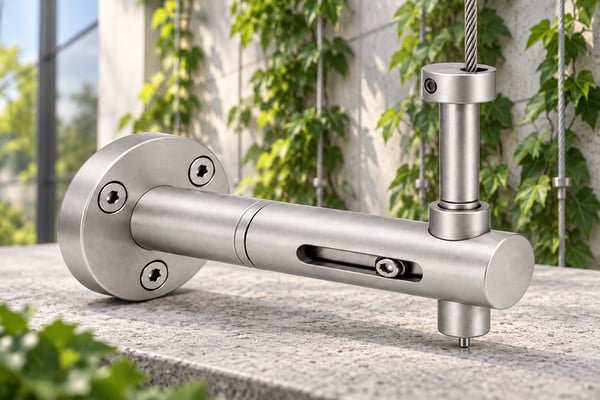
Concealed cable fixings reduce visible hardware but increase the importance of planned access. Exposed fixings may be easier to inspect, yet still require protection, appearance control and a suitable load path. Compare the whole installation and replacement process before choosing either arrangement.
This design-review note is for architects and contractors sourcing green wall cable hardware. It asks the questions that can be missed when a clean elevation is approved before the support detail is resolved.
Decision one: what does concealed mean?
Identify whether the fixing is behind a removable panel, within a recess or permanently covered by another building element. These arrangements have different service implications. A hidden connection is not necessarily inaccessible, but access must be designed rather than assumed.
The Jakob GreenSolutions catalogue and architectural cable catalogue provide component context. Use the actual selected system instructions. Our insulated-facade anchor guide helps keep the structural fixing distinct from the outer lining or insulation layer.
| Review question | Concealed fixing | Exposed fixing |
|---|---|---|
| Inspection | Define opening and access route | Confirm safe approach and visibility |
| Replacement | Check removal sequence | Check tools and adjacent planting |
| Appearance | Coordinate panel joints | Approve visible finish and alignment |
| Exposure | Assess hidden moisture conditions | Assess direct and sheltered exposure |
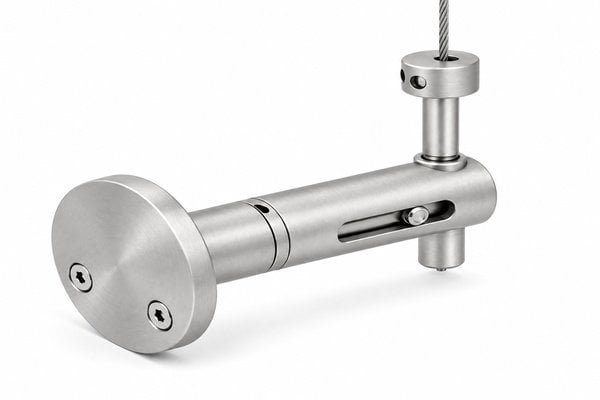
Catalogue illustration: Slotted Adjustable Cable Support — Matte silver appearance. Shown as a component reference, not an installation drawing or test result.
Decision two: where does the load go?
Show the substrate and the connection through the finished facade. A cover or decorative panel does not establish a structural support. Refer to the applicable anchor data, such as the Hilti technical guide collection, with the actual design and substrate information.
If access openings or removable covers are required, coordinate them before ordering cable lengths. The service access guide addresses the same issue around building services. Hardware should not block a panel that the maintenance plan expects to remove.
Decision three: what changes when plants mature?
A fixing visible at installation can become difficult to inspect once vegetation develops. RHS climber information and tying-in guidance offer horticultural context for the landscape team. They do not determine structural fixings, but they help identify growth and training considerations.
Our stand-off distance guide helps define the space between planting supports and the finished surface. Include the access needed for tools and maintenance, not only the desired visual gap in an architectural rendering.
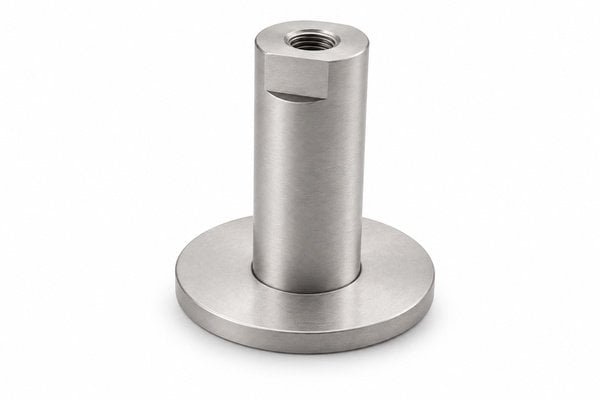
Catalogue illustration: Female Threaded Standoff Foot — Matte silver appearance. Shown as a component reference, not an installation drawing or test result.
Decision four: how will one part be replaced?
Describe a replacement sequence before approving the concealed detail. Which panel is opened, which cable section is managed, and which neighbouring parts remain in place? Have the responsible team define a safe method consistent with the system design.
For a special bracket or cover interface, submit the detail through OEM/ODM development. Ask the supplier to identify the supplied parts and access requirements. Review the relevant manufacturing capabilities without assuming that a custom appearance includes project engineering or installation services.
Decision five: how is the finish maintained?
IMOA coastal guidance provides background where salts are relevant. Concealment does not automatically create a dry or benign environment. Include likely moisture, deposits and cleaning access in the material review.
ASSDA cleaning guidance supports stainless maintenance planning. Obtain the instructions for the actual finish and adjacent materials. A detail that cannot be reached for the required maintenance deserves review before it is covered.
For a concealed option, include a small access drawing in the quotation package. Show the removable part, the opening direction and the space needed for tools. Have the responsible installation team review that drawing before closing the detail. This is often a more useful comparison item than a simple statement that maintenance access will be provided later.
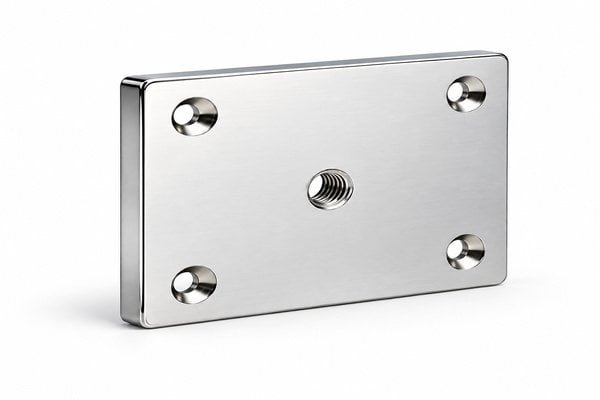
Catalogue illustration: Rectangular Threaded Mounting Plate — Polished silver appearance. Shown as a component reference, not an installation drawing or test result.
The NIST conformity assessment overview helps separate fit inspection from performance claims. Photographing a concealed fixing before closure can support the installation record, but it does not replace the defined design or inspection requirements.
Final comparison
Do not compare only visible bracket prices. Include removable covers, access work, installation sequence and future replacement effort. An exposed fitting may offer a simpler service route; a concealed one may suit the architecture when its access is properly planned.
The better option is the one that meets the approved design and maintenance requirements. Send the elevation and fixing section with access details, quantities and finish expectations so the quotation addresses the working detail as well as the appearance.