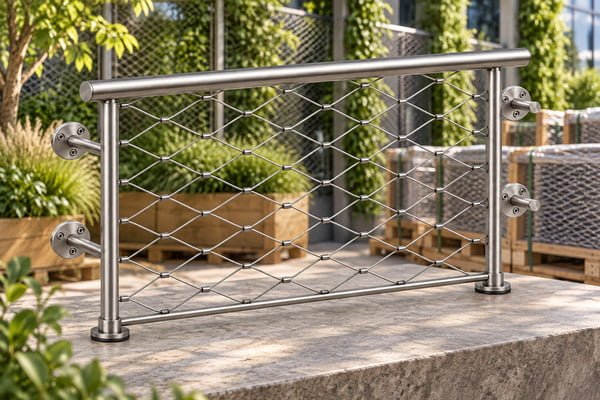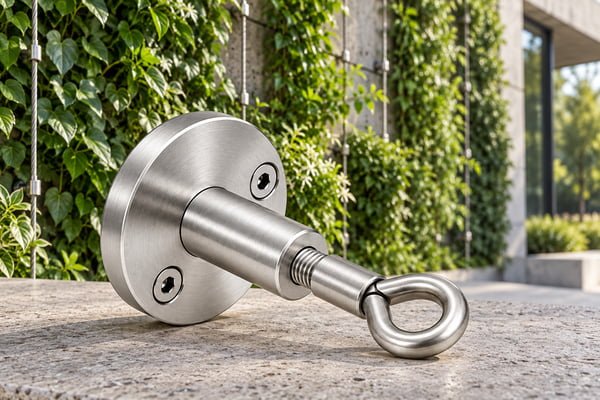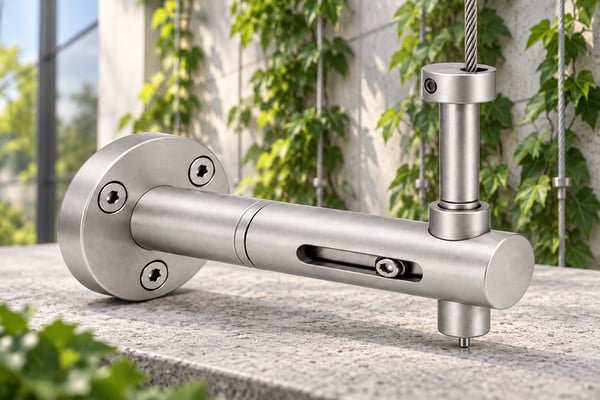
Short answer: Green-wall fixings for brick and concrete require different substrate information and product-specific anchorage evidence. Identify the actual load-bearing material behind the finish before selecting a wall bracket or anchor. A stainless bracket does not establish the capacity of the wall connection.
Two enquiries that should not receive the same answer
Enquiry A describes a reinforced-concrete wall with known construction information. Enquiry B says only “brick wall,” without identifying whether the unit is solid, perforated or part of a veneer. The visible bracket might look identical in both projects, but the missing information in B prevents a meaningful fixing comparison.
Begin with the green wall hardware range, then document the wall separately. The wall-standoff guide helps describe the bracket interface, and the insulated-facade anchor guide highlights why the outer finish may not be the anchoring substrate.
Compare the information, not just the anchor diameter
| Design input | Concrete enquiry | Masonry enquiry |
|---|---|---|
| Substrate identity | Specified concrete condition | Unit type and wall construction |
| Geometry | Thickness, edges and spacing | Unit layout, joints and edges |
| Existing condition | Relevant survey information | Relevant survey and material information |
| Fixing evidence | Approval for stated conditions | Approval for stated masonry |
| Installation | Product-specific instructions | Product-specific instructions |
Hilti’s technical guides organize product-specific engineering information. EOTA’s technical resources provide background on European assessment documentation. An approval is useful only when its scope matches the anchor, substrate and application being considered.
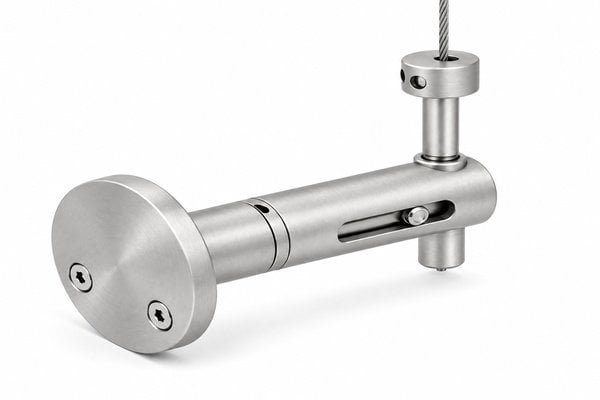
Catalogue illustration: Slotted Adjustable Cable Support — Matte silver appearance. Shown as a component reference, not an installation drawing or test result.
Separate the bracket from the anchorage design
Specify the standoff distance, cable route and connection geometry. Then ask the responsible designer to determine the actions transferred to the wall and the suitable anchorage arrangement. A longer projection or altered cable direction may change the design question even if the bracket material stays the same.
Jakob’s greening documentation and its technical catalogue show why facade supports and cable layouts must be considered together. These are references for system planning, not a substitute for a project-specific anchor design.
The window-and-edge layout guide is useful when openings constrain support locations. Keep opening dimensions and proposed fixing coordinates on the same drawing so that architectural and structural reviews use a common reference.
Questions for an existing wall survey
Ask what construction records are available, which layer is load bearing and whether the proposed locations can be inspected. Record uncertainty explicitly. If testing or further investigation is required, have the responsible professional specify its scope and acceptance basis.
Do not turn an isolated pull-out result into a universal capacity for every fixing on the building. Measurement, sample location, substrate variation and the intended design method all matter. NIST’s traceability guidance explains one part of the evidence chain: how a measurement relates to suitable references.
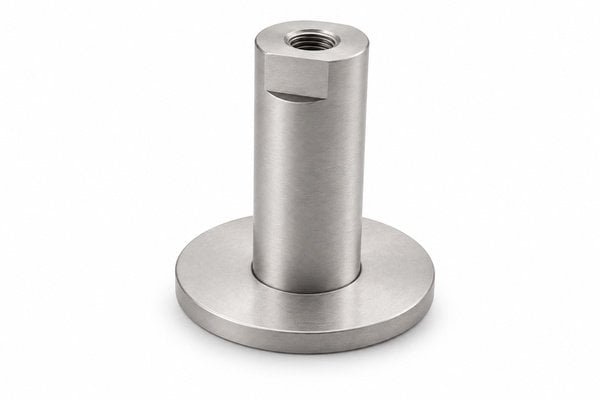
Catalogue illustration: Female Threaded Standoff Foot — Matte silver appearance. Shown as a component reference, not an installation drawing or test result.
For procurement, “survey required before final anchor approval” is a clear hold point. It is more actionable than assigning an arbitrary anchor diameter to an unknown wall.
Coordinate water, exposure and access
Penetrations need coordination with the facade’s water-management design. Ask the project team to define sealing, drainage and maintenance access. Do not prescribe one universal sealant detail across different wall assemblies.
IMOA’s coastal exposure guidance supports discussion of stainless selection, while ASSDA’s tea-staining information addresses appearance and care in exposed environments. Neither establishes anchorage strength.
The University of Washington’s green-wall construction resource provides broader context for wall-system planning. Separate this background from the actual manufacturer’s fixing instructions and the project’s approved drawings.
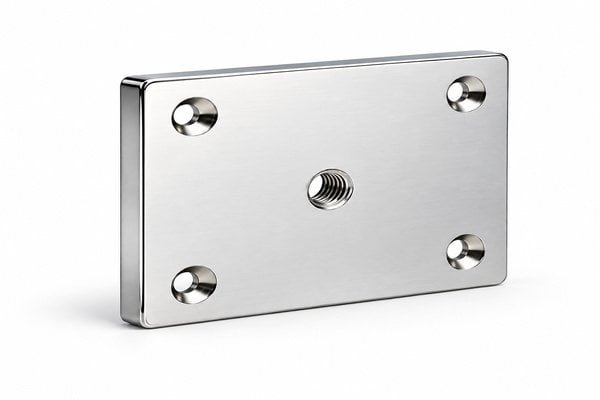
Catalogue illustration: Rectangular Threaded Mounting Plate — Polished silver appearance. Shown as a component reference, not an installation drawing or test result.
Make exclusions explicit
Separate the price of brackets, anchors, site investigation and installation support. Identify the party providing each item. If an anchor is excluded from supply, the bracket quotation should still state the assumed fixing interface. That prevents a later installer from choosing an unrelated anchor simply because it passes through the available holes.
A quotation package suppliers can answer
Include the wall survey, support coordinates, bracket projection, cable layout, environment, quantities and required documents. State whether anchors are included or supplied by another party. Require each exception to be listed beside the relevant drawing reference.
For a custom bracket, submit the interface through OEM/ODM review. Check the requested fabrication and documentation against the published capabilities, then request the proposed component drawing and commercial scope.
Send the coordinated package through project enquiries. Compare quotations against the same responsibilities and substrate assumptions; the lowest bracket price alone does not reveal the cost or suitability of the installed wall connection.