
Match shower handle finishes using an identified reference and agreed viewing conditions. A finish name alone is not an appearance specification. Keep the approved sample, material, process and batch records connected so repeat orders can be compared consistently.
This buyer’s workflow is for hotel suppliers and distributors sourcing shower handles and hardware over several deliveries. It addresses the practical difference between ordering a colour description and controlling an appearance requirement.
Define what is being matched
Specify whether the new handles must match a retained production sample, another hardware family or previously installed items. These are different targets. Installed surfaces may have changed through use and cleaning, so identify the intended reference explicitly.
The CRL handle range and shower hardware catalogue illustrate varied product and finish choices. They do not establish that similarly named finishes from different manufacturers will match. Use the actual agreed sample and specification for the order.
Include construction in the comparison
Our solid versus tubular pull guide covers construction differences. Geometry and surface form can affect how a finish looks under directional light. Compare representative finished handles rather than relying only on a flat colour chip.
ASSDA surface finish resources help describe stainless appearance beyond a vague silver label. For coatings and plating, obtain the relevant process description from the supplier. Record texture, gloss or directional appearance where they matter to the accepted result.
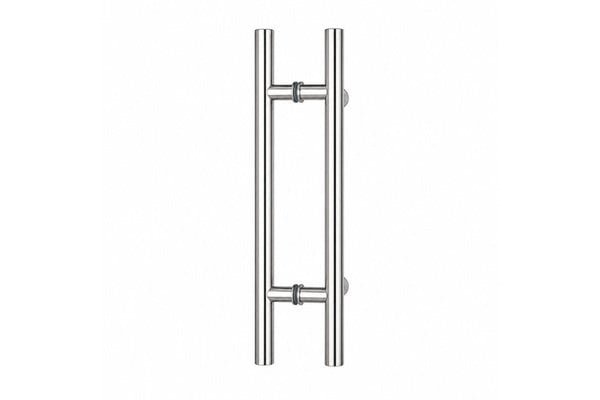
Catalogue illustration: Complete ladder-style shower door handle. Shown as a component reference, not an installation drawing or test result.
| Approval record | What it prevents |
|---|---|
| Reference sample ID | Confusion over which sample governs |
| Product configuration | Comparing unlike shapes or constructions |
| Viewing conditions | Different lighting driving inconsistent decisions |
| Acceptance criteria | A finish name replacing an agreed standard |
| Batch and revision | Losing the link to repeat production |
Agree the inspection before production
Define how appearance will be assessed and which differences require review. If instrumental measurements are part of the agreement, specify the method and limits with a competent party. Do not invent a universal colour tolerance for all metallic finishes.
The ASTM B117 reference concerns salt spray testing, not a general colour-matching guarantee. Keep corrosion-test requirements separate from appearance criteria. A product can need both kinds of evidence, but one does not replace the other.
Control cleaning and handling of the samples
Store reference samples so they remain usable. Record their condition and avoid comparing a freshly finished sample with one carrying fingerprints or cleaner residue. Our finish care guide and ASSDA cleaning guidance provide background for compatible care.
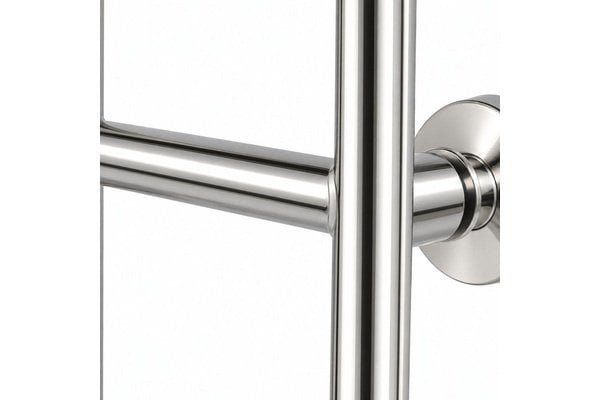
Catalogue illustration: Ladder-style shower handle cross-fixing detail. Shown as a component reference, not an installation drawing or test result.
For staged projects, agree when a reference sample should be reviewed or renewed. Keep any superseded sample identified rather than allowing several conflicting standards to circulate between purchasing, the factory and the site team.
Discuss repeat-order requirements through OEM/ODM supply. Include the sample identifier in the quotation request, along with the model, quantities and delivery stages. Review the relevant manufacturing capabilities for the actual finish process being requested.
Inspect batches using the agreed plan
Our bulk-order sampling guide helps organize incoming checks. NIST acceptance sampling information provides general background, while the order should define the applicable plan and acceptance criteria. Sampling is not a reason to omit traceability for the rest of the delivery.
NIST measurement traceability guidance is relevant where measured results support the acceptance decision. GS1 traceability principles help connect product codes, batches and retained samples. Keep observations separate from assumptions about the cause of a mismatch.
For phased hotel deliveries, agree whether each room set must come from one identified batch or another approved grouping. Record that requirement before packing, rather than sorting loose handles on site. Keep a retained reference from each accepted batch where the contract requires it. Later replacement enquiries can then refer to an identified installation and its accepted appearance.

Catalogue illustration: Shower handle glass-contact fixing detail. Shown as a component reference, not an installation drawing or test result.
If a batch is questioned, identify the affected cartons and preserve examples under the agreed process. Compare them with the governing reference before authorizing rework or mixing them into installed sets. This protects the usefulness of the inspection evidence.
Repeat-order questions
Will the same finish name guarantee a match? No. Use the agreed reference and inspection conditions.
Can a photograph be the only approval? It can support communication, but screen and lighting differences limit its value as the sole appearance standard.
What should we send for pricing? Product code, reference sample ID, finish requirements, quantities and inspection scope. Request a repeat-batch quotation with those details so the offer addresses a controlled match rather than an undefined colour expectation.