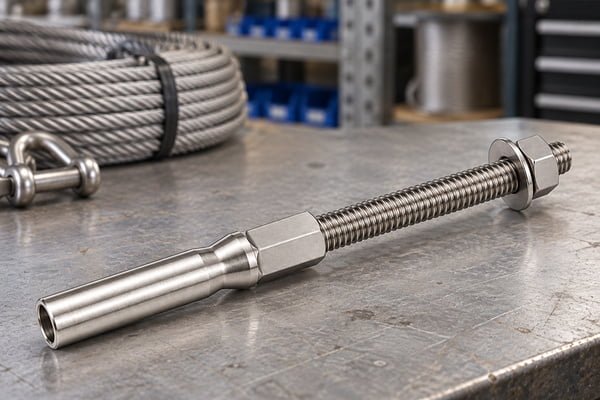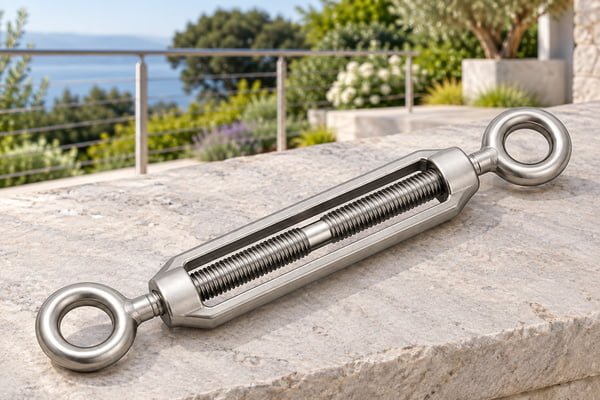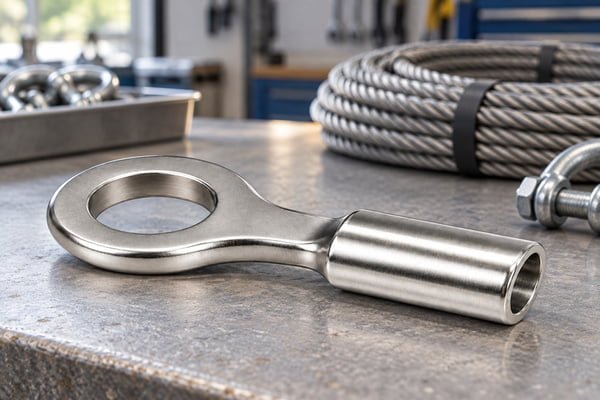
Select copper or stainless steel cable ferrules as part of a validated termination system, including the rope, ferrule, tooling and pressing procedure. Material preference alone is not enough to approve a termination. This guide helps buyers ask precise questions without transferring one manufacturer’s ratings to another supplier’s products.
Two materials, one essential question
The essential question is: which documented combination is suitable for this rope and application? Begin with the wire rope hardware range and identify whether the proposed end uses a turnback ferrule, a swaged terminal or another construction. These terms are not interchangeable.
Talurit’s copper turnback ferrule page and its stainless turnback ferrule page describe two manufacturer-specific systems. Their stated validation applies to those systems and instructions. It is not evidence for an untested lookalike or a different Elim assembly.
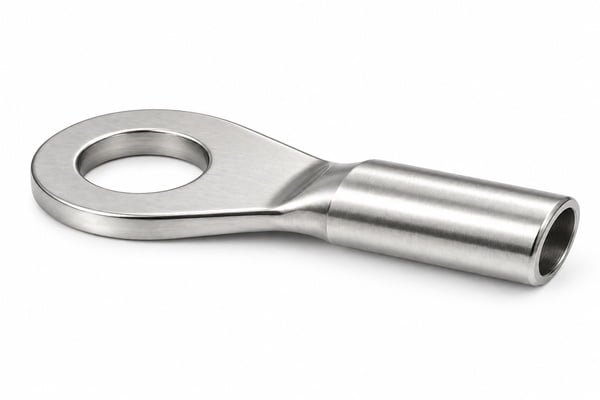
Catalogue illustration: Wire Rope Eye Terminal — WR075. Shown as a component reference, not an installation drawing or test result.
Put the whole combination on the purchase order
| Item | Information to request |
|---|---|
| Rope | Diameter, construction and material identification |
| Ferrule | Manufacturer, type and size designation |
| Tooling | Approved machine and die identification |
| Procedure | Current pressing and inspection instructions |
| Evidence | Relevant validation and production records |
Do not assume the size stamped on a ferrule is a universal rope diameter designation. Ask the supplier to explain its selection table. Bergen Cable’s technical introduction gives cable-construction context, while Bekaert’s rope-measurement resource addresses diameter measurement.
Our swaging die guide focuses on matching tools and terminals. A change in ferrule material may change the approved pressing process. The purchasing team should obtain the specific instructions, not infer a pressure or die choice from visual similarity.
Compare evidence before unit prices
A useful quotation identifies the proposed termination and states what has been validated. Ask how the supplier checks the finished pressing and controls rope insertion and component identity. The cable pull-test checklist explains the records a buyer can request for the actual configuration.
Sava’s fitting design information is another external example of system-based termination selection. It should not be used to combine components from unrelated systems. If a substitution is proposed, obtain a documented review of the complete assembly.
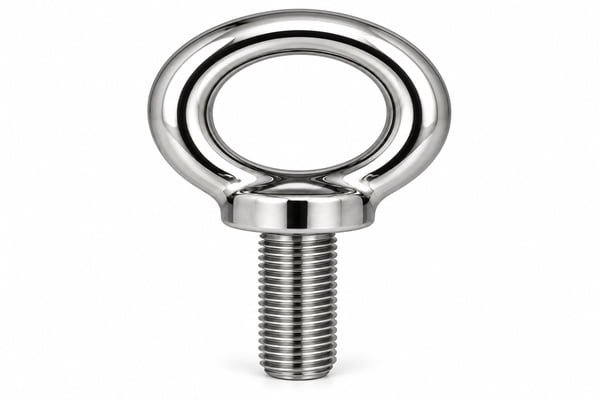
Catalogue illustration: Stainless Steel Wire Rope Eye Bolt — WR086. Shown as a component reference, not an installation drawing or test result.
Separate corrosion questions from strength questions
Define the exposure, adjacent materials and cleaning regime. IMOA’s coastal stainless guidance provides environmental context. A corrosion discussion does not establish termination strength, and a pull-test result does not answer every long-term exposure question.
Copper colour may be unacceptable for a visible architectural detail even where a particular system permits that material. Conversely, a stainless appearance does not remove the need for process control. Record both the technical requirements and the aesthetic acceptance criteria.
Keep an inspection trail
Link the finished cable assembly to the rope batch, ferrule identity and pressing record. Use the wire rope traceability checklist to define the handover package. GS1 traceability guidance provides a general framework for connecting those records.
For illustration, if a delivery contains 25 assemblies made in two production groups, the receiving team should be able to identify which records apply to each group. The numbers describe a hypothetical documentation example, not a test sample plan or production claim.
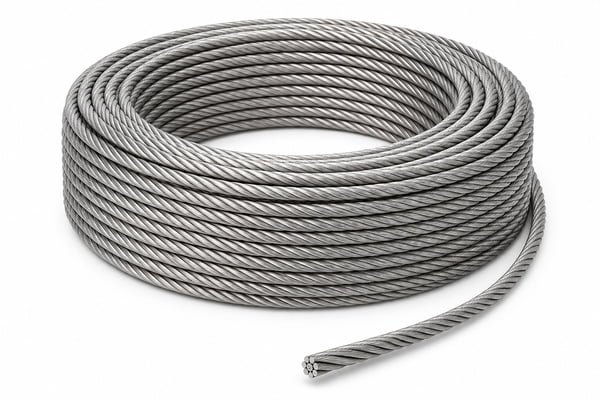
Catalogue illustration: 1×19 Stainless Steel Wire Rope — WR001. Shown as a component reference, not an installation drawing or test result.
Avoid mixed stock at the pressing bench
Keep different ferrule types and sizes in clearly identified containers, and verify the component identity against the work instruction before production starts. If a purchase order permits an alternative supplier, define the approval process for that alternative instead of allowing silent mixing. Retain records of the actual combination used. A box containing parts that appear interchangeable can create a process-control problem even when every individual component arrived with a correct supplier label.
NIST conformity assessment guidance helps distinguish a supplier statement from independent certification and testing. Agree which evidence the application requires before production. Catalogue component images in this article show related cable hardware; they are not proof of a ferrule cross-section or an approved pressing result.
Frequently asked questions
Is stainless always the stronger choice? Do not decide from the material name. Evaluate the documented termination system and its intended use.
Can one die set press every ferrule? Only use combinations expressly covered by the applicable manufacturer’s instructions.
Can we release an order while tooling is undecided? Resolve the process and evidence requirements first; otherwise the quoted component may not represent a usable assembly.
For custom cable assembly discussions, provide the rope and termination requirements. Review production capabilities and request a quotation identifying component, process, inspection and traceability scope separately.