Choose wire rope reel dimensions and pay-off arrangements around the rope, handling equipment and installation method. Protect stored rope from damage and contamination, retain its identity, and inspect it before use. This logistics guide helps importers avoid receiving a technically correct cable in an impractical package.
Start with the installation end of the journey
Ask how the cable will move from the delivery vehicle to storage and then to its installation position. Identify the rope in the wire rope system range. A reel that suits factory handling may not fit the site’s access or available equipment.
Bekaert’s storage guidance emphasizes protection and identification. Bergen Cable’s technical overview supplies rope-construction context. Obtain the selected manufacturer’s handling instructions; different rope and packaging arrangements should not be treated as identical.
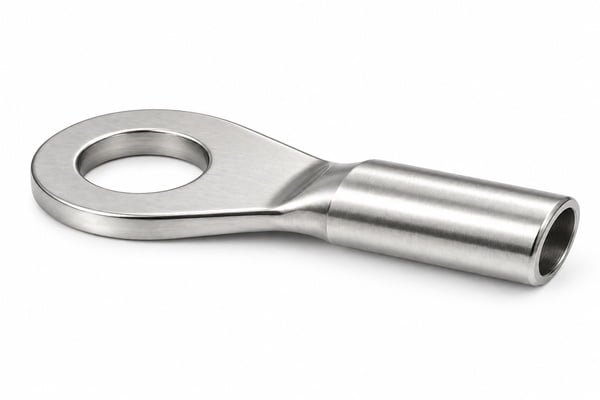
Catalogue illustration: Wire Rope Eye Terminal — WR075. Shown as a component reference, not an installation drawing or test result.
Put reel information on the order
| Information | Why purchasing needs it |
|---|---|
| Rope identity and length | Links the package to the intended order |
| Reel dimensions | Supports access and storage planning |
| Gross weight | Allows suitable handling arrangements |
| Pay-off requirements | Matches the intended installation method |
| Protection and labels | Preserves condition and traceability |
The wire rope packaging guide covers transit risks. Specify the package rather than relying on “standard export packing,” especially where long storage or constrained site access is expected.
Avoid introducing twist or damage
Follow the rope supplier’s pay-off instructions and use appropriate controlled handling equipment. Do not pull rope from an arbitrary direction simply because the reel can remain stationary. Stop if handling creates visible kinks, loops or damage and refer the condition for competent assessment.
Our bend-radius guide explains why handling geometry belongs in the brief. Sava’s pulley design information provides manufacturer-specific bending context; it is not a universal reel-core specification for every rope.
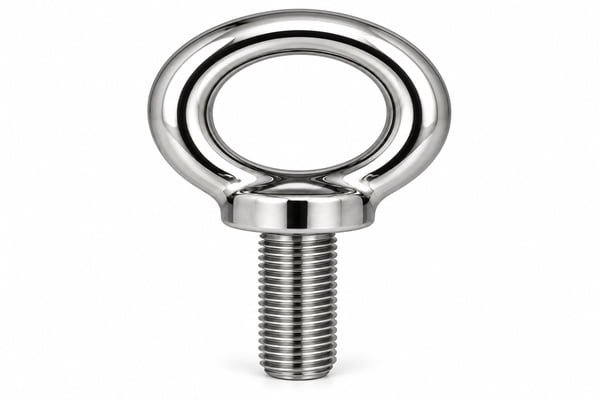
Catalogue illustration: Stainless Steel Wire Rope Eye Bolt — WR086. Shown as a component reference, not an installation drawing or test result.
Plan the storage space
Keep rope protected from nearby cutting, welding, dirt and accidental impact. Retain the manufacturer’s identification and records with the reel. Define how long storage is expected and who checks condition during that period.
ASSDA cleaning guidance and IMOA coastal exposure information offer stainless-care context. Do not use an unapproved cleaning or preservative treatment on the rope simply because it is marketed for stainless metal. Follow the product-specific instructions.
Control partial reels
A partial reel needs a remaining-length record and a secure identity. When material is cut for an order, retain the connection between that order and the original rope batch. The batch-traceability checklist provides a practical document structure; GS1 guidance explains general traceability principles.
For illustration, a hypothetical 100-metre reel used for three separate orders should not become three anonymous cable bundles. Record the issued lengths and original identity, allowing for the agreed cutting and measurement process. This example is bookkeeping guidance, not a recommendation for a particular reel length.
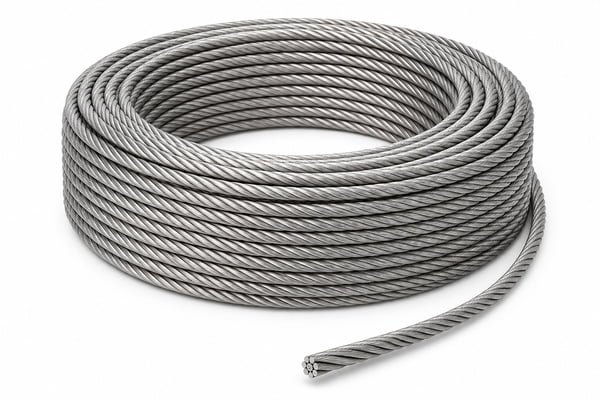
Catalogue illustration: 1×19 Stainless Steel Wire Rope — WR001. Shown as a component reference, not an installation drawing or test result.
Coordinate partial-reel handling with the storage team. Define how the rope end is secured according to the supplier instructions and how the remaining quantity is recorded after each issue. Keep damaged packaging or uncertain identity from being treated as an ordinary stock discrepancy. The responsible person should assess the condition before further use and retain the decision with the reel record, so later users do not inherit an unexplained problem.
Inspect before release to installation
Check packaging condition, identity and signs of rope deterioration or damage using the applicable instructions. Separate questionable material pending assessment. An undamaged label does not prove that the contents remain suitable.
ISTA procedures can frame a transport test discussion. NIST conformity assessment guidance helps distinguish inspection records and declarations from certification. Ask what evidence accompanies the rope and what checks are required before it enters service.
Resolve responsibilities in the quotation
State who supplies the reel, whether it is returnable, what handling information accompanies it and how damage claims are documented. Ask for photographs and dimensions of the proposed packing arrangement before shipment where logistics are critical. Confirm the unloading and storage plan with the receiving team rather than making a purchasing decision solely from net cable weight.
Can rope be stored outdoors indefinitely? Do not assume so; follow the supplier’s storage instructions and protection requirements.
Does a kink disappear when tensioned? Do not use tension as an improvised remedy for damage.
Can reel labels be discarded after cutting? Preserve the identity in the records for every issued length.
For custom cable supply, provide quantities and handling constraints. Review manufacturing capabilities and request a packing-specific quotation covering reels, labels, documentation and the planned delivery conditions.