A custom cable assembly prototype often carries setup and engineering costs that are spread across very few pieces. Production pricing should separate those one-time costs from repeat material, assembly, inspection and packing costs. Comparing unit prices without that breakdown can lead to the wrong purchasing decision.
This cost-model guide is for buyers specifying wire rope assemblies. It offers an illustrative quotation structure, not a price list or a promise of Elim production rates.
Start with the same technical definition
Two prices are comparable only when cable construction, length, terminals, finish, inspection and delivery scope are aligned. Sava’s cable assembly information and fitting design guidance show how application requirements influence component selection.
Our assembly length tolerance guide helps define measurement reference points. A supplier quoting loose cut cable is not quoting the same deliverable as a finished and inspected assembly of that nominal length.
A transparent illustrative calculation
Suppose a hypothetical quotation has a 300-unit setup charge and a repeat cost of 12 units per assembly. Before other costs, the average becomes:
| Quantity | Calculation | Average per assembly |
|---|---|---|
| 10 | 300 / 10 + 12 | 42 units |
| 100 | 300 / 100 + 12 | 15 units |
| 500 | 300 / 500 + 12 | 12.6 units |
These are invented arithmetic inputs for explaining cost allocation, not market prices. Freight, taxes, inspection changes and tooling ownership are excluded. Actual quotations may use a different cost structure.
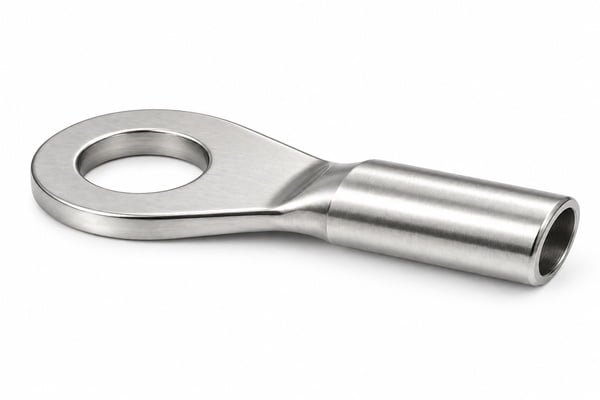
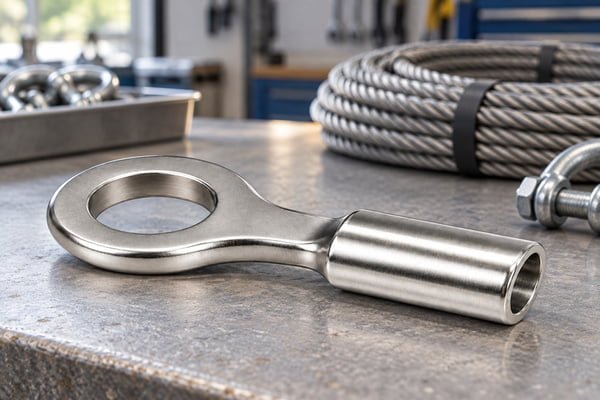
Catalogue illustration: Wire Rope Eye Terminal — WR075. Shown as a component reference, not an installation drawing or test result.
What belongs in the setup line?
Ask whether setup includes drawing review, fixtures, trial assembly, process development or other defined work. Identify what can be reused on repeat orders and what changes would trigger a new charge.
Do not assume that paying for a prototype transfers ownership of tooling or grants access to a supplier’s process. Put the agreed commercial arrangement in the quotation and order documentation.
Bergen Cable’s technical introduction explains construction terminology. Bekaert’s diameter measurement guidance is relevant when agreeing inspection. Those technical details can affect the work content behind a price without revealing any supplier’s actual cost.
Separate engineering samples from production samples
An engineering prototype may prove fit or assembly access while using a process that differs from planned production. Ask which materials, tooling and inspection steps will remain the same in the repeat order.
The swage dimension inspection guide identifies one useful production-control topic. If a trial part is accepted, record exactly what was accepted: fit, appearance, dimensional conformity or a defined performance result. Do not turn a successful fit check into evidence of load capability.
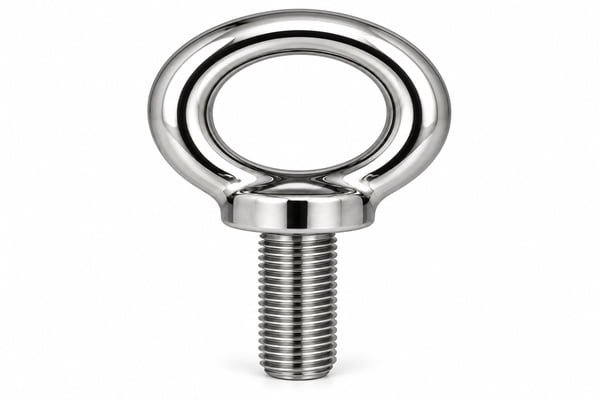
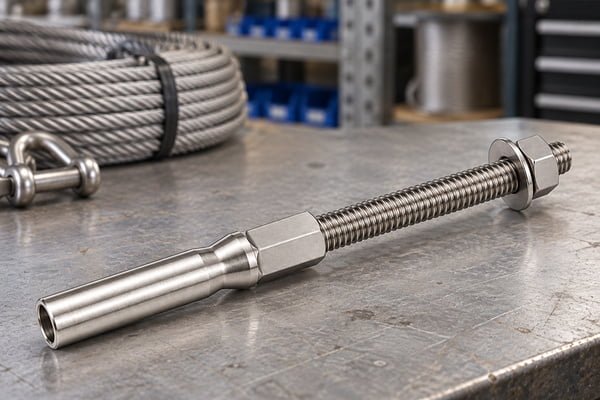
Catalogue illustration: Stainless Steel Wire Rope Eye Bolt — WR086. Shown as a component reference, not an installation drawing or test result.
Inspection can change the price curve
Request inspection and testing as explicit line items where appropriate. NIST’s acceptance-sampling introduction explains the logic of sampling, but the chosen plan must match the purchase requirements. A quotation including extensive inspection is not directly comparable with one that omits it.
For completed kits, ISTA’s transport-testing overview helps frame packaging questions. Trade.gov’s export-document guide provides background on shipment documentation; responsibility for the actual transaction should be stated in the order.
Look at installed cost as well
Review the cut-to-length kit comparison when deciding whether more preparation at the factory can reduce site work. Include waste, identification, handling and rework in the comparison without inventing savings percentages.
For repeat orders, apply traceability principles so the approved assembly and revision remain identifiable. A lower repeat price is useful only if the delivered configuration still matches the accepted definition.
Agree the repeat-order trigger
Ask which changes invalidate the repeat price: cable length, terminal code, quantity band, inspection scope or delivery schedule. Record the answer with the quotation revision. A repeat purchase should reference the accepted drawing and package definition, not merely an old invoice description. This makes it easier to distinguish a genuine price change from a change in what the buyer is ordering.
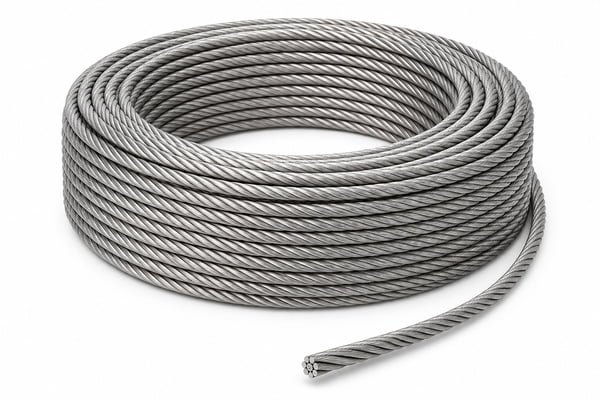
Catalogue illustration: 1×19 Stainless Steel Wire Rope — WR001. Shown as a component reference, not an installation drawing or test result.
The quotation request
Provide expected prototype quantity, initial production quantity and realistic repeat-order scenarios. Ask for one-time charges, repeat unit prices, inspection scope, packing and delivery assumptions separately. State which costs change if the drawing is revised.
Use OEM development for the design discussion, check manufacturing capabilities, and request a staged quotation. A clear cost breakdown lets the buyer compare alternatives without mistaking prototype overhead for the long-term cost of the product.