Compare wire rope assembly price breaks using the total cost of an approved, delivered quantity, not the lowest unit price on the quotation. A larger order can reduce setup cost per assembly while increasing inventory exposure, storage needs and the cost of a later drawing change.
For buyers sourcing wire rope systems, the best price tier depends on repeat demand and release conditions. This article uses a simple commercial worksheet rather than a product-performance calculation.
Put each offer on the same basis
Ask every supplier to quote the same drawing revision, cable construction, terminal combination, inspection scope and packaging. State whether the quantity means one production lot or several scheduled releases. A price for one shipment cannot be compared directly with a year-long call-off arrangement.
Industrial cable assembly information illustrates the range of assemblies covered by the term. Specify the actual construction. Our prototype and production cost comparison separates development charges from recurring manufacturing costs.
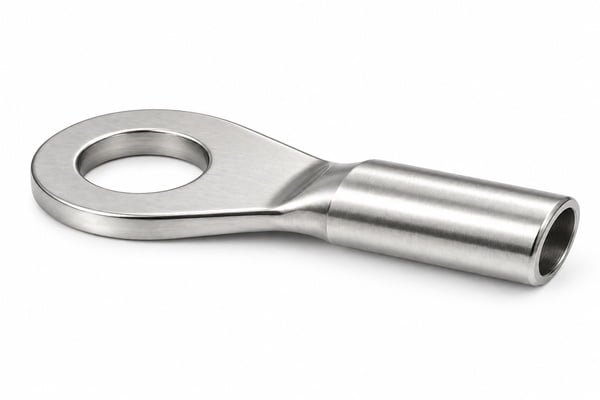
Catalogue illustration: Wire Rope Eye Terminal — WR075. Shown as a component reference, not an installation drawing or test result.
A numerical example with explicit assumptions
Suppose an illustrative quote includes a $120 setup charge. Supplier A offers 200 assemblies at $8 each; Supplier B offers 500 at $7.20 each. Before freight, tax, storage and inspection extras, the totals are $1,720 and $3,720 respectively.
The second offer has a lower average cost per assembly, but requires $2,000 more initial cash. If the confirmed requirement is only 200 units, the additional 300 units need a credible use. These invented figures demonstrate the calculation; they are not Elim prices or order terms.
| Comparison entry | Why it matters |
|---|---|
| Confirmed demand | Separates current need from forecast stock |
| Setup and tooling | Shows non-recurring charges |
| Unit price | Must cover the same assembly scope |
| Freight and packaging | Can change across shipment sizes |
| Inspection | Should remain consistent across offers |
| Obsolescence exposure | Captures the effect of revisions or cancellations |
Check what changes at the price break
Ask whether the lower rate assumes a different terminal process, cable source or inspection plan. Cable fitting design information is useful context for the terminal interface, but price alone cannot establish equivalent assembly performance.
Do not trade away documented quality requirements without a review. NIST’s acceptance-sampling introduction and sampling-plan guidance help distinguish a controlled receiving decision from an informal reduction in inspection. Any changed inspection scope should be visible in the quotation.
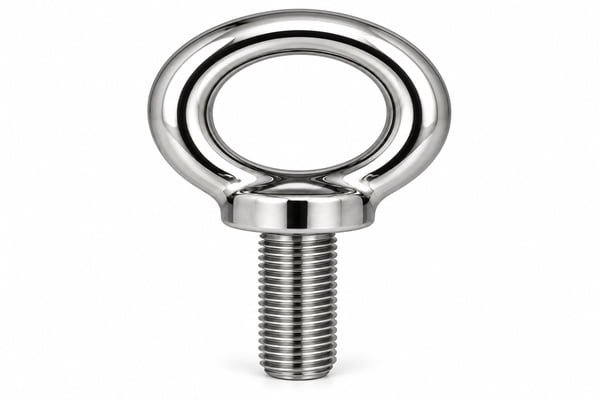
Catalogue illustration: Stainless Steel Wire Rope Eye Bolt — WR086. Shown as a component reference, not an installation drawing or test result.
Quote release quantities separately
A blanket order may combine an annual forecast with smaller delivery releases. Define the minimum release quantity, production trigger, storage responsibility and ownership of unfinished stock. Record whether a drawing change affects only future production or also goods already manufactured.
Maintain the assembly identity through each release using traceability principles. The batch-record guide explains the documents buyers should retain. Repeated deliveries should not silently mix drawing revisions because they share the same commercial order number.
Packaging can also change the economics. Compare coils, separators and carton quantities using the intended distribution conditions and relevant ISTA procedures. More assemblies in one box may lower freight volume but increase handling difficulty or damage exposure.
Ask for a costed alternative
Where site cutting creates waste, compare complete assemblies with the approach in our cut-to-length cable kit guide. Include rejected lengths, unused terminals and site labour in the estimate. Keep the same approved finished requirement in both scenarios.
Request clarification of any claimed compliance or testing using conformity-assessment principles. If dimensional inspection is charged separately, define the measurement method with traceability guidance in mind. An undefined inspection allowance makes offers harder to compare.
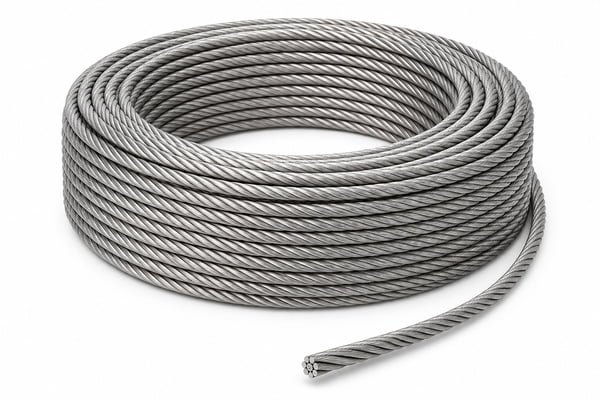
Catalogue illustration: 1×19 Stainless Steel Wire Rope — WR001. Shown as a component reference, not an installation drawing or test result.
Three purchasing questions
Is the largest tier always best? No. It is best only when its total cost and stock exposure suit a realistic demand plan.
Can we combine several lengths to reach a tier? Ask explicitly. Different setups or components may prevent the supplier from pooling quantities.
What should be fixed before negotiation? The drawing, inspection scope, shipment basis and release schedule. Otherwise a discount may simply reflect reduced scope.
Submit unusual assemblies through OEM review, check manufacturing capabilities, and request comparable price tiers. A transparent worksheet makes the commercial decision repeatable when demand changes.