Reuse pool gate hardware only after identifying the model, assessing its condition and confirming compatibility with the required gate arrangement. Replacement is not automatically a like-for-like swap: glass preparation, striker position, fixing conditions and current requirements can change the decision. This retrofit guide helps property teams compare scope before ordering.
Start with an inventory
Record the hinge, latch, striker, stops and supporting fixings. Photograph identifying marks and obtain the available drawings or instructions. Use the pool hardware range to organise possible replacements, not to identify an existing part by appearance alone.
D&D documentation resources and its latch range demonstrate the value of exact model information. Our magnetic-versus-mechanical latch comparison explains why the mechanism’s name does not establish suitability for every pool gate. An unknown model creates an information gap that must be resolved in the assessment.
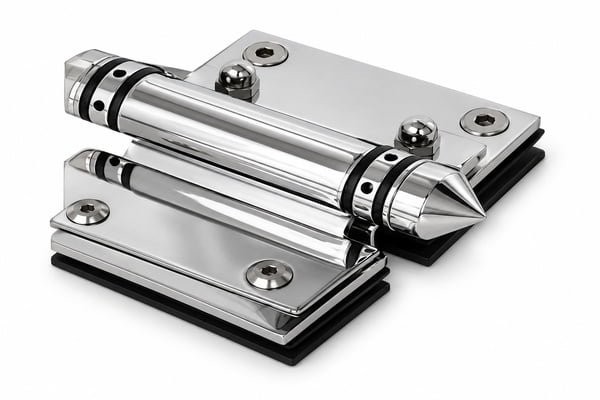
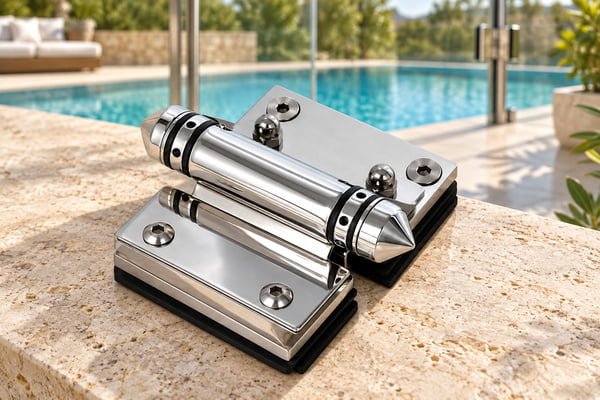
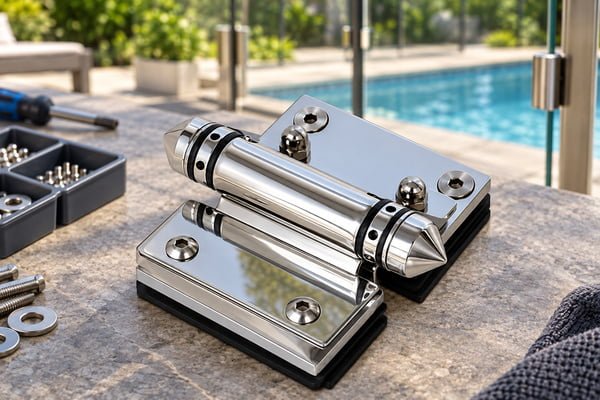
Catalogue illustration: Bolt-Plate Glass-to-Glass Pool Gate Hinge. Shown as a component reference, not an installation drawing or test result.
Compare three possible scopes
| Scope | Evidence needed | Main coordination issue |
|---|---|---|
| Retain and maintain | Identified serviceable parts and permitted procedure | Restoring the documented operating condition |
| Replace selected components | Verified compatibility with retained parts | Mixed old and new interfaces |
| Replace the hardware set | Approved complete arrangement | Glass, support and installation changes |
Do not treat this table as a recommendation to keep a damaged component. The condition assessment and applicable requirements determine what can remain in service. Where safety is in doubt, manage access and use appropriately while obtaining competent advice.
Check the requirements before pricing
The CPSC barrier guidance and NSW pool-owner requirements are examples of jurisdiction-specific references. Establish the rules applicable to the property and the proposed work. A gate’s age or previous use does not independently establish that a proposed retrofit is acceptable.
Our closing-test checklist helps organise operating observations, but the actual commissioning procedure must match the system and project requirements. Record the conditions of testing. One successful closure observed during a sales visit is not a complete assessment.
Measure the retained interfaces
Record glass thickness and preparation, fixing positions, mounting faces and the available adjustment space. The CPSC tempered-glass alert is important if a replacement would require changing finished glass. Resolve that issue before buying hardware that cannot fit the existing preparation.
For illustration, replacing 12 latch bodies may also require 12 matching strikers and model-specific fixing kits. The quantities are a purchasing example, not a universal kit rule. Identify the included and excluded parts in the quotation so a low body-only price is not compared with a complete set.
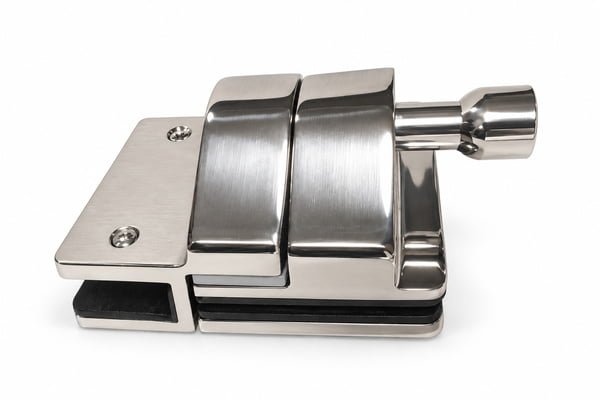
Catalogue illustration: Inline Glass Pool Gate Latch with Metal Housing. Shown as a component reference, not an installation drawing or test result.
Review closing and latching together
A latch change can interact with hinge behaviour, gate alignment and stops. A hydraulic hinge product example shows that closing hardware also has model-specific instructions. Do not compensate for misalignment by making undocumented adjustments elsewhere in the gate.
Use the spare-parts planning guide to identify replacements that should remain available after the work. Record the final combination in the handover file. Future maintenance becomes harder when the property holds invoices for individual parts but no clear assembly schedule.
Include labour and downtime in the comparison
Compare assessment, removal, installation, any glass or substrate work, commissioning and maintenance documentation. A cheaper replacement can cost more overall if it requires a new mounting arrangement or several return visits.
ASSDA cleaning guidance provides context for exposed stainless surfaces, while the hardware manufacturer’s instructions govern the complete mechanism. Distinguish cosmetic cleaning from a repair or replacement decision. Cleaning cannot establish that worn or damaged operating parts are suitable for continued use.
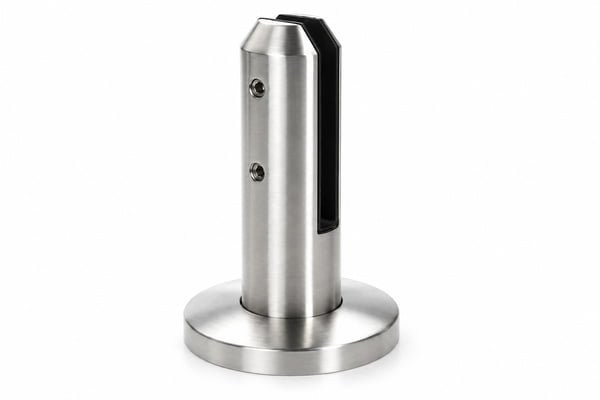
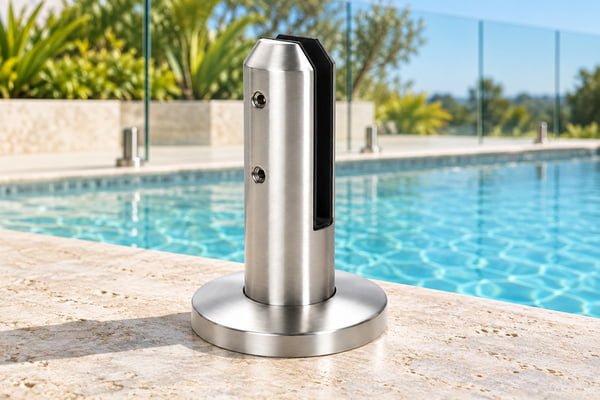
Catalogue illustration: Round Base-Plate Glass Pool Fence Spigot. Shown as a component reference, not an installation drawing or test result.
Questions for the final decision
Can we retain the old striker with a new latch? Only when the exact combination is documented as compatible and accepted for the project.
Is an identical-looking hinge a direct replacement? Not necessarily. Compare preparation, fixing, operating limits and instructions.
What should the contractor hand over? The installed model schedule, relevant instructions and required inspection or commissioning records. NIST conformity-assessment guidance explains why these records have different purposes.
For project-specific replacements, discuss OEM enquiries, review manufacturing capabilities, and request a retrofit quotation. Include the inventory, measurements and assessment findings so the supplier can price a defined scope rather than guessing what can be reused.