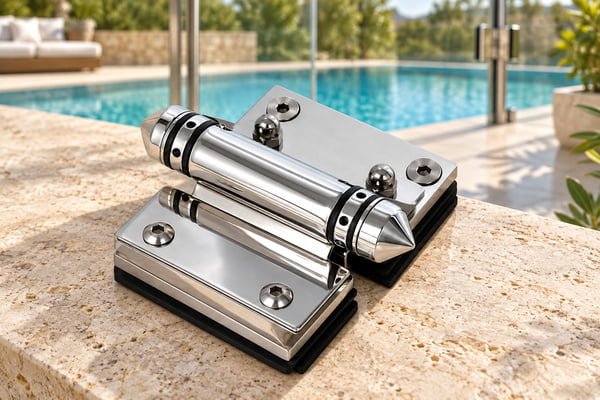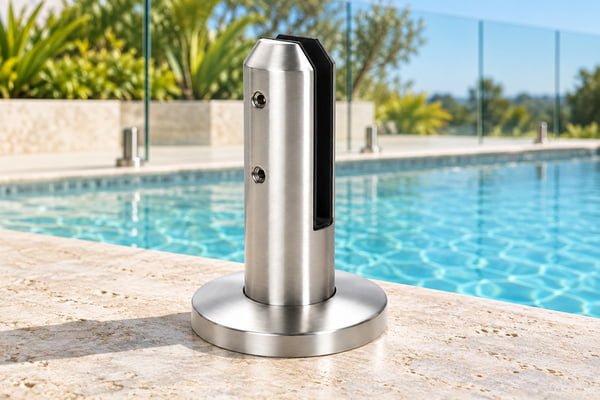
Rooftop pool fence procurement requires coordination between the barrier, the building structure and the waterproofing. The hardware order should identify those interfaces before manufacture. Choosing a spigot by appearance or material grade alone leaves essential project responsibilities unresolved.
This checklist is written for contractors purchasing pool fencing hardware above occupied spaces. Its focus is the information that must reach the supplier, designer and waterproofing contractor in the same revision.
Define the barrier role first
A pool barrier and an edge-protection guard may have different requirements. Establish which functions the assembly performs, and have the responsible designer apply the relevant local rules. The CPSC barrier guidance is US pool safety context; NSW pool safety information addresses a different jurisdiction. Neither automatically defines all rooftop guard obligations.
Ask who approves the glass system, the supporting structure and the installed barrier. Put those names or roles in the submittal schedule so a hardware quotation is not mistaken for complete project approval.
Draw the layers below each fixing
The visible tile is only one part of the roof build-up. Show the structural substrate, waterproofing, protection layers, finishes and any pedestal or raised deck. Fixing dimensions must refer to the appropriate structural datum, while visible covers must fit the finished surface.
| Interface | Required coordination |
|---|---|
| Structural fixing | Substrate, anchor design and installation access |
| Waterproofing | Approved penetration or upstand detail |
| Finished deck | Height, cover fit and drainage route |
| Glass and hardware | Matching system and project performance evidence |
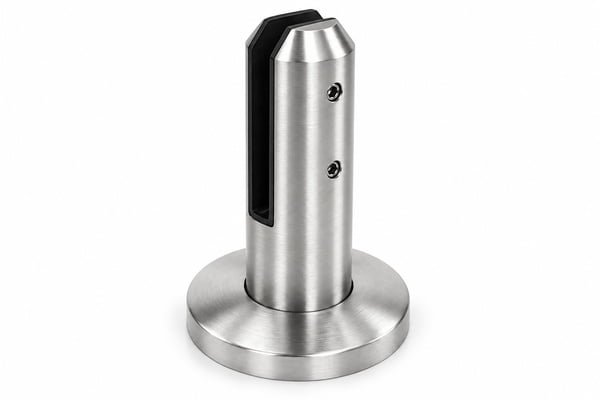
Catalogue illustration: Round Base-Plate Glass Pool Fence Spigot. Shown as a component reference, not an installation drawing or test result.
The Hilti technical guides are a useful source of anchor design information. Use the applicable product data and project design rather than a generic embedment value. Our spigot anchoring guide explains the purchasing information needed around edge distance and substrate conditions.
Protect the water-management detail
Request the waterproofing contractor’s approved interface before fixing locations are released. A decorative cover should not be described as a waterproofing system unless that role is documented. Define who inspects the concealed work before it is covered.
Use our spigot drainage guide to coordinate water paths around the hardware. Roof falls, drainage outlets and maintenance routes should remain functional. If a fixing detail changes, review its effect on waterproofing and structure together.
Specify the exposure, not just “outdoor”
Record coastal salts, pool chemicals, cleaning products and sheltered surfaces where deposits may accumulate. IMOA coastal guidance explains why stainless selection is exposure-dependent. It is background information, not a guarantee that a selected grade needs no maintenance.
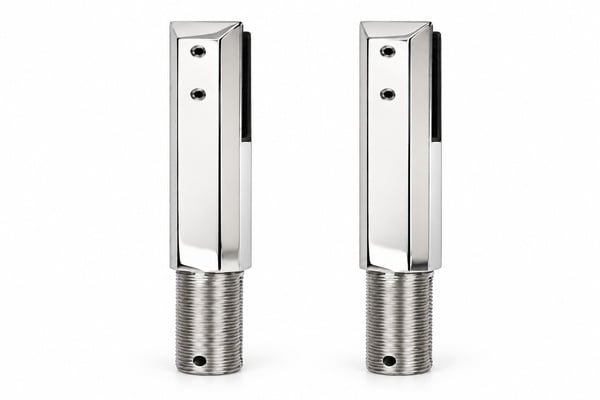
Catalogue illustration: Threaded-Shank Core-Drill Pool Fence Spigot — Polished silver appearance concept. Shown as a component reference, not an installation drawing or test result.
The CPSC glass safety alert and ASTM E2353 test-method reference support the discussion of glass and system evidence. Ask whether any proposed report covers the actual assembly, supports and loading conditions. Do not use a catalogue photograph as proof of rooftop suitability.
For special interfaces, submit a coordinated section through OEM/ODM development. Separate the hardware price from project engineering, waterproofing and installation unless those services are explicitly included.
Compare quotations by responsibility
List supplied spigots, glass-contact parts, covers and specified fasteners. Identify exclusions such as anchors selected by others, site testing or waterproofing work. Review the relevant manufacturing capabilities, then compare lead times only after the drawing release point is agreed.
Access also affects replacement cost. Ask how a damaged component can be removed without disturbing unrelated waterproofing. ASSDA cleaning guidance helps inform maintenance planning, while NIST conformity assessment information clarifies the difference between inspection and certification.
Plan delivery around rooftop access. Crate size, lifting arrangements, storage protection and installation sequence can affect the practical cost of the order. Ask the site team to confirm those constraints before packing is finalized, and keep each component kit identifiable without requiring every package to be opened at once.
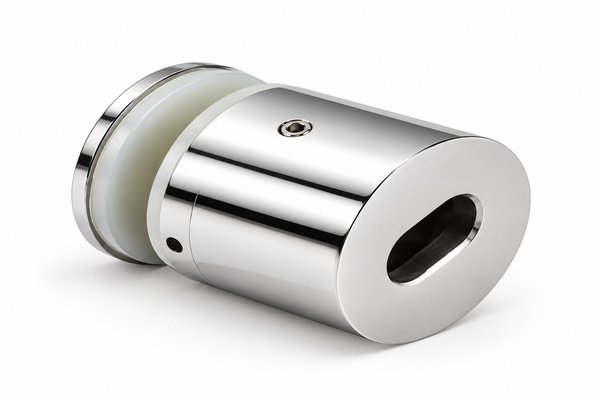
Catalogue illustration: Slotted-Face Glass Pool Fence Standoff — Polished silver appearance concept. Shown as a component reference, not an installation drawing or test result.
Handover questions
Use our pool fence handover checklist to organize the final records. Include approved drawings, component identifiers, inspection evidence and maintenance instructions, with the scope of each record clearly stated.
Does a stainless grade establish rooftop suitability? No. Structural, glass, barrier and waterproofing requirements must also be addressed.
Can the cover hide a fixing change? A cover does not approve an altered fixing. Record and review changes before concealment.
What should the RFQ include? Roof sections, barrier layout, exposure, quantities and responsibilities. Send the coordinated package so the quotation can identify open interfaces before they become site variations.