
Quick answer
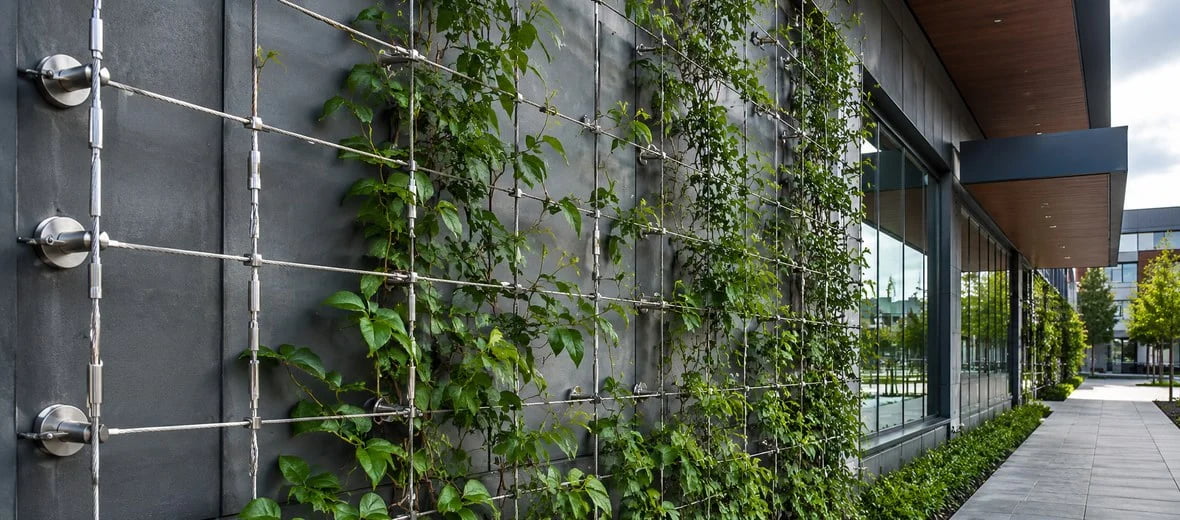
Specify a commercial cable trellis as a coordinated assembly: cable construction, terminals, tensioners, stand-offs, anchorage, substrate and exposure. Provide the layout and design responsibilities; a cable diameter or a brand-or-equal note does not define an equivalent system.
For a cable-trellis RFQ, define the environment, layout, support interfaces and responsible design party. Assess proposed equivalents against documented requirements rather than a brand-or-equal label alone.
Architects and buyers should specify cable trellis hardware by defining the corrosion environment, stainless steel grade, cable diameter and construction, grid spacing, deflection target, end fittings, tensioning method, substrate type, and anchorage details. Any substitution should match these parameters, not just the general appearance or brand name.
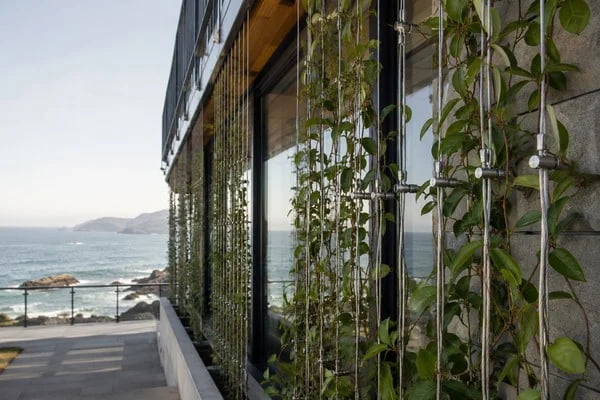
A good facade trellis spec should help three teams at once: design, procurement, and installation. If one field is missing, the risk usually appears later as a price gap, a site delay, or a maintenance issue.
How Should Cable Trellis Hardware Be Specified for Environment and Durability?
Environment is the first problem. Many buyers start with price or cable size, but corrosion exposure decides whether the system will last. If the facade is near the sea, a pool, heavy pollution, or de-icing salts, a weak material choice can fail early.
The specification should state the corrosion exposure class, required stainless grade, and galvanic isolation method. For chloride-prone or marine environments, I would not accept 304 stainless steel. Buyers should consider 316 stainless steel or duplex stainless steel where the project engineer or facade consultant confirms the need.
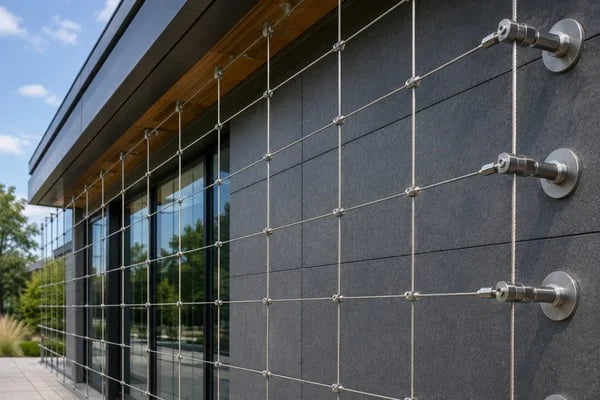
Illustrative RFQ scenario, not a recorded customer case: a request states only 'stainless cable trellis, brand or equal'. Bidders could propose different steel grades or bracket specifications. Request a common specification before comparing those prices.
A clearer spec field would read like this:
Material and exposure: Cable trellis hardware shall be suitable for the declared facade exposure class. Stainless steel grade shall be 316 minimum for chloride-prone exterior conditions, or duplex stainless steel where verified by the project engineer. Galvanic isolation shall be provided where stainless components interface with aluminum or other dissimilar metals.
Buyers should also ask suppliers to declare:
| RFQ Field | What to Request |
|---|---|
| Exposure condition | Urban, coastal, marine, pool, industrial, shaded/soiled |
| Stainless grade | 316, duplex, or engineer-approved equivalent |
| Surface finish | Satin, polished, passivated, or project-specific |
| Dissimilar metal contact | Isolation washers, sleeves, pads, or coating method |
| Maintenance note | Cleaning access and recommended inspection interval |
The key point is simple: durability rules the material choice. Price only matters after the materials are truly equivalent.
For complementary guidance, see What Comes in a Professional Green Wall Hardware Kit—and What Is Often Missing?.
How Should Cable Trellis Hardware Control Span, Grid, and Deflection?
The common mistake is to treat thicker cable as automatically safer. That is not how a facade trellis works. Cable diameter must relate to span, spacing, plant load, wind exposure, pretension, end fittings, and allowable deflection.
The spec should define axis spacing, target grid size, maximum span, cable construction, tensile grade, and allowable deflection as a project-specific ratio such as L/… to be verified by the engineer. It should also state the pretension and adjustment range required for turnbuckles or tensioners.
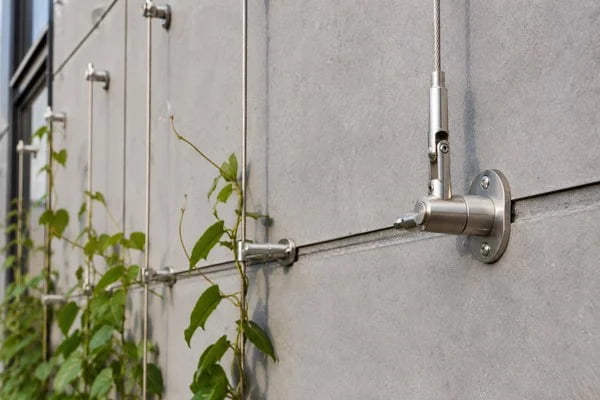
I usually ask buyers not to approve a quote that only says “6 mm cable.” A 6 mm 7×7 cable with one fitting family may behave differently from a 6 mm 7×19 cable with another fitting family. Flexibility, stretch, swaging method, and adjustment range all matter.
A practical RFQ table can make bids much easier to compare:
| Parameter | Buyer Should Specify |
|---|---|
| Cable diameter | Project-selected size, not guessed by supplier |
| Cable construction | 7×7 or 7×19, matched to design intent |
| Grid spacing | Horizontal and vertical axis spacing |
| Span limit | Maximum unsupported cable length |
| Deflection target | Project-specific L/… value, engineer verified |
| Tensioning | Turnbuckle, fork, stud, or concealed tensioner |
| Adjustment access | Visible and reachable after installation |
A useful spec excerpt may look like this:
Cable layout and adjustment: Cable diameter, strand construction, grid spacing, pretension, and allowable deflection shall be coordinated with the facade engineer. Adjustment points shall remain accessible for commissioning and future maintenance.
This protects the buyer from a cheap but incomplete quote. It also helps installers avoid hidden tensioners that cannot be reached after cladding or planting is complete.
For complementary guidance, see From Elevation Drawing to BOM: Preparing a Green Wall Hardware Enquiry.
How Should Cable Trellis Hardware Connect to the Wall?
The wall is often the failure point. A perfect stainless cable system can still fail if the substrate is hollow, weak, too close to an edge, or poorly waterproofed. This is why anchorage must be specified, not left as a site assumption.
The spec should declare the substrate type, anchoring method, backing plate needs, embedment, edge-distance checks, and waterproofing detail. Pull-out capacity, fixing layout, and sealant interfaces should be verified by the project structural engineer or facade consultant.
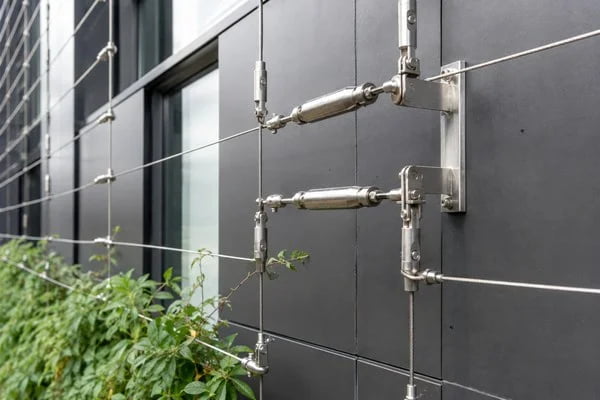
Check the actual load-bearing substrate behind insulation, cladding and finishes. Record the fixing interface on the project drawings rather than assuming that the visible wall surface defines the structural support.
The RFQ should separate the hardware package from the engineering verification:
- Supplier to provide: cable, fittings, tensioners, brackets, material certificates, shop drawings.
- Project engineer to verify: loads, pull-out resistance, edge distance, substrate capacity, deflection criteria.
- Facade team to coordinate: waterproofing, sealant, thermal movement, cladding penetration, access.
A clean anchorage spec may read:
Anchorage and substrate: Contractor shall confirm substrate type before fabrication. Anchors shall be mechanical or chemical as approved for the verified substrate. Shop drawings shall show embedment, backing plates, isolation details, waterproofing interfaces, and accessible adjustment points.
For procurement, I recommend rejecting substitutions unless they match the declared system parameters:
| Substitution Check | Must Match? |
|---|---|
| Stainless grade | Yes |
| Cable construction | Yes |
| End-fitting type | Yes |
| Adjustment range | Yes |
| Anchor compatibility | Yes |
| Waterproofing interface | Yes |
| Engineer verification basis | Yes |
“Equal” should mean parameter equal, not just visually similar.
For complementary guidance, see How Landscape Contractors Source Cable Systems for Large Green Wall Projects.
Frequently Asked Questions
Is 304 stainless steel acceptable for exterior cable trellis hardware?
304 stainless steel may be used in some mild interior or low-exposure conditions, but I would not specify it for marine, chloride-prone, poolside, or heavily polluted facades. Buyers should define the exposure class and verify the grade with the facade consultant.
Should buyers choose cable size first?
No. Cable size should follow span, grid spacing, deflection target, load assumptions, cable construction, and end-fitting compatibility. A thicker cable alone does not make the system correct or buildable.
What should be included in a cable trellis hardware RFQ?
A strong RFQ should include environment class, stainless grade, cable diameter, strand construction, grid spacing, span, deflection target, fittings, tensioners, substrate type, anchor method, waterproofing details, and required shop drawings.
Can architects use “brand or equal” in the specification?
They can, but it is risky if no parameters are listed. Any “equal” product should match material grade, cable construction, fitting type, adjustment range, anchorage compatibility, and verification requirements.
Facade specification: a practical decision record
Use this proposed worksheet to record a purchasing decision. It is an editorial checklist, not a completed project inspection or test result.
| Review step | What to record |
|---|---|
| Define the requirement | Record the climbing support layout, environment, mature planting assumptions and maintenance access. |
| Resolve the interface | Ask the facade engineer to resolve loads, allowable movement and anchors before equivalent products are compared. |
Worked example: Drawing revision impact
Illustrative assumptions only — not an actual order, measured result, price offer or engineering approval.
If a design revision changes the number of approved runs from 18 to 20 and retains 2 terminals per run, the terminal quantity changes from 36 to 40: an increase of 4.
Decision: Confirm whether supports and tensioning components also change; terminal arithmetic alone is not a revised structural design.
External project example: a green facade is an assembled structure
Published external evidence. Jakob Saigon project report reports the following: Jakob's published factory project describes more than six kilometres of stainless steel ropes supporting up to nine planter levels, with 16 mm tension members and integrated irrigation.
Procurement interpretation: This project illustrates why an RFQ should distinguish the load-carrying structure, planting elements and irrigation scope. The reported dimensions describe that project only; they are not a generic green-wall design or an Elim performance claim.
This source describes another organisation's work or products. It is not an Elim project, test report or certification. Source checked: 25 September 2026.
Reference and applicability
Jakob climbing-support applications: Manufacturer examples distinguish cable and mesh climbing supports from modular planting-wall equipment. Project-specific technical or regulatory requirements should be checked by the responsible qualified professional.
Editorial update: 25 September 2026. This update checks article structure, topic scope and the references identified above. It does not claim independent engineering certification.
Related guides and product references
For the next stage of green wall systems selection, use these guides alongside the product catalogue. Catalogue references do not replace project-specific drawings or engineering approval.
- Planning a Stainless Steel Green Wall System? Start with These 6 Hardware Decisions
- Stainless Steel Green Wall Systems: Specification, Installation & Testing Guide
- Green wall systems product range
- Straight Multiport Cable Support — Silver appearance — catalogue reference
Conclusion
Cable trellis hardware should be specified as a complete, compatible system, not a loose collection of cables, brackets, and anchors. I recommend starting with environment class, then defining span, grid, deflection, fittings, tensioning access, and anchorage compatibility. Buyers should request parameter-based quotes so bids are truly comparable. If you are preparing a facade RFQ, ask suppliers for shop drawings, material declarations, and engineer-verifiable anchorage details before approval.

Comments (2)