
Quick answer
Resolve six green-wall decisions before ordering: fixing and support, material grade, system format, water-management interfaces, maintenance access and finish. Separate cable climbing supports from modular planting walls so their different components and responsibilities are not combined accidentally.
First define the green wall type
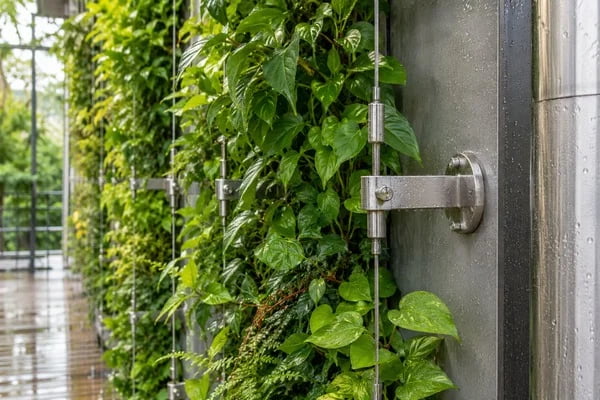
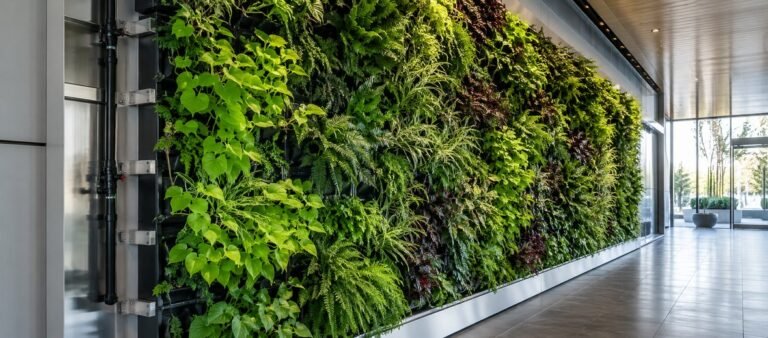
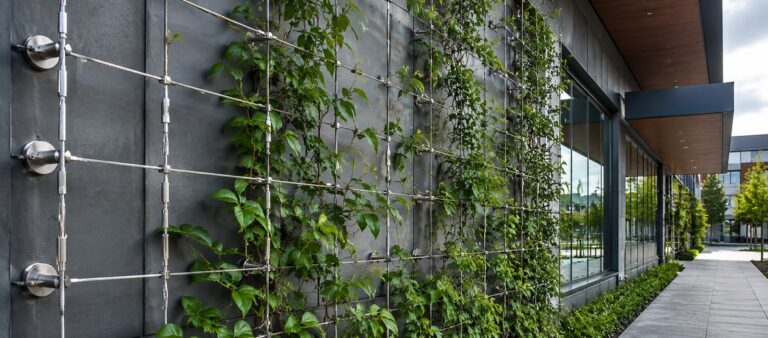
Cable trellis systems support climbing plants with cables or mesh, terminals, tensioners, stand-offs and project-specific fixings. Modular planting walls use planting modules and their supporting frame, with separately defined irrigation and drainage equipment. These are different supply scopes.
The module, pump, tank and drainage discussions below apply to modular planting-wall coordination when those items are included in the project; they are not standard inclusions in a cable-trellis hardware order. The decision record later in this article separates the interfaces.
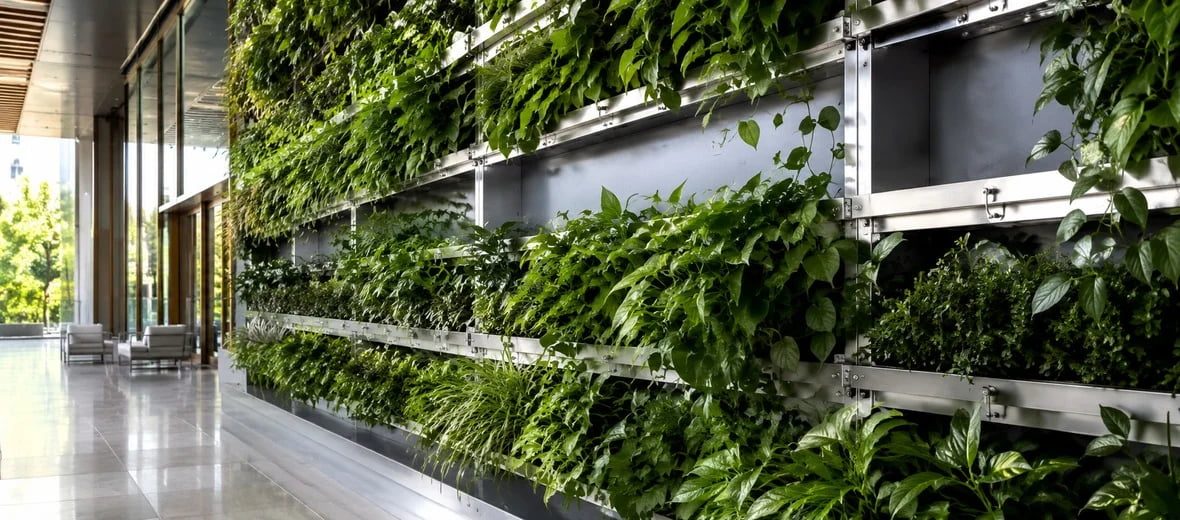
A stainless steel green wall system can look simple in a drawing, but the wrong early hardware choices can create cost, delay, and maintenance problems later. I often hear buyers ask, “Which steel grade should I choose?” I usually reframe that into a better question: “What must the whole system support, resist, drain, and allow people to maintain?”
A stainless steel green wall system should be planned as an early design-stage system decision, not a last-minute hardware purchase. Buyers should confirm six hardware areas first: wall fixing and load support, stainless steel grade, modular frame format, drainage and waterproofing coordination, maintenance access, and visible finish. Final load and safety decisions should be verified by qualified engineers or installers.
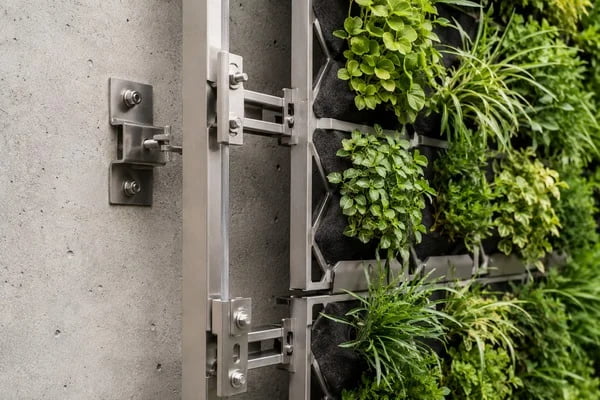
The details below are not structural calculations. They are the practical specification questions I use in pre-sales conversations to help architects, designers, contractors, and procurement buyers avoid mismatched parts.
1. How Will the Stainless Steel Green Wall System Be Fixed and Supported?
Clients often ask me, “What hardware do I need?” The real starting point is the wall condition. A concrete wall, steel structure, block wall, or lightweight partition may require very different fixing logic.
The fixing method must match the wall substrate, expected plant load, water weight, maintenance activity, and project safety requirements. Anchors, brackets, rails, and support frames should be selected only after the wall condition and load path are reviewed by qualified professionals.
I usually ask these questions first:
- Where will the green wall be installed? Indoor lobby, outdoor façade, terrace, retail wall, or courtyard?
- What is the base wall material? Concrete, brick, steel frame, gypsum board, or another substrate?
- Will the system hold live plants, artificial plants, planter boxes, or trays?
- Who will confirm the load calculation? Engineer, installer, or project consultant?
Late fixing decisions can be expensive. The design may be approved before anyone confirms whether the wall can take the system. In procurement, this can lead to hardware being purchased twice: once for the concept, then again for the actual site.
For complementary guidance, see What Comes in a Professional Green Wall Hardware Kit—and What Is Often Missing?.
2. Which Stainless Steel Green Wall System Grade Fits the Environment?
Many buyers start with, “Should I use 304 or 316 stainless steel?” I understand why. It feels like the main decision. But stainless steel grade is only one part of environmental suitability.
The grade should be selected according to exposure, humidity, irrigation, cleaning chemicals, coastal air, pollution, and project budget. No single stainless steel grade is correct for every green wall project, so buyers should verify material certificates and match the grade to the real environment.

A simple procurement comparison may look like this:
| Decision Factor | Why It Matters |
|---|---|
| Indoor dry area | Lower corrosion risk, but cleaning still matters |
| Outdoor exposure | Rain, UV, and pollution increase demands |
| Coastal or humid site | Chlorides can increase corrosion risk |
| Irrigation contact | Constant moisture changes material requirements |
| Visible hardware | Finish quality affects the final design look |
I avoid saying, “This grade is always enough.” Instead, I ask for photos, location, irrigation plans, and cleaning expectations. Buyers should also check mill certificates, surface finish records, and supplier quality documents before approval.
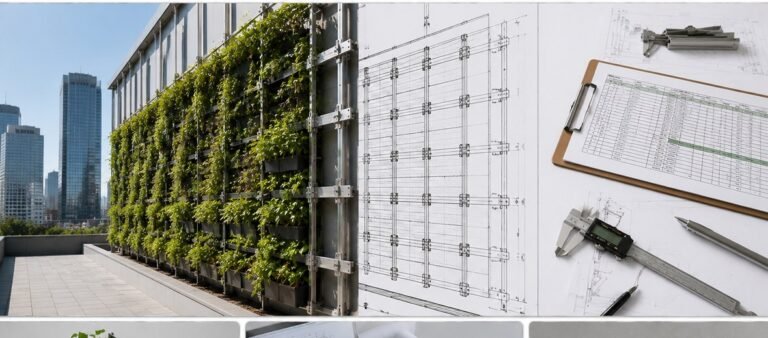
For complementary guidance, see From Elevation Drawing to BOM: Preparing a Green Wall Hardware Enquiry.
3. What Modular Format Should the Stainless Steel Green Wall System Use?
A designer may ask for “a green wall frame,” but that phrase can mean several different systems. It may involve trays, planter boxes, mesh panels, hanger rails, shelves, or a custom modular frame.
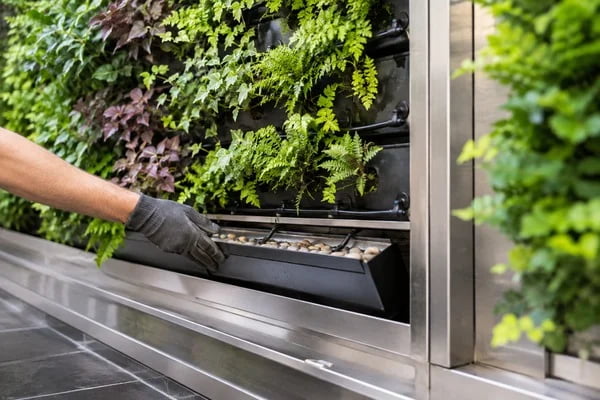
The modular format should match plant type, replacement method, wall layout, installation sequence, and transport limits. A good format reduces site confusion and helps procurement buyers order compatible parts instead of isolated hardware pieces.
Common formats include:
- Rail and hanger systems for removable planters or panels
- Tray systems for modular planting pockets
- Planter box systems for heavier planting designs
- Mesh or grid systems for climbing plants or decorative greenery
- Custom frames for branded commercial interiors
I prefer to confirm the module size early. If the wall design uses irregular shapes, lighting, signage, or access doors, the frame must coordinate with those features. Otherwise, the installer may need to cut, drill, or modify parts on site, which increases risk.
For complementary guidance, see Cable Trellis Hardware for Commercial Facades: What Architects and Buyers Need to Specify.
4. How Will Drainage, Irrigation, and Waterproofing Be Coordinated?
For a modular planting wall, coordinate drainage and waterproofing with the hardware layout before approving the supply scope. Assign responsibility for these interfaces explicitly.
Drainage, irrigation, and waterproofing must be coordinated before hardware purchase. Stainless steel frames, trays, brackets, and fixing points should not block water flow, damage waterproof layers, or make leak inspection difficult.
Key coordination points include:
- Water supply route
- Drainage outlet position
- Overflow protection
- Waterproof backing layer
- Access for pipe inspection
- Separation between wet planting zones and wall structure
The supplier, installer, and designer should review drawings together. I can help translate design intent into hardware questions, but final waterproofing details should come from qualified project professionals.
5. Can the System Be Maintained Without Dismantling the Whole Wall?
A green wall is not finished when it is installed. Plants may need pruning, replacement, irrigation checks, cleaning, and seasonal adjustment. Hardware should make that work realistic.
Maintenance access should be planned through removable trays, accessible rails, service gaps, inspection points, and replaceable components. If a system looks beautiful but cannot be serviced, long-term operating cost and user frustration can increase.
I suggest buyers ask:
- Can one module be removed without disturbing others?
- Can irrigation parts be inspected?
- Can damaged panels or planters be replaced?
- Can cleaners reach visible stainless steel surfaces?
- Does the maintenance team understand the system?
This is especially important for hotels, malls, offices, restaurants, and retail spaces, where downtime and visible repairs can affect the customer experience.
6. What Visible Finish Should the Stainless Steel Green Wall System Have?
Hardware is not always hidden. In many projects, rails, trims, fasteners, planter edges, or frames remain visible. If finish is ignored, the final wall may look less refined than the design rendering.
The visible finish should match the interior or landscape design. Brushed, polished, matte, powder-coated, or custom-colored surfaces should be confirmed with samples before bulk production or procurement approval.
For commercial projects, I recommend checking:
- Sample finish under real lighting
- Edge treatment and weld appearance
- Fastener visibility
- Color matching with plants, stone, glass, or wood
- Cleaning method for fingerprints or water marks
A small finish sample can prevent a large approval problem later.
Frequently Asked Questions
Is 304 stainless steel enough for a green wall?
It depends on the environment. Indoor dry projects may have different requirements from outdoor, coastal, humid, or heavily irrigated projects. Buyers should verify exposure conditions, material certificates, and project specifications before selecting a grade.
Should I buy green wall hardware before the design is finalized?
I would not recommend it. The fixing method, module size, drainage plan, and visible finish can all change after design coordination. Early supplier input is useful, but final purchasing should follow confirmed drawings and site requirements.
Who should confirm the load capacity?
A qualified structural engineer, installer, or project professional should confirm load capacity and fixing safety. Suppliers can support hardware selection discussions, but final safety judgment should be documented by responsible professionals.
What is the biggest procurement risk?
The biggest risk is buying isolated parts before confirming the full system. Brackets, trays, frames, and fasteners must work together with the wall condition, water plan, maintenance method, and finish requirements.
Six green wall decisions: a practical decision record
Use this proposed worksheet to record a purchasing decision. It is an editorial checklist, not a completed project inspection or test result.
| Review step | What to record |
|---|---|
| Define the requirement | Record the support substrate, material grade, cable or module layout, water-management interfaces, maintenance access and finish. |
| Resolve the interface | Identify which decisions concern the hardware supplier and which require the planting contractor or structural designer. |
Worked example: Decision ownership
Illustrative assumptions only — not an actual order, measured result, price offer or engineering approval.
Six hardware decisions across 3 facade zones create 18 decision records. If 4 records remain unresolved, 14 are complete and 4 require a named owner.
Decision: A record is complete only when the applicable design and procurement requirements have been resolved.
Reference and applicability
Jakob climbing-support applications: Manufacturer examples distinguish cable and mesh climbing supports from modular planting-wall equipment. Project-specific technical or regulatory requirements should be checked by the responsible qualified professional.
Editorial update: 25 September 2026. This update checks article structure, topic scope and the references identified above. It does not claim independent engineering certification.
Related guides and product references
For the next stage of green wall systems selection, use these guides alongside the product catalogue. Catalogue references do not replace project-specific drawings or engineering approval.
- How Landscape Contractors Source Cable Systems for Large Green Wall Projects
- Stainless Steel Green Wall Systems: Specification, Installation & Testing Guide
- Green wall systems product range
- Straight Multiport Cable Support — Silver appearance — catalogue reference
Conclusion
A stainless steel green wall system is not just a set of brackets and frames. It is a coordinated design, procurement, and maintenance decision. I recommend confirming support, material grade, module format, drainage, access, and finish before committing to hardware. If you are sourcing a custom system, share your drawings, site photos, and design goals with your supplier early, then verify all structural and waterproofing decisions with qualified project professionals.

Comments (3)