
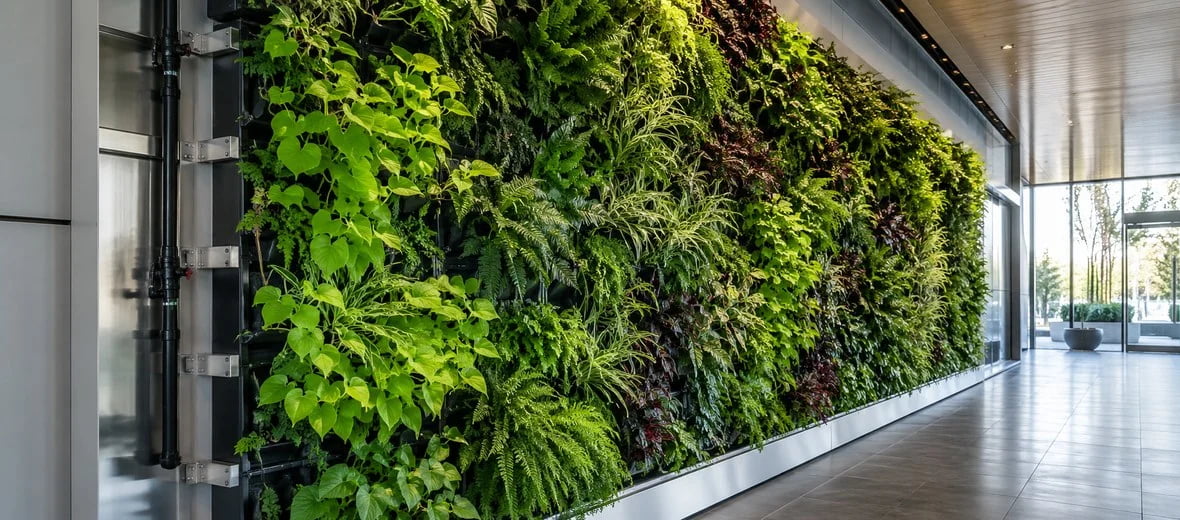
A professional green wall hardware kit can look complete on a quote, but I have seen many bids turn risky because key site interfaces were not included. That gap creates confusion, delays, and change orders. The safer approach is to separate the run-capable core kit from the plumbing, drainage, and compliance items that make it installable.
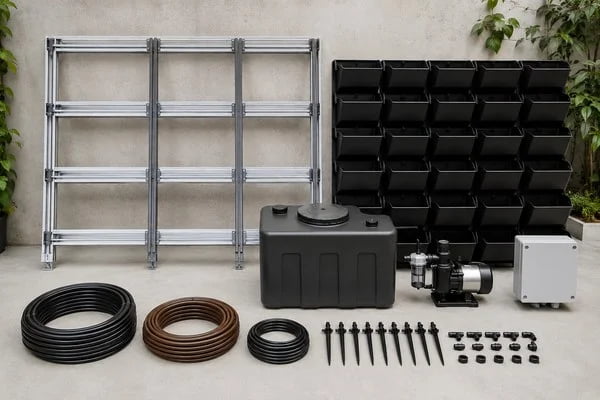
A professional green wall hardware kit usually includes the structural frame, planting modules, irrigation tank, pump, mainline, drippers, and basic controls. What is often missing is water quality management, backflow compliance hardware, drainage tie-ins, overflow protection, and waterproofing details. These exclusions should be priced and assigned before bid submission.
In my bid-stage conversations, the same problem comes up again and again. The kit may run water through the wall, but the project still needs safe water, approved plumbing connections, and a tested leak path.
What Does a Professional Green Wall Hardware Kit Usually Include?
A professional green wall hardware kit usually covers the core system needed to hold plants and circulate water. The problem is that “included” does not always mean “ready for your specific site.” If buyers do not check the details, the kit can be under-sized or hard to maintain.
A typical kit includes support structure, planting modules, tank, pump, irrigation lines, drippers, and simple controls. Some suppliers also include solenoid valves or a control box. Lighting, filtration, backflow devices, floor drains, and waterproof interfaces are often outside the baseline.
What I check first
When I review a kit, I do not stop at the component list. I translate each item into installation and maintenance risk.
| Kit item | What to verify | Why it matters |
|---|---|---|
| Pump | Rated head vs. actual vertical lift | A pump can look strong on paper but fail at real line length |
| Drippers | Type, access, cleaning method | Clogged emitters are a common maintenance issue |
| Tank | Capacity vs. watering cycles | A small tank may need frequent service |
| Controls | Timer vs. smarter logic | Simple controls are cheaper but may need more hands-on care |
| Structure | Load path and anchoring | The wall substrate must carry wet system weight |
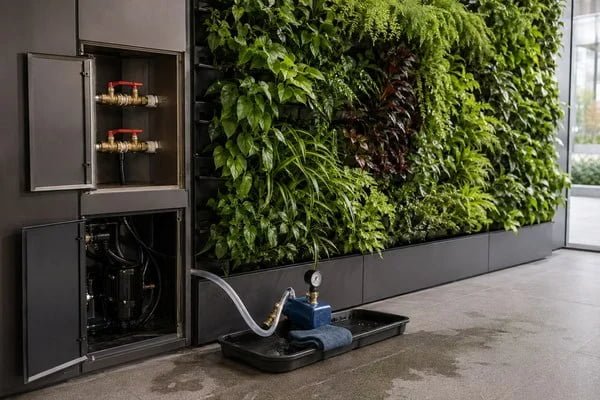
I also ask who owns power outlets, GFCI/RCD protection, access panels, and shutoff valves. These details sound small, but they decide whether the installer can service the wall without removing finishes.
What Is Missing From a Professional Green Wall Hardware Kit?
A professional green wall hardware kit often excludes the items that connect the wall safely to the building. This is where hidden cost appears. The wall supplier may provide a working recirculating loop, but the building still needs filtration, compliant water connection, and a controlled drain path.
The three common missing items are water quality management, backflow/compliance accessories, and drainage/waterproofing. These are site-dependent, so suppliers often leave them out. However, GCs, MEP teams, and O&M staff should define them before award.
1. Water quality management
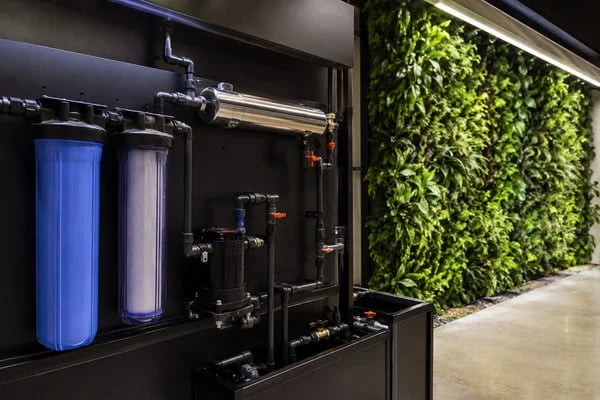
Indoor recirculating green walls are sensitive to water quality. Suspended solids can clog drippers. Biofilm can build up in tanks and lines. Hardness and high TDS can stress plants and leave deposits.
Common adders include:
- Pre-filtration
- Flush or bleed points
- UV treatment, where appropriate
- Hardness or TDS control
- Filter change schedule in the O&M manual
The right solution depends on site water testing. I usually ask for basic water data before assuming anything.
2. Backflow and compliance accessories
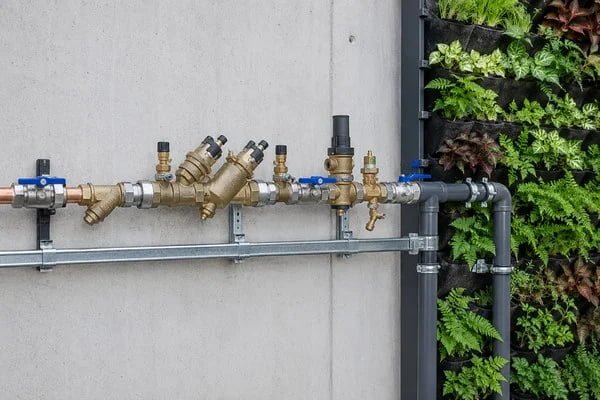
Backflow requirements are not universal. They depend on the authority having jurisdiction, local plumbing code, and how the system connects to potable water.
Possible scope items include:
- Backflow preventer
- Pressure reducing valve
- Check valves
- Isolation valves
- Test ports
- Certification documents
This scope often belongs to MEP, not the wall supplier. Buyers should confirm this early.
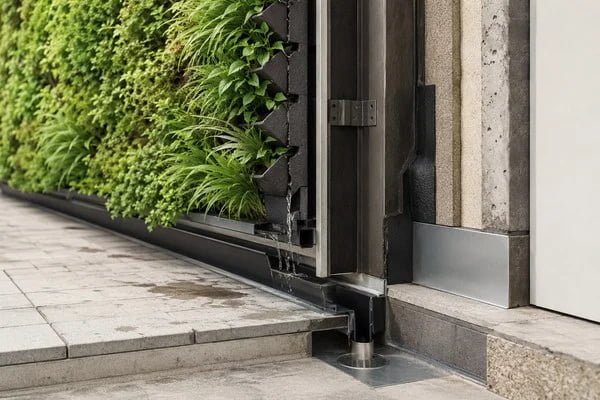
3. Drainage and waterproofing
A recirculating wall still needs a safe failure path. Pumps fail. Tanks overfill. Drippers leak. People over-service systems.
Typical missing items include drip trays, overflow lines, floor drain tie-ins, secondary waterproofing, sealants, and leak containment. These items protect finishes and reduce dispute risk after handover.
How Should Buyers Define Scope Before Bidding?
A professional green wall hardware kit should be evaluated against the project conditions, not just the supplier brochure. The risk is simple: if nobody owns an interface, it becomes a change order later.
Before bidding, buyers should map water, power, drainage, structure, access, and code requirements. The kit choice should follow those conditions. The supplier’s datasheets matter, but the installation context matters more.
My pre-bid checklist
I like to confirm these points before pricing:
Water source
- Is it service water, potable water, or RO?
- What are TDS, hardness, and suspended solids?
- Who changes filters?
Compliance
- What does the AHJ require for backflow?
- Who supplies and certifies the assembly?
- What documents are needed for acceptance?
Structure
- What is the wall substrate?
- Where is the load path?
- Are anchors accessible?
Hydraulics
- What is the actual pump head?
- How long are the irrigation lines?
- Are isolation and flush points included?
Drainage
- Where does overflow go?
- Is there a floor drain nearby?
- Is secondary waterproofing required?
I treat these as bid questions, not afterthoughts.
What Acceptance Tests Should Be Included?
A professional green wall hardware kit should not be accepted only because the pump turns on. That test is too weak. The system should prove that it can run, overflow safely, and be maintained.
Useful acceptance items include a 24-hour static and operational leak test, overflow test, backflow certification where required, initial water quality record, filter rating, and maintenance schedule. These requirements should be written into the bid scope.
Practical acceptance documents
I usually recommend including:
- 24-hour leak test record
- Overflow test result
- Backflow certification, if required locally
- Pump model and operating head
- Filter micron rating
- Initial TDS range
- Valve and shutoff locations
- O&M schedule
These records protect both sides. The contractor proves completion. The owner understands maintenance. The supplier avoids blame for site interfaces outside its scope.
Frequently Asked Questions
Is lighting included in a professional green wall hardware kit?
Lighting is usually outside the baseline kit. Some suppliers offer it separately, but it should be treated as a separate design package. This article focuses on hardware, irrigation, plumbing interfaces, and acceptance risk.
Who should supply the backflow preventer?
That depends on local code and project scope. In many projects, the MEP contractor supplies and certifies it. Buyers should verify requirements with the local authority having jurisdiction before bidding.
Does a recirculating green wall need drainage?
Yes, it should have an overflow and leak management plan. Even recirculating systems can spill during maintenance, blockage, pump failure, or overfilling. Drainage and waterproofing should be coordinated before installation.
Why do suppliers exclude filtration?
Suppliers often exclude filtration because water quality varies by site. A filter package that works for one building may be wrong for another. Buyers should test water and define maintenance responsibility.
<!-- elim-blog-links-20260925 -->
Related guides and product references
For the next stage of green wall systems selection, use these guides alongside the product catalogue. Catalogue references do not replace project-specific drawings or engineering approval.
- From Elevation Drawing to BOM: Preparing a Green Wall Hardware Enquiry
- Cable Trellis Hardware for Commercial Facades: What Architects and Buyers Need to Specify
- How Landscape Contractors Source Cable Systems for Large Green Wall Projects
- Planning a Stainless Steel Green Wall System? Start with These 6 Hardware Decisions
- Stainless Steel Green Wall Systems: Specification, Installation & Testing Guide
- Green wall systems product range
- Straight Multiport Cable Support — Silver appearance — catalogue reference
<!-- /elim-blog-links-20260925 -->
Conclusion
A professional green wall hardware kit usually provides the run-capable core: structure, planting modules, irrigation, pump, tank, and basic control. The real bid risk sits in what is often missing: water quality management, backflow compliance, drainage, overflow protection, and waterproofing. Before you award a project, define who supplies, installs, tests, and maintains each interface. If you are preparing a quote, I recommend reviewing the kit against site water, code, structure, and drainage conditions before final pricing.

Comments (1)