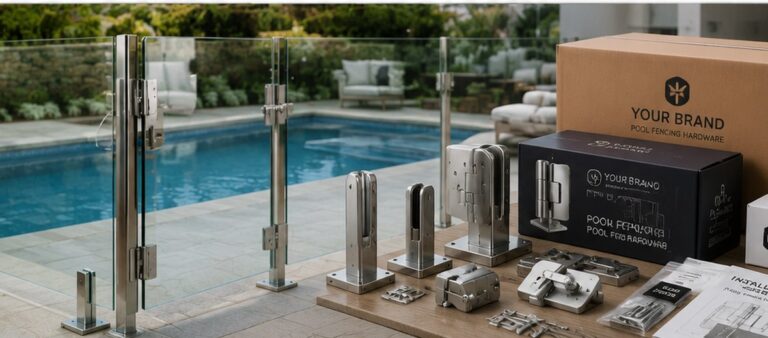
A glass pool fencing hardware system can look complete in a quotation, but still miss the small parts that make purchasing, resale, or installation coordination difficult. That gap creates delays, extra freight costs, and price confusion. The practical solution is to treat “complete” as a matched procurement package, not just a list of visible fittings.
A complete glass pool fencing hardware system usually includes the main hardware, auxiliary accessories, fixing components, quantity matching, packaging details, and project-condition confirmation. Buyers should check what is included, what is excluded, and whether the supplier matched the parts to glass thickness, installation method, substrate, order quantity, and resale or project requirements.
I have handled many customer inquiries where the first question was, “Is this a complete set?” In practice, the better question is, “Can this quoted package support my intended project without hidden missing parts?” That small shift helps buyers compare suppliers more accurately.
What Should a Complete Glass Pool Fencing Hardware System Include?
A complete glass pool fencing hardware system is easy to underestimate because the most visible parts get most of the attention. Buyers often compare clamps, spigots, posts, or channels first. Then they discover that small accessories were not included, or that fixing parts were only suggested separately.
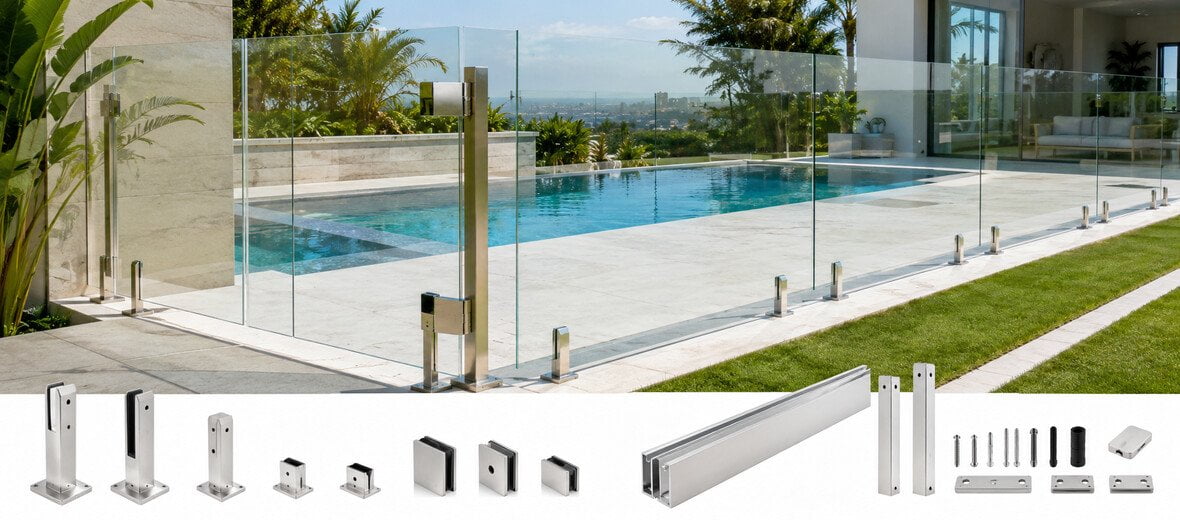
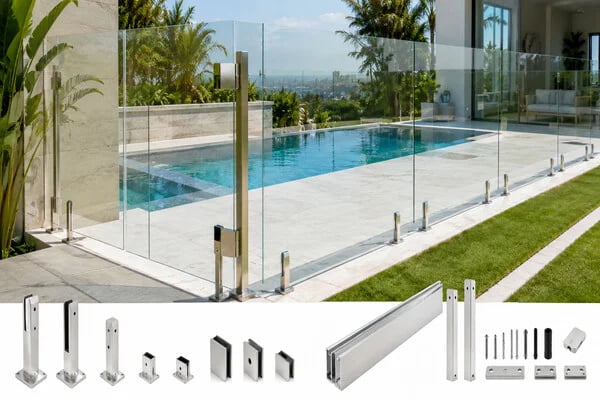
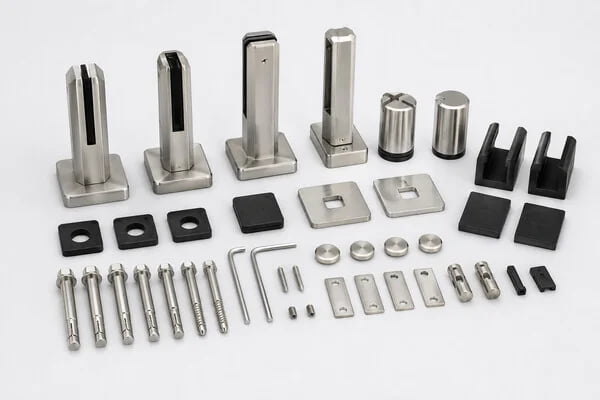
A complete system should normally include main visible fittings, matching accessories, fixing components, protective parts, adjustment items, and clear quantity calculations. The exact package depends on glass thickness, installation type, substrate condition, project layout, and whether the order is for direct project use, wholesale distribution, or private-label resale.
Dive Deeper
When I review a pool fencing hardware inquiry, I usually start by separating the system into several purchasing categories. This helps buyers avoid a common mistake: treating the product name as the full scope.
For example, if a quotation says “glass clamp” or “base shoe,” that may not mean the supplier included screws, anchors, end caps, rubber gaskets, drainage parts, cover plates, or spare accessories. Some suppliers quote only the main visible fitting because it makes the unit price look lower. Other suppliers include a fuller bill of materials, so their quotation may appear higher at first.
A practical glass pool fencing hardware system usually needs confirmation in these categories:
| Category | Typical Items to Confirm | Procurement Risk If Missed |
|---|---|---|
| Main hardware | Spigots, posts, clamps, base channels, handrail brackets | The visible system may be incomplete |
| Glass-contact parts | Gaskets, rubber pads, liners, sleeves | Glass may not fit the hardware as expected |
| Fixing components | Screws, bolts, anchors, expansion plugs | Buyer may need local sourcing or extra shipment |
| Finishing parts | Caps, cover plates, end caps, decorative covers | Final appearance may not match sales photos |
| Adjustment items | Leveling pieces, shims, wedges, setting blocks | Site adjustment may become harder |
| Spare parts | Extra screws, caps, gaskets, small accessories | Distribution and after-sales support may suffer |
| Packaging | Inner boxes, labels, cartons, pallet options | Resale and warehouse handling may be affected |
The Main Hardware Is Only the Starting Point
Main fittings usually define the installation style. A frameless pool fence may use spigots or base channels. A semi-frameless style may use posts and clamps. However, the main fitting alone does not answer whether the package is ready for purchasing.
Buyers should ask:
- Does each fitting include glass-contact gaskets?
- Are cover plates included or optional?
- Are screws and anchors included?
- Are end caps included for channels or rails?
- Are installation-related accessories packed with each set or bulk packed?
- Are spare parts included for wholesale or project use?
Why Small Parts Matter More Than They Look
Small parts often cost little per piece, but they create expensive problems when missing. A buyer may need to pause installation coordination, arrange air shipment, or ask a contractor to source substitutes locally. For distributors, missing small parts can also create customer complaints even when the main stainless-steel fitting is acceptable.
In my purchasing communication experience, missing accessories are one of the fastest ways for a “good price” quotation to become a difficult order.
A complete package is not universal. It should be matched to the buyer’s purpose. A contractor may prefer project-specific packing by zone or area. A wholesaler may need universal accessory packs and clear labels. An e-commerce seller may care more about retail packaging, barcode labels, and replacement parts.
That is why I suggest buyers ask suppliers for a simple BOM, not just product photos. A BOM, or bill of materials, makes the quoted scope visible before the order moves forward.
Why Does Quotation Scope Change the Real Cost of a Glass Pool Fencing Hardware System?
A glass pool fencing hardware system can have very different prices from different suppliers because the quotation scope may not be the same. One supplier may include a fuller accessory package. Another supplier may quote only visible fittings. Without checking inclusions and exclusions, buyers cannot compare the real cost.
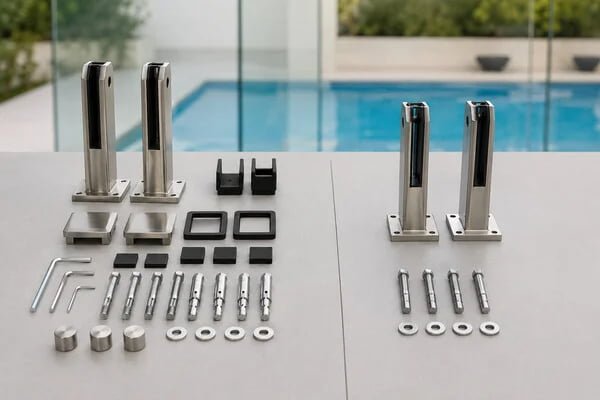
Quotation scope changes the real cost because it controls what the buyer actually receives. A low unit price is not meaningful unless the supplier clearly states whether screws, anchors, gaskets, caps, adjustment pieces, packaging, spare parts, and quantity matching are included, excluded, optional, or recommended for local sourcing.
Dive Deeper
Many buyers ask for “best price” early in the discussion. I understand why. Importers and distributors need competitive landed costs. Contractors need to stay within project budgets. However, when the product is a glass pool fencing hardware system, the best price is not always the lowest visible unit price.
The quotation must be read as a purchasing document. It should answer not only “how much is each fitting?” but also:
- What parts are included?
- What parts are excluded?
- What parts are optional?
- What parts must be sourced locally?
- What assumptions did the supplier use when calculating quantities?
Example: Two Quotations That Are Not Really Equal
| Quotation Item | Supplier A | Supplier B |
|---|---|---|
| Main spigot | Included | Included |
| Cover plate | Included | Optional |
| Rubber gasket | Included | Not stated |
| Anchor bolts | Included | Excluded |
| Screws | Included | Excluded |
| Spare accessories | 2% extra | Not included |
| Individual packaging | Included | Bulk packing |
| Unit price | Higher | Lower |
At first glance, Supplier B may look cheaper. However, the buyer may later need to add cover plates, gaskets, anchors, screws, and extra packaging. If those items require a second shipment, the real cost can rise quickly.
The Hidden Costs Buyers Should Watch
A quotation with unclear scope can create several costs that do not appear on the first price sheet:
- Extra freight cost for missing small items
- Local sourcing cost for anchors, screws, or tools
- Project delay cost if installation coordination stops
- Repacking cost for distributors or retailers
- After-sales cost when customers report missing parts
- Communication cost from repeated confirmation and revisions
These costs matter because glass pool fencing hardware is often purchased for projects, resale channels, or distributor stock. The buyer may not be the final installer. That means every missing detail travels through the supply chain.
Ask for Included and Excluded Lists
I usually recommend asking the supplier to provide a quotation note like this:
- Included: main fittings, gaskets, cover plates, standard screws, standard anchors, cartons
- Excluded: glass panels, installation tools, site drilling, local code evaluation
- Optional: custom logo, retail packaging, barcode labels, spare parts pack
- To be confirmed: substrate type, glass thickness, installation layout, local fastening requirements
This type of note reduces confusion. It also protects both sides. The buyer can compare offers fairly, and the supplier can avoid being blamed for items that were never included.
Low Price Can Still Be Valid
A lower quote is not automatically misleading. Sometimes buyers want to source anchors locally because local contractors prefer specific fasteners. Sometimes distributors already have standardized packaging. Sometimes a contractor only needs replacement fittings, not a full system.
The key is clarity. A partial package can be acceptable if both sides understand that it is partial. Problems happen when a partial quotation is treated as a complete glass pool fencing hardware system.
Which Project Conditions Affect a Glass Pool Fencing Hardware System?
A glass pool fencing hardware system is conditional because hardware selection depends on the project. Glass thickness, installation method, ground condition, quantity, packaging needs, and market requirements can all change what should be included. Buyers should not assume one supplier’s standard set fits every pool fencing order.
The main project conditions to confirm are glass thickness, fitting style, substrate or ground condition, installation method, layout quantity, corrosion environment, local requirements, packaging method, and spare-part needs. These details help the supplier match hardware and accessories more accurately before quotation, sampling, or mass production.

Dive Deeper
A system that works for one project may not be suitable for another. I am not an installer or structural engineer, so I do not make site safety judgments. However, from supplier-side communication, I have seen how unclear project conditions create wrong quotations and mismatched accessories.
Buyers often send one photo and ask for a price. That is a useful start, but it is rarely enough. A supplier usually needs more information before treating the quote as complete.
Key Conditions to Confirm Before Quotation
| Condition | Why It Matters | What Buyers Should Ask |
|---|---|---|
| Glass thickness | Gaskets and fittings must match the glass | Which thickness range does this hardware support? |
| Installation style | Spigots, posts, clamps, and channels use different parts | Is this for frameless or semi-frameless fencing? |
| Substrate | Fixing method may change by concrete, timber, tile, or other base | Are standard anchors suitable, or should local fasteners be used? |
| Project layout | Quantity of fittings depends on length, panels, corners, and gates | Can the supplier help calculate approximate quantities? |
| Environment | Poolside conditions may require material and finish review | What material grade and surface finish are offered? |
| Local requirements | Codes and standards vary by market | What documents should the buyer verify locally? |
| Packaging | Distributor and project packing needs differ | Can items be packed by set, carton, project area, or SKU? |
Glass Thickness and Hardware Matching
Glass thickness is one of the first technical details to confirm. Common pool fencing glass thicknesses can vary by market and project. The hardware must be selected with the correct gasket or liner. If the gasket is wrong, the buyer may face fitment issues even if the visible fitting looks correct.
Useful questions include:
- What glass thickness is the fitting designed for?
- Are different gaskets available for different glass sizes?
- Are the gaskets included in the price?
- Are spare gaskets available for distributors?
- Does the supplier need glass drawings before final confirmation?
Substrate and Fixing Components
The ground or base condition affects fixing components. Some buyers expect anchors and bolts to be included. Other buyers prefer local sourcing because contractors want fasteners that match local substrate, installation practice, or regulatory expectations.
A supplier can usually provide standard fixing options, but buyers should verify project-specific fastening decisions with qualified local professionals. This is especially important for public projects, commercial pools, coastal environments, or projects with strict approval processes.
Packaging and Resale Conditions
A wholesaler’s “complete system” may not be the same as a contractor’s “complete system.” A contractor may want the system packed by project area. A distributor may want SKU labels, barcode labels, logo stickers, or neutral cartons. An online seller may want stronger inner packaging and clear accessory bags.
For importing, packaging is part of the procurement system. It affects:
- Warehouse receiving
- Inventory counting
- Retail display
- After-sales replacement
- Shipment damage rate
- Customer perception
Documents and Verification
Buyers may also ask for material certificates, inspection reports, drawings, or product photos. These documents can support purchasing decisions, but they should be verified based on the target market and project requirements. A supplier can provide available documents, while the buyer should confirm whether those documents satisfy local rules, customer requirements, or tender requirements.
A complete glass pool fencing hardware system is therefore not one fixed universal kit. It is a matched package built around the project’s real conditions.
How Should Importing Glass Pool Fencing Hardware Be Checked by Wholesalers and Distributors?
Importing glass pool fencing hardware creates more risk when buyers only check the unit price and product photo. A distributor needs a package that can be stocked, resold, identified, replaced, and explained to customers. If the accessory scope is unclear, after-sales pressure can increase after shipment.
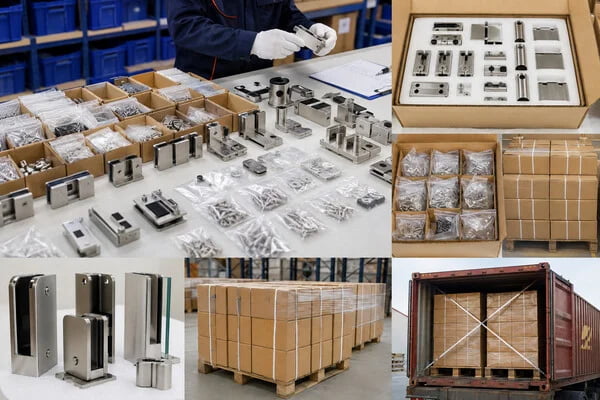
Wholesalers and distributors should check the BOM, accessory list, packing method, labeling, spare parts, inspection process, material documents, carton markings, order quantity matching, and excluded items before importing glass pool fencing hardware. This checklist helps determine whether the offer is suitable for resale or only for a single project.
Dive Deeper
The additional requirement here is important: Importing Glass Pool Fencing Hardware: A Checklist for Wholesalers and Distributors. Importing is not the same as buying a few replacement fittings. A distributor must think about stock control, customer service, repeat orders, and product consistency.
When I communicate with B2B buyers, I often see two types of inquiries. One buyer says, “Please quote this spigot.” Another buyer says, “Please quote a complete selling package with accessories, labels, and spare parts.” The second buyer usually has fewer surprises later because the purchasing expectation is clearer.
Importing Checklist for Wholesalers and Distributors
Use this checklist as a flexible guide, not a universal rule. Every market and project can have different requirements.
Product scope
- Are main fittings included?
- Are gaskets, caps, screws, anchors, and plates included?
- Are optional accessories listed separately?
BOM and quantity matching
- Does the supplier provide a bill of materials?
- Are quantities calculated per panel, per meter, per set, or per project?
- Are spare parts included?
Material and finish
- What stainless steel grade or surface finish is quoted?
- Are documents available for buyer verification?
- Is the finish suitable for the target market and environment? This should be verified case by case.
Packaging
- Is packaging bulk, set-packed, or retail-ready?
- Are inner bags labeled?
- Are cartons strong enough for export handling?
- Are custom labels, logos, or barcodes needed?
Quality inspection
- Can the supplier provide pre-shipment inspection photos?
- Can dimensions, quantity, surface finish, and packing be checked?
- Does the buyer require third-party inspection?
Export and documentation
- Are HS codes, carton details, packing lists, and invoices prepared clearly?
- Are product photos and SKU lists aligned?
- Are certificates or declarations required by the destination market?
After-sales support
- Are replacement accessories available?
- Can small parts be ordered separately?
- Can the supplier keep consistent packaging for repeat orders?
Distributor Stock Needs Are Different
A contractor may use all fittings on one site. A distributor may sell fittings over several months to different customers. That means the distributor needs a more controlled system.
For example, if gaskets are packed separately without labels, warehouse staff may mix them. If cover plates are not counted by set, the distributor may ship incomplete orders. If spare screws are not available, one customer complaint may require breaking another carton.
A wholesale-ready glass pool fencing hardware system should make warehouse handling easier. It should also make customer explanation easier.
Sampling Before Bulk Orders
I usually suggest samples before large-scale purchasing, especially when the buyer is changing suppliers or developing a new product line. A sample order allows the buyer to check:
- Surface finish
- Glass-fit accessories
- Packing method
- Label design
- Carton strength
- Accessory completeness
- Product photos versus real goods
Samples do not replace professional site evaluation, but they can prevent basic procurement mistakes. For distributors, a sample can also become the base reference for future inspection.
Avoid Over-Specifying Without a Reason
Some buyers try to include every possible accessory in one package. That can also create problems. Extra parts increase cost, carton size, and inventory complexity. The better approach is to define the sales model first.
Ask:
- Will this be sold as a project package?
- Will this be stocked as individual SKUs?
- Will customers source anchors locally?
- Will the product be private label?
- Will the buyer need multilingual instruction sheets?
A complete import package should be complete for its purpose, not overloaded with unnecessary items.
How Can Buyers Confirm a Complete Glass Pool Fencing Hardware System Before Ordering?
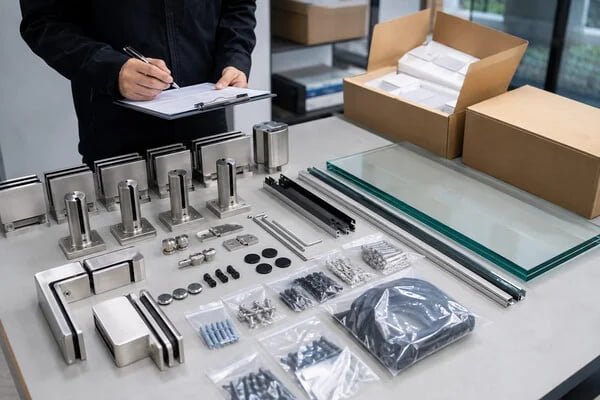
A complete glass pool fencing hardware system should be confirmed before ordering through a written BOM, drawings or layout assumptions, accessory list, packing plan, sample review, and clear quotation notes. Buyers should ask the supplier to mark included, excluded, optional, and project-specific items before deposit or purchase order approval.
Buyers can confirm completeness by requesting a detailed BOM, checking accessory quantities, matching hardware to glass and installation conditions, reviewing packaging needs, verifying documents, and asking for photos or samples. Final installation, safety, and local compliance decisions should be reviewed by qualified professionals in the project market.
Dive Deeper
The confirmation stage is where many purchasing mistakes can be prevented. A supplier may have good products, and a buyer may have a real project. Still, the order can go wrong if both sides use different meanings for “complete.”
From my experience in accessory-confirmation communication, the safest approach is to make every assumption visible. A buyer does not need to become an engineer to do this. The buyer simply needs a structured purchasing confirmation process.
Step 1: Ask for a Written BOM
A BOM should list the actual parts, not only the product family. It should include:
- Product name
- Item code or drawing number
- Material and finish description
- Quantity per set or per project
- Included accessories
- Optional accessories
- Packing method
- Remarks for excluded items
A clear BOM helps the buyer compare suppliers. It also helps internal teams, such as purchasing, quality control, sales, and warehouse staff.
Step 2: Confirm the Quantity Logic
Quantity matching is often more important than the unit price. A buyer should know whether the supplier calculated parts based on:
- Number of glass panels
- Linear meters
- Number of posts
- Number of corners
- Number of gates
- Standard spacing assumptions
- Customer-provided drawing
If the supplier did not receive a drawing, the quotation should say that the quantity is estimated. That avoids future disputes.
Step 3: Confirm Installation Assumptions
The supplier should know the intended installation method. For example, hardware for core-drilled spigots, surface-mounted spigots, base channels, and post-and-clamp systems may require different accessories.
Buyers should ask:
- What installation style is this quote based on?
- What glass thickness is assumed?
- What fixing parts are included?
- Are fasteners standard suggestions or project-specific requirements?
- Should the final fixing choice be confirmed locally?
This language keeps the discussion practical and realistic. A supplier can support product matching, but local professionals should confirm installation suitability.
Step 4: Confirm Packing and Labels
For B2B trade, packing is not a small detail. A complete glass pool fencing hardware system for resale may need:
| Packing Need | Why It Matters |
|---|---|
| Individual inner boxes | Easier resale and product protection |
| Accessory bags | Reduces missing-part complaints |
| SKU labels | Improves warehouse picking |
| Barcode labels |
<!-- elim-blog-links-20260925 -->
Related guides and product references
For the next stage of pool fencing hardware selection, use these guides alongside the product catalogue. Catalogue references do not replace project-specific drawings or engineering approval.
- Private Label Pool Fencing Hardware: What Distributors Can Customize Before Importing
- Coastal Pool Projects: When Is 316 Stainless Steel Worth the Extra Cost?
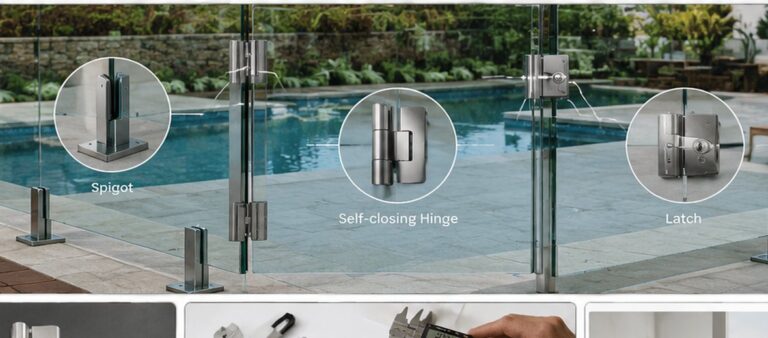
- Spigots, Hinges and Latches: Where Pool Fence Hardware Compatibility Goes Wrong
- Importing Glass Pool Fencing Hardware: A Checklist for Wholesalers and Distributors
- Glass Pool Fencing Hardware: The Complete Buyer's Guide
- Pool fencing hardware product range
- Bolt-Plate Glass-to-Glass Pool Gate Hinge — catalogue reference
<!-- /elim-blog-links-20260925 -->