
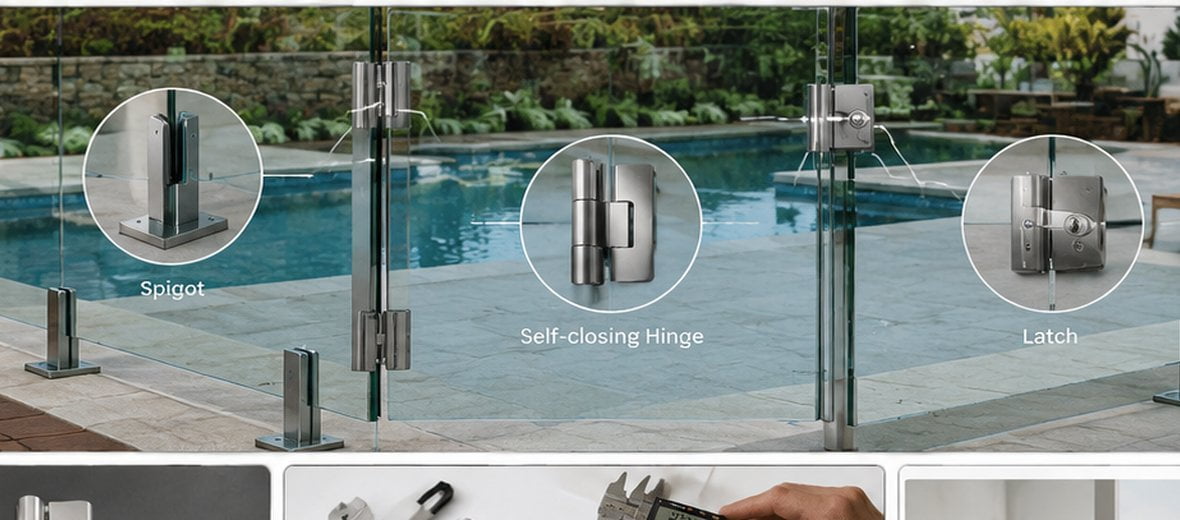
Pool fence hardware compatibility often goes wrong when buyers treat spigots, hinges, and latches as separate replacement parts. The problem looks small at first. Then the gate does not close, the latch misses, or the glass holes do not match. The safer solution is to verify the whole gate system before purchase.
Pool fence hardware compatibility fails when similar-looking spigots, hinges, or latches are bought without checking glass thickness, hole positions, mounting method, gate alignment, latch engagement, and site conditions. These parts must work together as one system, so buyers should confirm dimensions, drawings, samples, and project requirements before ordering.
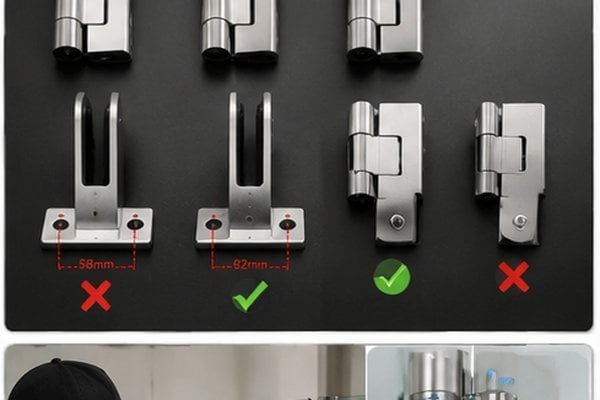
I have seen many inquiries where a buyer sends one photo and asks, “Can this replace my old hinge?” I understand the urgency. However, a photo rarely gives enough information. The real question is not only whether the part looks right. The real question is whether the system will work after installation.
Why Does Pool Fence Hardware Compatibility Fail When Parts Look Similar?
A similar-looking part can create a costly mismatch. The surface shape may look correct, but the internal dimensions, fixing method, hole pattern, and operating angle may be different. That gap creates risk for installers, importers, and wholesalers.
Pool fence hardware compatibility fails because spigots, hinges, and latches are not isolated parts. They affect glass position, gate swing, closing force, latch engagement, and long-term stability. Buyers should compare measured specifications, not product photos, before deciding whether a part can replace another one.
The problem with “it looks the same”
In real procurement conversations, I often receive messages like:
“Please check if your hinge can replace this one. The customer only has photos from the site.”
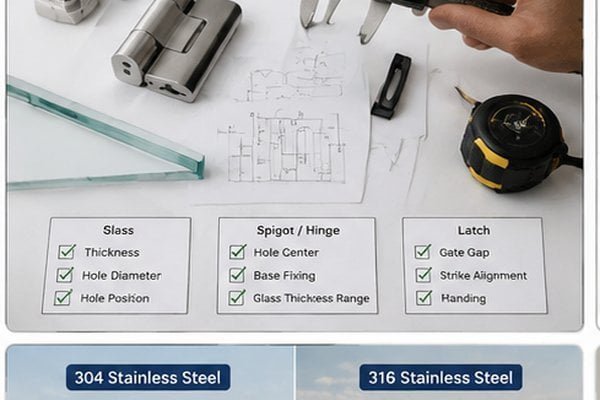
I usually cannot answer with confidence from photos alone. I may see a polished stainless hinge, a black latch, or a square spigot. However, I cannot confirm glass thickness, hole center distance, clamping depth, base fixing pattern, or gate clearance from a simple image.
This is where pool fence hardware compatibility becomes a system issue. A hinge may fit the glass holes but fail to align with the latch. A spigot may hold the glass panel but change the final glass height. A latch may look correct but need a different gap between the gate and post.
Common hidden differences
Many hardware problems come from small differences that are hard to see in photos:
- Glass thickness: 10 mm, 12 mm, and 15 mm glass may require different gaskets or clamp spacing.
- Hole positions: A 2 mm difference in hole centers can block installation.
- Gate gap: The latch may need a specific clearance to engage correctly.
- Mounting base: Core-drilled, surface-mounted, side-mounted, and fascia-mounted hardware behave differently.
- Opening direction: Some hinges are handed, while others are more flexible.
- Spring or self-closing function: Closing speed and force can vary by hinge type.
- Panel position: A spigot with a different saddle height can change the top line of the glass.
Similar appearance vs verified compatibility
| What buyers can see in a photo | What must still be verified |
|---|---|
| Color and finish | Stainless grade, coating process, corrosion suitability |
| General shape | Full dimensions and tolerances |
| Glass clamp style | Glass thickness range and gasket type |
| Screw positions | Hole center distance and fixing pattern |
| Latch design | Required gate gap and strike alignment |
| Hinge body shape | Swing angle, closing function, load range, hole pattern |
Why this matters for installers
Installers face the most immediate pain. If one part does not fit, the job may stop. The installer may need to redrill, reorder, adjust glass, or explain the delay to the client. In pool fence projects, that delay can become sensitive because the customer often expects a clean, safe, finished enclosure.
I do not present myself as the final installation authority. A qualified installer or engineer should review application-specific decisions. Still, from the supplier side, I have learned one practical rule: a replacement part should not be approved only because it looks similar.
For procurement teams, the better question is:
“Can we verify that this hardware combination fits this glass, this gate layout, and this installation method?”
That question reduces after-sales disputes and helps everyone understand responsibility before the goods are shipped.
For complementary guidance, see Private Label Pool Fencing Hardware: What Distributors Can Customize Before Importing.
What Information Do I Need Before Judging Pool Fence Hardware Compatibility?
Incomplete information creates wrong purchasing decisions. A buyer may want a quick answer, but speed without dimensions can create site rework, rejected stock, or customer complaints. The compatibility check needs enough detail to protect the project.
To judge pool fence hardware compatibility, I need glass thickness, glass size, hole positions or cutout drawings, mounting surface, installation method, gate direction, gap requirements, old hardware dimensions, photos, and ideally drawings or physical samples. Without these details, any answer is only a preliminary opinion.
The minimum information I ask for
When a buyer asks whether a hinge, latch, or spigot can replace an existing one, I usually ask for a structured set of information. This is not because I want to slow the order down. I ask because the wrong assumption can cost more than the part itself.
A practical compatibility request should include:
Glass details
- Glass thickness
- Glass height and width
- Tempered or laminated glass type, if relevant
- Existing hole or cutout drawings
Hardware details
- Photos from front, side, top, and bottom
- Full product dimensions
- Hole center distances
- Screw size and fixing method
- Existing brand or model, if known
Project details
- Gate width and height
- Gap between gate and fixed panel or post
- Opening direction
- Indoor, outdoor, coastal, or chlorinated pool environment
- Surface type, such as concrete, timber, tile, or steel
Commercial details
- One-time replacement or repeat stock item
- Required finish
- Order quantity
- Target market
- Any local compliance documents the buyer needs to verify
Why photos alone are weak evidence
Photos are useful, but they are not enough. A photo can show the style of a hinge, but it cannot reliably show whether the glass hole is 45 mm or 48 mm from the edge. A photo can show a latch shape, but it cannot confirm the gate gap needed for engagement. A photo can show a spigot, but it cannot confirm the drilling depth, base plate size, or internal wedge design.
In one anonymized inquiry, a buyer sent me two photos of an old hinge and asked for “same type.” The hinge looked common. However, when I asked for hole positions, the buyer discovered that the glass had been drilled to a non-standard pattern from an older project. If the buyer had ordered based on appearance, the replacement hinge would have arrived but would not have fitted the existing glass.
A simple information table for buyers
| Compatibility point | Why it matters | Best evidence |
|---|---|---|
| Glass thickness | Affects clamp fit and gasket choice | Glass specification or caliper measurement |
| Hole center distance | Determines whether hinge or latch fits existing glass | Drawing or measured photo with scale |
| Gate gap | Affects latch engagement and closing | Site measurement |
| Mounting surface | Affects fixing method and base style | Site photo plus surface details |
| Hardware dimensions | Confirms replacement fit | Technical drawing or sample |
| Environment | Affects material and finish choice | Project location and pool condition |
| Quantity plan | Affects stocking risk | Project list or sales forecast |
My practical rule for uncertain cases
If the buyer cannot provide enough dimensions, I prefer to describe the answer as “not confirmed” rather than “yes.” This may feel conservative, but it protects both sides. For a small replacement job, the buyer may send a sample. For an importer or wholesaler, a trial order with measured testing may be more responsible than a large first order.
Pool fence hardware compatibility should move through stages:
- Visual comparison
- Dimension comparison
- Drawing review
- Sample check
- Installer or project approval
- Bulk purchase decision
This process does not remove every risk. However, it makes the risk visible before the buyer spends money on the wrong stock.
For complementary guidance, see Coastal Pool Projects: When Is 316 Stainless Steel Worth the Extra Cost?.
How Do Spigots, Hinges, and Latches Interact in Pool Fence Hardware Compatibility?
A pool gate can fail even when each part is acceptable by itself. The spigots may hold the fixed panels, the hinges may swing, and the latch may lock. Yet the final gate may still misalign because the parts were not selected as a working set.
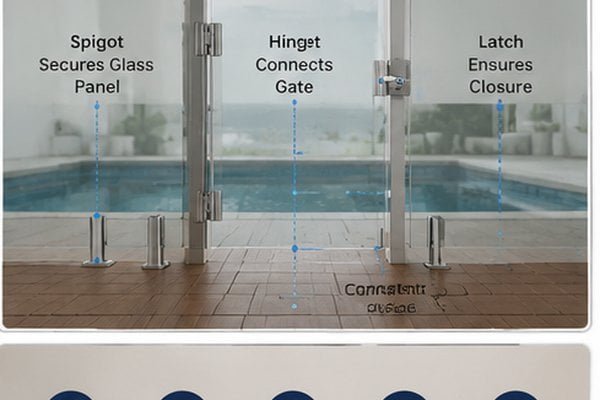
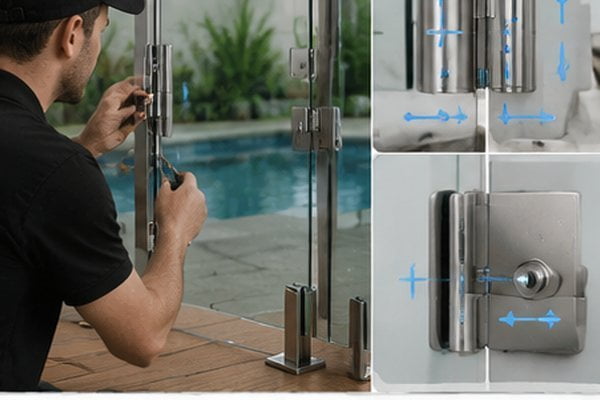
Spigots, hinges, and latches interact through glass position, gate clearance, hinge axis, self-closing force, latch height, and strike alignment. Pool fence hardware compatibility should be checked as a complete gate system, not as three separate hardware purchases.
The gate system is more important than one fitting
The most common compatibility mistake is treating hardware like simple accessories. In reality, the gate system has a chain of dependencies.
For example:
- The spigot height affects the final level of the fixed glass panel.
- The hinge offset affects the gate gap and swing path.
- The latch body needs the correct approach angle and strike position.
- The glass hole pattern limits which hinges or latches can be used.
- The mounting surface affects the final vertical alignment.
If one item changes, the rest of the system may need adjustment.
Example: a hinge replacement that creates latch problems
Imagine a contractor replaces an old hinge with a new hinge that has the same finish and similar size. The glass holes match. The hinge installs well. At first, the replacement looks successful.
Then the gate closes slightly off-center. The latch tongue does not fully enter the receiver. The installer adjusts the hinge tension, but the latch still catches poorly. The problem may not be the hinge quality. The issue may be that the hinge axis, gate offset, or closing angle changed by a few millimeters.
In this case, the part “fits” mechanically but fails functionally. That is why pool fence hardware compatibility should include both installation fit and operating fit.
Key interaction points
| Hardware interaction | What can go wrong | What to verify |
|---|---|---|
| Spigot + fixed panel | Panel sits too high, low, or tilted | Spigot saddle height, glass thickness, leveling method |
| Hinge + gate glass | Holes do not match or hinge clamps poorly | Hole pattern, glass thickness, gasket fit |
| Hinge + latch | Gate closes at wrong position | Hinge offset, closing angle, gate gap |
| Latch + receiver | Latch does not engage smoothly | Strike alignment, gap, latch height |
| Gate + surrounding panels | Gate rubs or leaves unsafe gaps | Overall layout and clearances |
| Hardware + surface | Fixing is unstable or misaligned | Base type, anchor method, surface condition |
Functional questions I like to ask
Before confirming a combination, I prefer to ask practical questions:
- Does the gate need self-closing hinges?
- What is the required gate width and weight range?
- Does the latch need to align with a glass panel, post, or wall?
- What is the planned gap between gate and fixed panel?
- Is the system frameless glass, semi-frameless, or mixed with posts?
- Will the hardware be used in a new installation or as a replacement?
These questions help separate “part matching” from “system matching.”
Why importers should care
For importers and wholesalers, the risk is different from one project replacement. A contractor may lose time on one job. An importer may buy inventory that only fits a narrow set of glass patterns. If the market uses different hole positions or different gate gaps, the stock may create returns and disputes.
I recommend that importers build their product range around verified system combinations. A wholesaler can stock a hinge, latch, and spigot as a compatible set, but that set should still be supported by drawings, installation assumptions, and clear limitations.
A good product sheet should not say only “suitable for pool fence.” It should state:
- Compatible glass thickness range
- Hole pattern requirements
- Suggested gate size range, if provided by the manufacturer
- Required gap range for latch engagement
- Mounting method
- Finish and material
- Packing details
- Available test reports or certificates for buyer verification
This approach does not make the supplier an engineer. It simply gives the buyer enough procurement information to ask better project questions.
For complementary guidance, see What Makes a Complete Glass Pool Fencing Hardware System?.
Why Can Material and Finish Not Prove Pool Fence Hardware Compatibility?
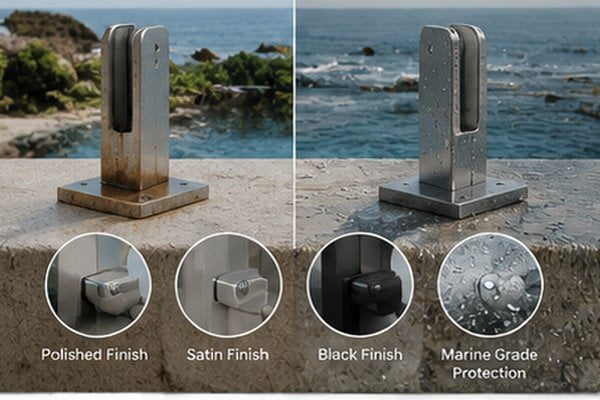
Material and finish matter a lot in pool environments. Outdoor moisture, cleaning chemicals, and coastal air can affect durability. However, stainless grade or black coating cannot prove that a hinge, latch, or spigot will fit the existing system.
Material and finish are important quality factors, but they are not the main test of pool fence hardware compatibility. Buyers must still verify dimensions, glass thickness, mounting method, hole positions, gate alignment, and latch engagement before purchase.
Material is a quality question, not a fit guarantee
Many buyers start by asking whether the product is stainless steel 316 or 304. That question is valid, especially for poolside and coastal applications. Stainless steel grade, surface finish and passivation belong in the material specification. They do not establish dimensional fit. Check the hinge drawing, glass preparation, gaskets, mounting interface and latch alignment as separate compatibility requirements.
Frequently Asked Questions
Can a replacement pool gate hinge be selected from a photograph?
A photograph can help identify a possible model, but cannot establish fit. Compare the current drawing with the glass thickness, hole or cutout pattern, mounting interface, gate size and opening direction. Resolve any mismatch before ordering.
Can hinges and latches from different ranges be combined?
Only after their interfaces and operation have been checked together for the intended gate. A matching colour or stainless grade does not demonstrate compatible clearances, alignment or closing behaviour. Obtain documented compatibility information and project-specific installation review.
Does a gate that closes once prove the installation is acceptable?
No. One demonstration does not establish continued operation or regulatory acceptance. The CPSC residential pool barrier guide discusses self-closing and self-latching gates; follow the applicable local requirements and manufacturer's inspection procedure. This US guidance is not a product certification.
What records should a replacement enquiry include?
Include the existing model if known, dimensioned glass and hardware drawings, mounting details, measured clearances and photographs. Identify who will verify the installed assembly and retain the approved drawing revision with the order.
Pool gate compatibility: a practical decision record
Use this proposed worksheet to record a purchasing decision. It is an editorial checklist, not a completed project inspection or test result.
| Review step | What to record |
|---|---|
| Define the requirement | Record the complete gate assembly, glass preparation, hinge positions and latch engagement details. |
| Resolve the interface | Check closing and latching in the installed configuration against the applicable local requirements; keep the result with the project record. |
Worked example: Gate assembly reconciliation
Illustrative assumptions only — not an actual order, measured result, price offer or engineering approval.
For 8 gates, assume the approved design specifies one latch per gate. Eight latch sets are required; a packing list showing 7 has a shortage of one.
Decision: The count does not establish gate safety or compliance; verify the complete installed assembly.
Reference and applicability
CPSC residential pool barrier guidance: US residential guidance discusses gates and barriers. Check the rules in the actual project jurisdiction. Project-specific technical or regulatory requirements should be checked by the responsible qualified professional.
Editorial update: 25 September 2026. This update checks article structure, topic scope and the references identified above. It does not claim independent engineering certification.
Related guides and product references
For the next stage of pool fencing hardware selection, use these guides alongside the product catalogue. Catalogue references do not replace project-specific drawings or engineering approval.


Comments (2)